A BOCCHI THE ROCK! prequel anime film has been announced for 2027, according to Crunchyroll. For viewers wondering whether another movie is coming, that is the essential news. The more interesting creative question is what looking backward can reveal that moving forward cannot.
A prequel offers a particular pleasure: familiar relationships can acquire unfamiliar weight. It also carries a risk. Knowing where a story eventually leads can make its earlier events feel like required stops. My hope for this film is that its characters will experience their lives as uncertain, even when returning viewers think they know the destination.
This is a spoiler-free critical preview, not a review of the completed film. Discussion of storytelling possibilities below expresses expectations rather than descriptions of confirmed scenes.
What the 2027 announcement tells viewers
The announcement establishes a prequel anime film and a 2027 release year. Those details answer the broad question of the project's direction, but they should not be stretched into promises about a particular screening date or local availability.
For an American audience, the distinction matters. A release year alone does not establish when a film will reach nearby theaters, whether subtitled and dubbed screenings will run together, or when home viewing will become possible. Before planning a trip or buying tickets, look for a territory-specific announcement and an actual theater listing.
The word prequel also describes chronology, not accessibility. An earlier setting does not automatically make a movie the ideal starting point. That depends on how clearly the film introduces its relationships and stakes. A newcomer needs reasons to care within the movie itself; recognition cannot do that work for everyone.
The character test: make the past feel undecided
From a character's perspective, the future should remain open. Someone making a difficult choice does not know that the decision will eventually become useful background information. They have immediate wants, incomplete knowledge, and something they could lose.
That is where I would begin evaluating this prequel. What does its central character want before the audience starts connecting events to later developments? What makes that desire difficult to express? Does another person misunderstand it? Those questions create drama because they allow people to act for themselves.
A weaker approach would treat every encounter as an explanation. A familiar object receives an origin, a recognizable habit gets a cause, and a relationship settles neatly into place. Such details can be enjoyable, but a collection of answers is not necessarily a satisfying movie. The emotional turning point must matter even to someone who misses every reference.
Perspective is equally important. A character who appears confident to someone else may understand the same encounter as an exhausting performance. An act of encouragement can feel generous to its recipient and risky to the person offering it. A prequel earns its place when it lets us inhabit that difference instead of merely adding dates to a timeline.
Music should change the relationships
For a music-centered story, a performance becomes dramatically valuable when something changes between the people involved. Technical improvement is one possibility. So are a new willingness to listen, a disagreement that can no longer be concealed, or the realization that two people want different things from the same activity.
That gives even a modest rehearsal considerable potential. Repetition can reveal patience or resentment. A pause can feel considerate or punishing. The person who notices another player's hesitation may tell us more about a relationship than a speech explaining how close they are.
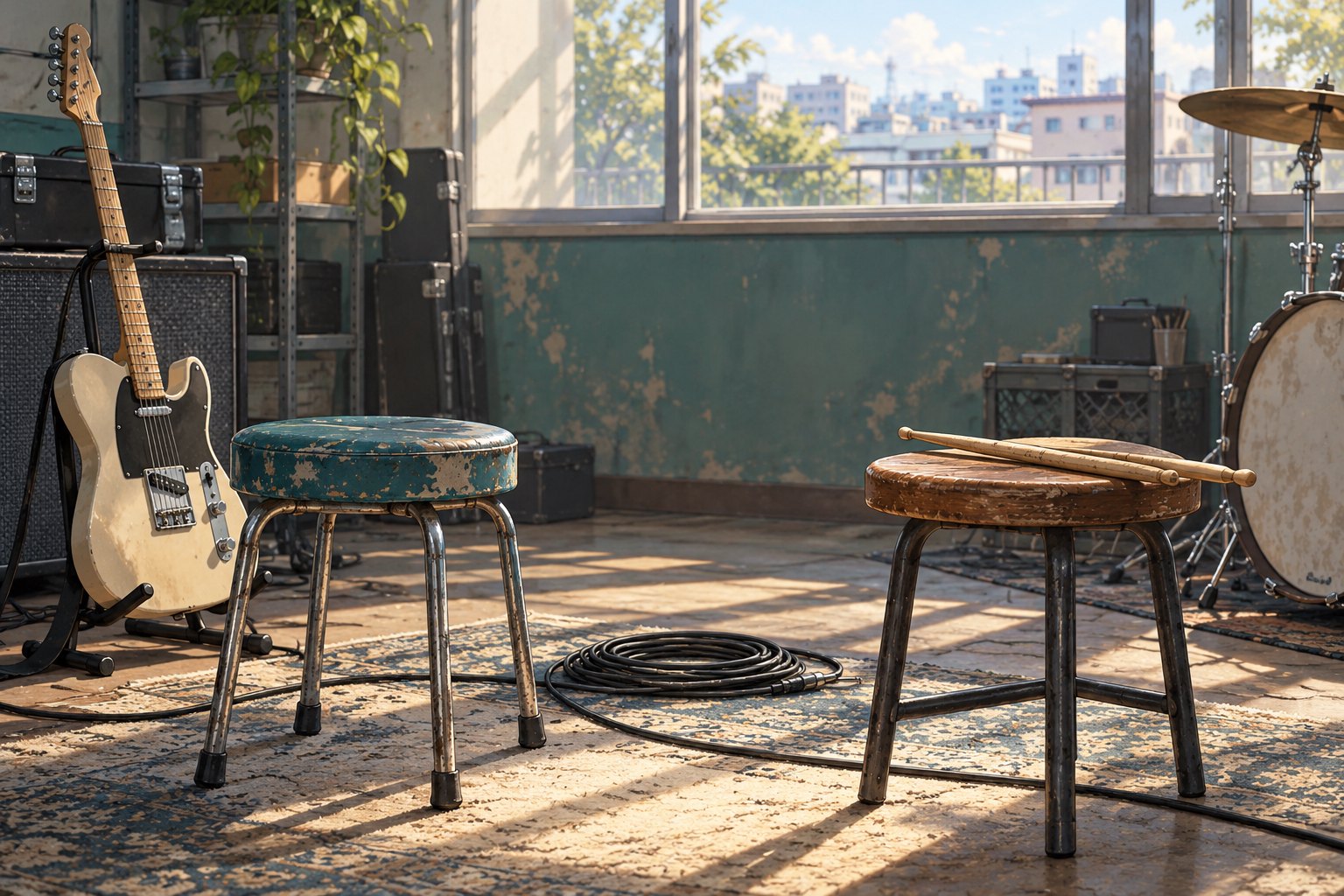
These are possibilities, not reported moments from the upcoming film. They describe the standard I would bring to its musical storytelling: sound should affect behavior. A polished sequence can impress the audience while leaving the characters exactly where they started. A less triumphant exchange can move a story much further.
Music also involves people and spaces beyond whoever receives the spotlight. Our discussion of musical ambition and influence in Ambler Theater's noir showcase explores a darker version of that relationship. The relevant connection here is the value of examining who makes a performance possible and what that support means to them.
What would make this story work as a movie?
A feature needs a satisfying shape of its own. That does not require inflated stakes or a spectacular climax. It requires development: an early situation should become harder to sustain, choices should have consequences, and the ending should leave the central relationship meaningfully altered.
My preference would be for emotional concentration. Give an important exchange time to unfold. Let a reaction complicate what has just been said. Allow silence to register before the next joke or musical cue arrives. Intimacy can justify a theatrical experience as convincingly as scale when the filmmaking directs our attention precisely.
The adaptation question resembles the one behind our consideration of what a Pokémon horror movie would need to preserve: changing a franchise's format creates opportunities, but the change itself is not an artistic achievement. The new form needs to illuminate the appeal that brought viewers there.
Recognition should reward attention, not replace emotion
Returning fans will naturally look for connections. The strongest callbacks work twice: first as clear details in the present story, then as something richer for viewers with additional knowledge. A scene should not stop making sense because someone lacks the background needed to recognize its significance.
It is too early to evaluate the film's dialogue, performances, or Easter eggs. Memorable lines deserve discussion in context, where delivery and consequence give them meaning. Assigning quotations or hidden references to an unseen movie would create expectations the film has never promised to meet.
The deeper opportunity: understanding how people become available to one another
To me, the most compelling reason for a prequel is the chance to reconsider something that once seemed ordinary. Support, confidence, and belonging can look effortless from the outside. An earlier story can reveal the decisions and uncertainty behind them without reducing a person to a single formative incident.
That is the opportunity worth watching in BOCCHI THE ROCK!'s 2027 film. If its past contains people pursuing immediate, imperfect hopes, the audience may return to familiar relationships with greater understanding. The best result would be more than knowing what happened earlier: it would be noticing more when we look again.
Original content by this site's editorial team. Published: November 1, 2026 at 06:49:23 PST (Los Angeles time)