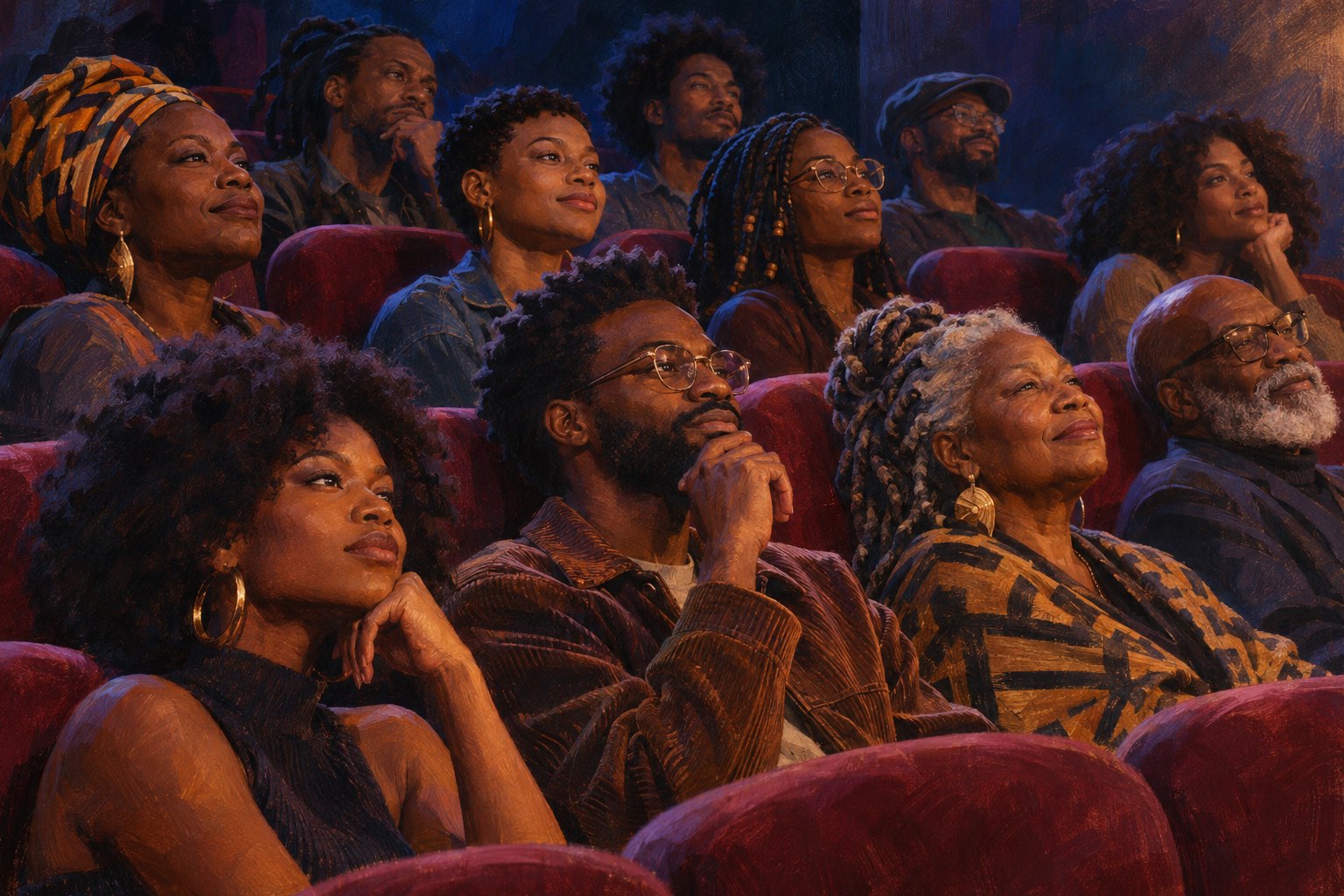
Black Harvest Film Festival is celebrating its 32nd year, with Block Club Chicago describing its lineup through the phrase “For Us, By Us.” That framing gives this edition a compelling subject beyond the anniversary: the relationship between the people making films, the lives those films portray, and the audiences they address.
For viewers, the most productive question is what that relationship makes possible on screen. Whose desires organize a story? Which experiences can remain specific without being explained? Who gets to be funny, difficult, mistaken, or unresolved? Those questions offer a useful way into Black Harvest’s anniversary and the broader value of Black cinematic authorship.
This is spoiler-free festival commentary, not a review of individual selections. The anniversary and the reported lineup framing are the starting points; the interpretation that follows concerns their artistic implications.
What “For Us, By Us” Can Mean for a Movie
The phrase joins two ideas that deserve separate attention. “By us” points toward authorship: the ability to decide which stories receive attention and how they take shape. “For us” concerns address: the audience a film imagines when it chooses what to explain, where to find humor, and which emotional details deserve time.
My reading is that the most exciting possibility lies in the connection between them. A filmmaker working from cultural familiarity can trust a gesture, a silence, or a disagreement to carry meaning. A scene need not interrupt its emotional movement to translate every detail for an imagined outsider.
That trust can also welcome unfamiliar viewers. Understanding a character does not require recognizing every reference immediately. Sometimes it requires watching patiently enough to discover what matters to that person. Specificity gives an audience something concrete to encounter; it need not become a barrier.
None of this establishes the quality or approach of a particular Black Harvest selection. It establishes a worthwhile critical expectation: the films deserve attention as distinct works, with individual voices and choices, rather than as interchangeable illustrations of a shared identity.
Start With What the Characters Want
A character-focused approach begins with desire. Before deciding what someone represents, ask what they want within the story. Affection, privacy, professional recognition, escape, forgiveness, and a quiet afternoon are different dramatic needs. A persuasive film makes those differences matter.
Then ask what the character risks by pursuing that desire. The answer may involve money or physical danger, but it can also involve embarrassment, loyalty, or the fear of disappointing someone. These smaller pressures often reveal the distance between a public identity and a private self.
For Black Harvest viewers, this approach offers a way to take representation seriously without reducing characters to examples. A protagonist should be allowed to have an unflattering motive. A supporting character should have interests beyond helping the lead grow. Two people from the same community should be able to disagree without the film treating one as a definitive spokesperson.
The decisive question is whether the filmmaking gives those people an interior life. Does a reaction shot let us reconsider an argument? Does the camera stay after someone else leaves? Does a change in sound draw us into a character’s attention? These are observable choices that turn a broad claim about perspective into something a viewer can assess.
Listen for Relationships, Not Just Quotable Lines
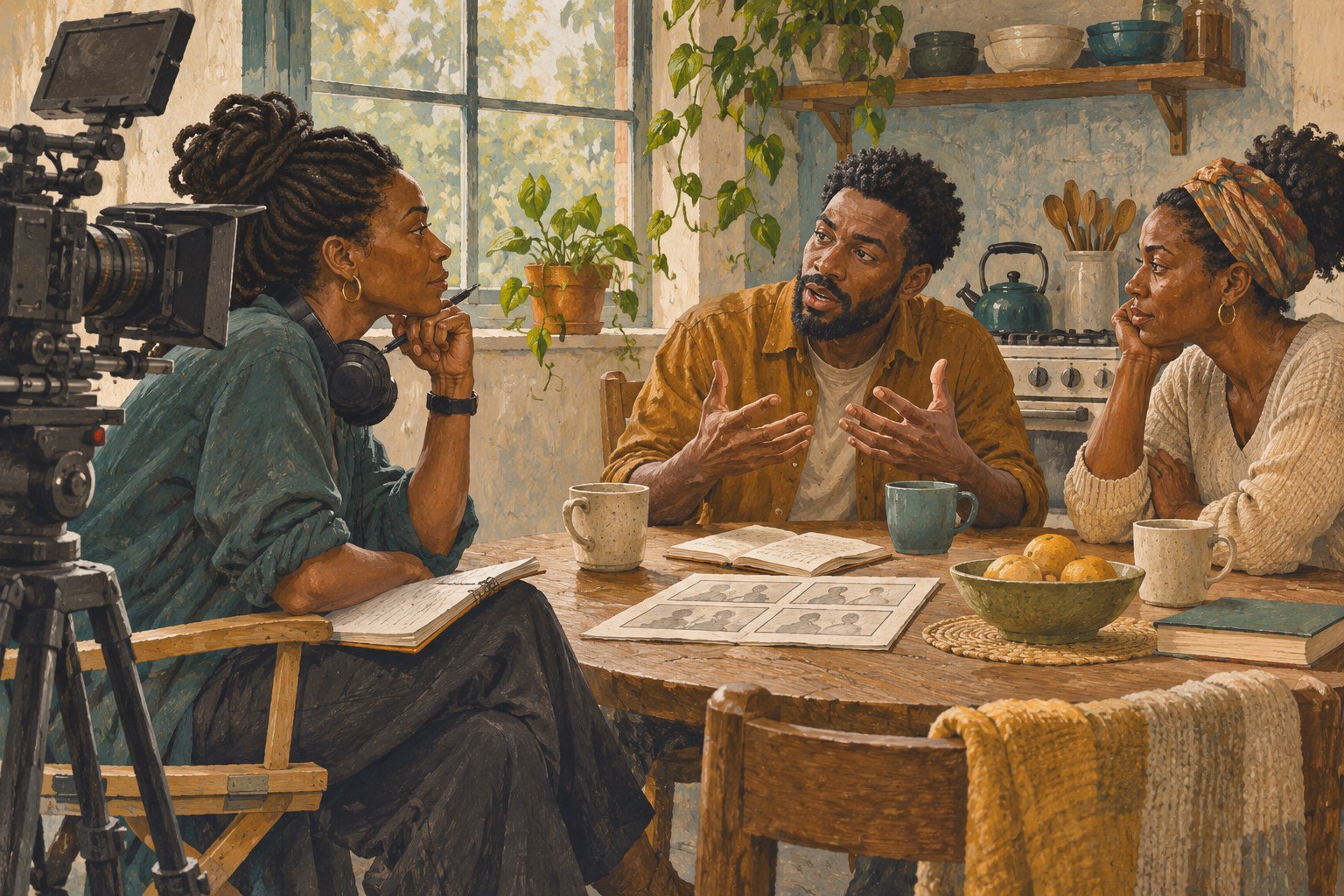
Memorable dialogue matters because of the relationship around it. A joke can protect someone from admitting fear. An ordinary greeting can reveal an old grievance. A repeated expression can shift from affection to accusation when the speaker’s circumstances change.
When watching a Black Harvest selection, listen for who can speak freely and who has to measure every word. Notice whether people interrupt one another, finish one another’s thoughts, or avoid the subject that plainly controls the room. Dialogue becomes characterization through these patterns, even when no single sentence announces the theme.
Silence deserves the same attention. A pause may express refusal, uncertainty, exhaustion, or comfort. The performance and surrounding images should help distinguish those possibilities. Calling every quiet moment profound would be as unhelpful as overlooking them all.
This is where close film criticism earns its conclusions. A review should connect its interpretation to an actual exchange, performance, or formal decision. A festival’s appealing premise cannot supply that evidence in advance.
A Shared Audience Can Hold Different Responses
The word “us” should leave room for disagreement. Black audiences are not a single taste category, and Black filmmakers need not share one aesthetic, political position, or definition of a satisfying ending. Taking the phrase seriously means allowing that plurality to remain visible.
One viewer may find an ambiguous ending liberating; another may find that the film has avoided its hardest question. Either response becomes more useful when it identifies what the ending actually does. Does it preserve a character’s uncertainty? Withhold information? Break a pattern the film has carefully established?
A festival provides an opportunity to discover differences like these across films and among viewers. The potential value of Black Harvest’s framing lies partly in making room for recognition without demanding agreement. Familiarity with a world can sharpen criticism as readily as it can deepen affection.
Our discussion of festival recognition and character perspective in We Are Aliens approaches a related distinction: recognition can direct attention toward a work, while critical judgment still depends on how that work tells its story.
How to Build a More Rewarding Festival Visit
For anyone considering Black Harvest, a thoughtful viewing plan starts with curiosity about individual films. Consult the current program for practical details, then look beyond the most immediately familiar subject. A surprising premise or unfamiliar storytelling approach may produce the richest conversation afterward.
- Choose for contrast. Where the program permits, pair films with different tones or forms. Contrasting experiences can make each filmmaker’s choices easier to recognize.
- Identify the central perspective. After a screening, ask whose knowledge and feelings shaped your understanding of events.
- Remember one precise moment. A gesture, edit, sound, or exchange provides firmer ground for discussion than a general declaration that a film was important.
- Separate preference from execution. Disliking a character or an unsettling ending does not automatically mean the filmmaking failed. Explain what the work attempted and whether its choices supported that aim.
If you are attending with others, our guide to choosing a shared moviegoing experience offers a complementary way to think about tone and expectations. Agreeing on the experience you want can be more useful than insisting that everyone leave with the same verdict.
The Deeper Promise of Black Harvest’s Anniversary
A 32nd year invites celebration, but the most interesting artistic promise of “For Us, By Us” is permission: permission to tell a culturally specific story without making every character carry the weight of universal explanation.
In my view, that freedom becomes meaningful when it produces particular people—people whose desires collide, whose humor has texture, and whose choices remain open to scrutiny. Celebrating authorship and demanding strong filmmaking belong together. Serious attention honors the work by considering its achievements and limitations with equal care.
Black Harvest’s anniversary offers an occasion to bring that attention into the theater. Watch for the person behind the premise, the relationship behind the dialogue, and the choices behind the camera. The most revealing question is what a film allows its characters to become once it gives them the room.
Original content by this site's editorial team. Published: November 4, 2026 at 00:46:46 PST (Los Angeles time)