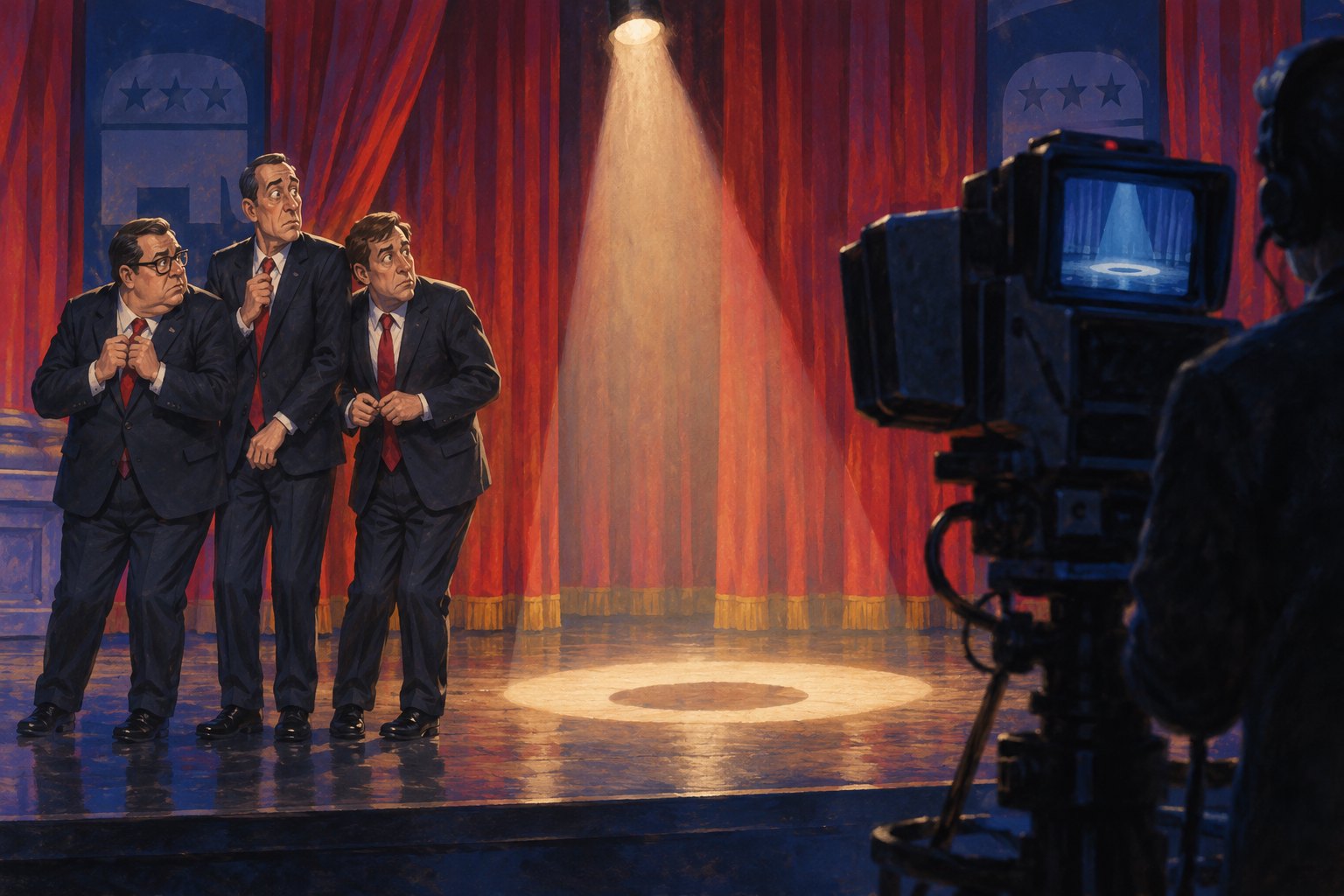
Armed police questioned an audience at a San Jose movie theater, according to a KRON4 video report. That is the central reported development. The reason for the questioning, the circumstances that prompted the response, and its outcome are not established here. Those distinctions matter for anyone looking for an explanation of what happened inside the theater.
For moviegoers, the setting gives the report particular resonance. A cinema is a place where people deliberately direct their attention away from their surroundings. Police questioning introduces an entirely different demand on that attention. The incident deserves scrutiny, but understanding it requires more than the immediate force of its description.
This is commentary on a reported theater incident. The accompanying illustrations are conceptual and do not depict the actual encounter.
What is reported—and what remains unanswered
KRON4 identifies the event as armed police questioning a movie audience in San Jose and presents it as a video report. That supports a narrowly framed account of the encounter. It does not, by itself, explain why officers were there or establish whether any audience member was suspected of wrongdoing.
Several questions remain essential: What brought police to the location? Who was being questioned, and for what purpose? What information did officers have before approaching the audience? How did the encounter end? Without verified answers, a confident narrative about the incident would outrun the available facts.
The wording also requires care. Questioning is not interchangeable with arrest. The presence of armed officers does not alone establish that shots were fired, that someone was injured, or that a particular threat existed. None of those outcomes should be added through implication.
The movie being shown is not established here, either. There is consequently no factual basis for connecting the police response to a film’s subject, its politics, or the people presumed to be attending it. The venue is relevant; an imagined connection to the programming is not.
Why the theater setting matters
The appeal of theatrical moviegoing depends partly on a shared agreement: sit together, dim the distractions, and give a story your attention. The same arrangement that makes a film absorbing can make an unexpected interruption difficult to interpret. People may receive information at different moments, from different positions in the room.
That observation describes the setting, not the emotions of this particular audience. It would be inappropriate to declare everyone terrified, reassured, angry, or confused without testimony. A roomful of people does not have a single perspective, even when everyone witnesses part of the same event.
From an audience-centered editorial perspective, the most useful follow-up would explain what patrons were told and when. Clear information can help distinguish an instruction directed at one person from an instruction meant for everyone. Whether such explanations occurred in San Jose remains an open question here.
For a film publication, this is a legitimate part of covering cinema culture. The experience of attending a movie includes the conditions in which people watch it. An incident inside a theater deserves attention without being repackaged as a review of whatever happened to be playing.
A video frame cannot supply every missing answer
Video can document conduct and preserve details that recollection misses. Its limits still matter. A recording has a beginning, an end, a camera position, and an area outside the frame. It may capture an encounter without capturing the information that preceded it.
That principle neither dismisses footage nor excuses anything it might show. It separates two questions: What does a recording demonstrate, and what additional evidence would explain it? An answer to the first should not automatically be treated as an answer to the second.

Readers assessing the San Jose report should keep the original recording, a publisher’s description, and subsequent commentary conceptually separate. An interpretation can become more assertive each time it is repeated, even when the underlying evidence has not changed. A caption assigning a motive is still a claim that needs support.
The same habit of separating evidence from conclusions applies elsewhere in film coverage. Our commentary on what opening-weekend numbers can and cannot tell audiences considers a different version of that problem: a striking piece of information can dominate discussion without answering every important question.
What meaningful follow-up reporting would clarify
A useful update would add an attributable explanation and a clearer sequence of events. It would distinguish what officials say prompted the response from what witnesses personally observed, then identify where those accounts agree or differ.
- The initiating circumstances: What reported concern brought police to the theater, and who is providing that explanation?
- The sequence: What happened before, during, and after the audience questioning?
- The communication: What instructions or explanations did patrons receive?
- The outcome: How did the encounter conclude, and what consequences, if any, were confirmed?
These are questions for further reporting, not a list of things presumed to have happened. An official statement could clarify the stated purpose of the response. Audience accounts could clarify what the encounter was like from a seat in the room. Each would contribute a different kind of information.
For readers deciding what to share, the practical test is simple: does a new account add verifiable information, or does it merely attach a stronger reaction to the same limited description? More emphatic language is not necessarily a substantive update.
The audience members are people, not roles in a story
Film criticism trains viewers to read expressions, pauses, and gestures for meaning. Applying that instinct to real incident footage requires restraint. A movie performance is shaped to communicate character. A stranger caught on camera has made no such agreement with the viewer.
Silence does not establish guilt. A visible reaction does not reveal a complete motive. Nor should anyone’s presence in a theater become an invitation for online spectators to identify them or invent a personal history. Our examination of audience responsibility when attention becomes online harassment addresses the broader importance of keeping scrutiny from becoming personal targeting.
The deeper issue raised by the San Jose report is the relationship between public attention and understanding. The encounter warrants questions because it involved armed police and a movie audience. Answering those questions responsibly means preserving the distinction between what was reported, what remains unknown, and what commentators believe should happen next. The people in that theater deserve an accurate account of their experience, with room for evidence that a headline alone cannot provide.
Original content by this site's editorial team. Published: October 4, 2026 at 16:49:20 PDT (Los Angeles time)