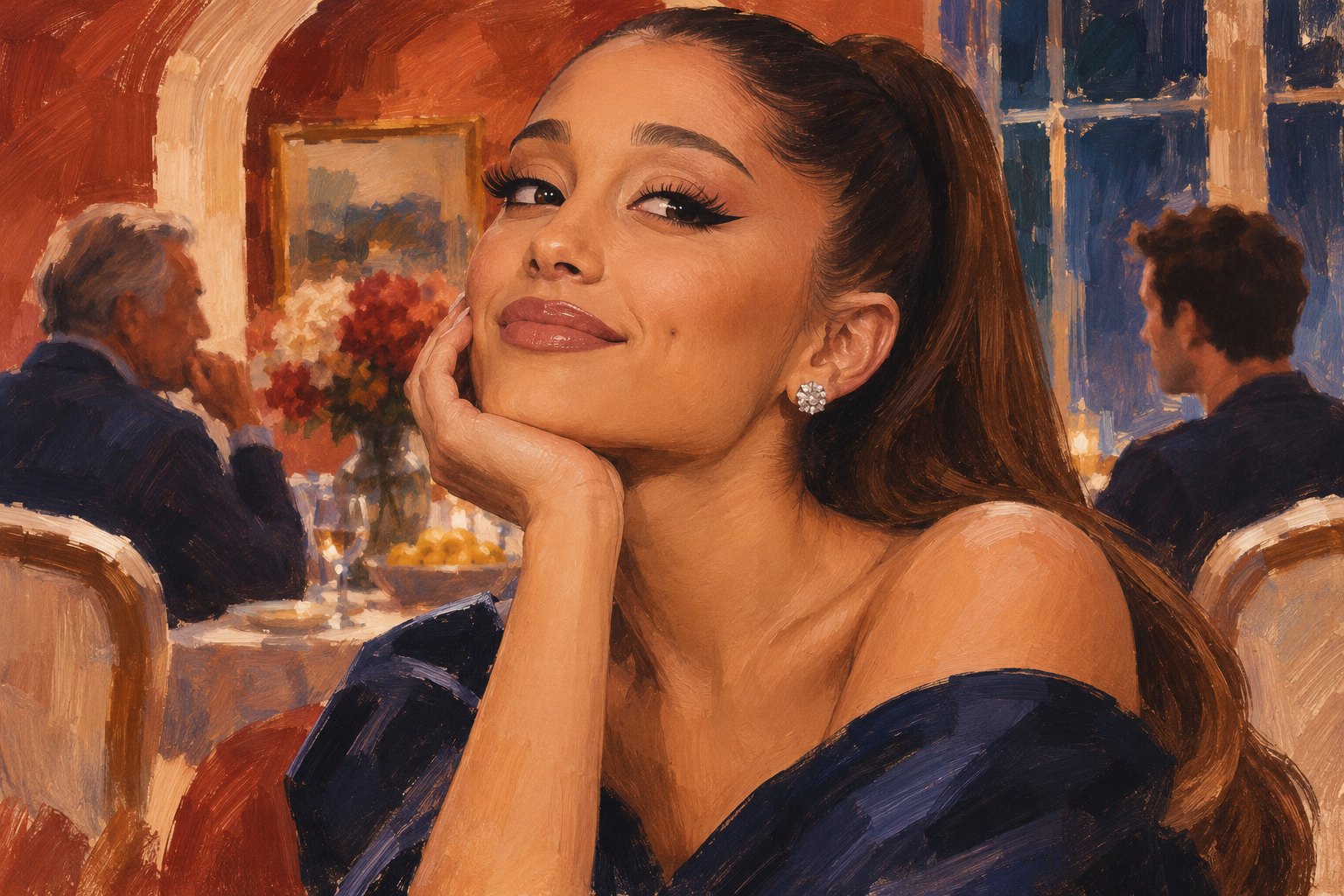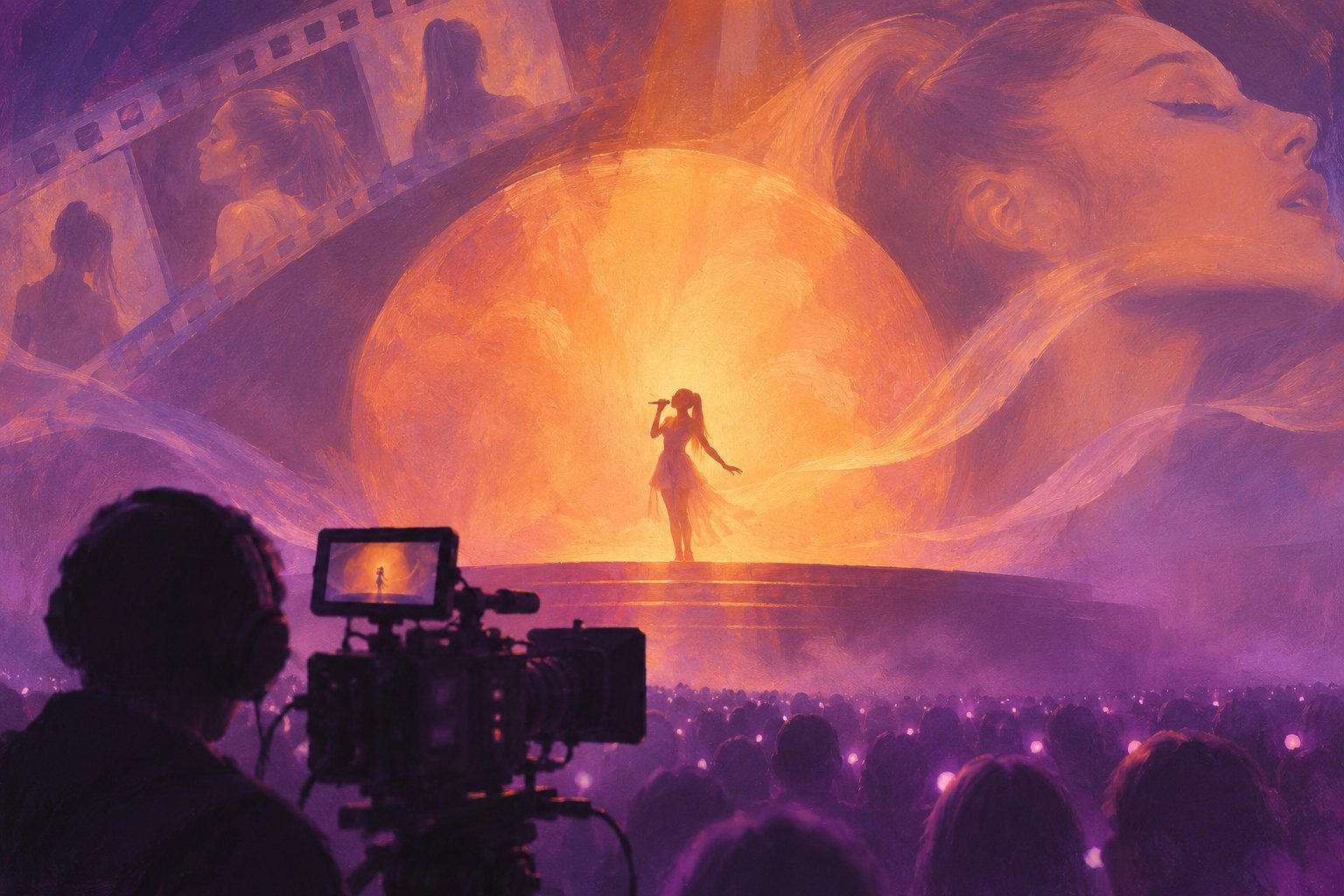
Ariana Grande’s Eternal Sunshine Tour is getting both a concert film and a documentary, according to ELLE. For viewers interested in her work as a screen presence, the pairing offers an appealing possibility: watching a performance take shape, then seeing how a camera transforms it into a movie. The central question is what each format can reveal that the other cannot.
This is a spoiler-free critical preview, not a review of the completed films. The reported projects provide a starting point for discussing their cinematic potential. Their finished scenes, editing choices, dialogue, and emotional impact should be judged through viewing, rather than inferred from an announcement.
One performer, two different kinds of attention
A concert film invites us to experience an event. A documentary can invite us to understand the decisions surrounding it. Those purposes overlap, but they create different expectations. A performance might need to sustain an uninterrupted musical passage; a documentary might gain more from stopping to examine why that passage exists.
Grande is the central subject in both cases, yet the relationship between subject and viewer changes. Onstage, an expressive gesture can communicate across a large room. Onscreen, the same gesture becomes available for close inspection. In documentary footage, its preparation could become the story. These are possible approaches, not descriptions of footage already assessed.
My interest in the pairing lies in that shift of perspective. Two projects become worthwhile when they give the audience different ways of looking. Simply repeating the most flattering images would leave much of the opportunity unexplored.
How a concert film builds its central character
Calling a real performer a film’s central character requires care. Grande is a person, not a fictional role whose motives a critic can freely explain. Nevertheless, a concert movie constructs a screen portrait through selection: which expressions receive close-ups, which transitions remain visible, and which interactions establish relationships with the audience.
Consider a hypothetical sustained shot of a singer completing a demanding phrase. Staying with the performer lets viewers register timing, breath, concentration, and release. Cutting to the crowd at that instant changes the emphasis. The emotional subject becomes the audience’s response. Neither choice is automatically superior, but each tells a different story about what matters.
That distinction is especially useful when approaching Grande through both music and acting. Our discussion of Grande’s role in the family dynamics of Focker In-Law considers performance within a fictional relationship. A concert film creates another kind of relationship: the one between an artist, the people in the room, and viewers encountering the event later.
The strongest screen portrait would give those relationships room to develop. Constant visual emphasis can flatten a performance by treating every moment as equally momentous. A quiet transition may make the next burst of movement feel larger; a held expression may communicate more than another sweeping view of the venue.
The camera should make the music easier to see
Concert filmmaking has a practical challenge: translating an experience designed for a physical space into an experience organized by a frame. A viewer at a show can choose where to look. A movie viewer inherits the director’s choices.
Wide shots can establish how bodies, lighting, and scenery relate. Medium shots can preserve movement while keeping a performer’s expression readable. Close-ups can reveal details that would disappear from a distant seat. A thoughtful sequence of these perspectives gives the screen audience a coherent sense of space.
For the Eternal Sunshine Tour film, one useful test will be whether the images help us understand the performance or merely announce its scale. Rapid editing can create excitement, but it can also interrupt a movement before we appreciate its shape. Visual energy becomes more satisfying when the viewer can follow what generates it.
Sound deserves equally close attention. The balance among a lead voice, musical accompaniment, and crowd response determines our perceived distance from the stage. Our examination of how singing voices shape screen characters explores a related idea: vocal expression carries dramatic information. In a concert movie, the mix helps decide how clearly that information reaches us.
A documentary earns intimacy through specific decisions
A documentary about Grande and the tour has a different opportunity. It could show how artistic preferences become practical choices, how collaborators interpret an idea, or how a performer evaluates whether something works. These are questions the format makes possible, not promises about the project’s contents.
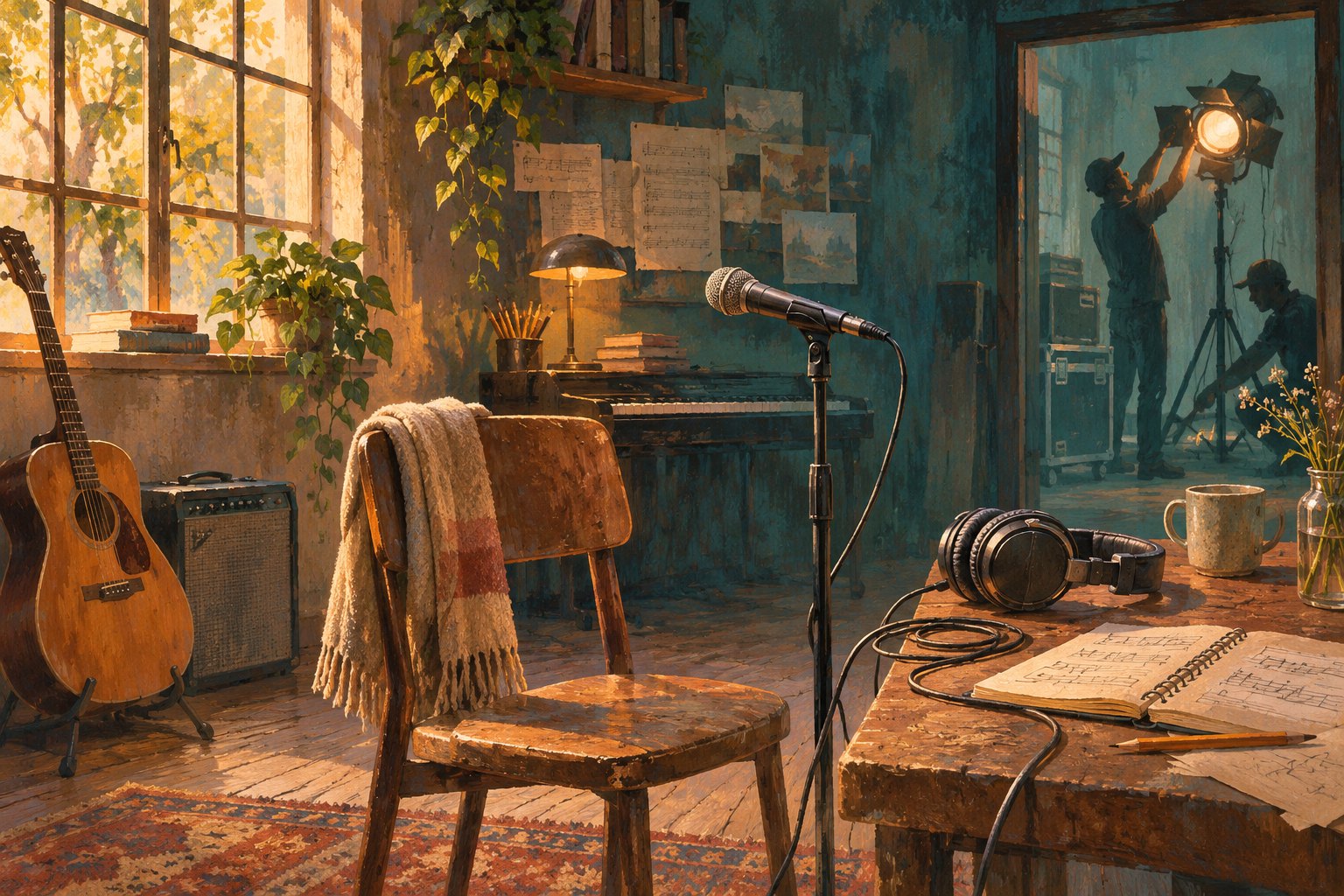
Intimacy does not require personal disclosure. Watching someone listen carefully, reconsider a choice, or explain a preference can reveal a great deal about their working personality. A documentary can respect its subject’s privacy while remaining observant and specific.
Imagine, as a general example, a rehearsal sequence in which an arrangement changes. The meaningful material would include what prompted the adjustment, how another musician responded, and what became different afterward. A montage of busy people accompanied by praise might establish effort, but it would explain less about the work.
Collaboration also matters to the portrait of Grande. Giving colleagues distinct contributions would help viewers understand the environment in which she makes decisions. A central subject often becomes more interesting when the film allows other people to have expertise, perspectives, and agency of their own.
What to watch for when assessing the two projects
The announcement establishes the pairing; it does not establish its artistic success. A useful viewing approach is to ask what each film makes newly visible:
- Performance continuity: Can musical and physical passages unfold long enough for their shape to register?
- Creative specificity: Does the documentary explain consequential choices through observable examples?
- Audience perspective: Do crowd reactions develop a relationship, or simply punctuate the spectacle?
- Distinct purposes: Does seeing one project change your understanding of the other?
These questions leave room for different filmmaking styles. A highly stylized concert film can be expressive, and a restrained documentary can be absorbing. The standard is whether the chosen approach creates understanding and feeling, rather than whether it conforms to a single idea of authenticity.
The deeper promise: seeing how presence is made
The most compelling possibility here is a fuller understanding of stage presence. From the audience, a performance can appear immediate and instinctive. Documentary storytelling can potentially make the judgment, repetition, and shared effort behind that impression visible.
That knowledge need not diminish the pleasure of the concert. It can sharpen attention. Once viewers understand a creative decision, they may recognize its effect in a pause, a change of emphasis, or the relationship between sound and movement.
For Grande’s Eternal Sunshine Tour projects, that would be a meaningful cinematic achievement: allowing the performance to retain its emotional force while helping us see the choices that sustain it. The concert film can give us the event as a screen experience. The documentary’s opportunity is to make us look and listen differently when we return to it.
Original content by this site's editorial team. Published: November 26, 2026 at 17:14:24 PST (Los Angeles time)