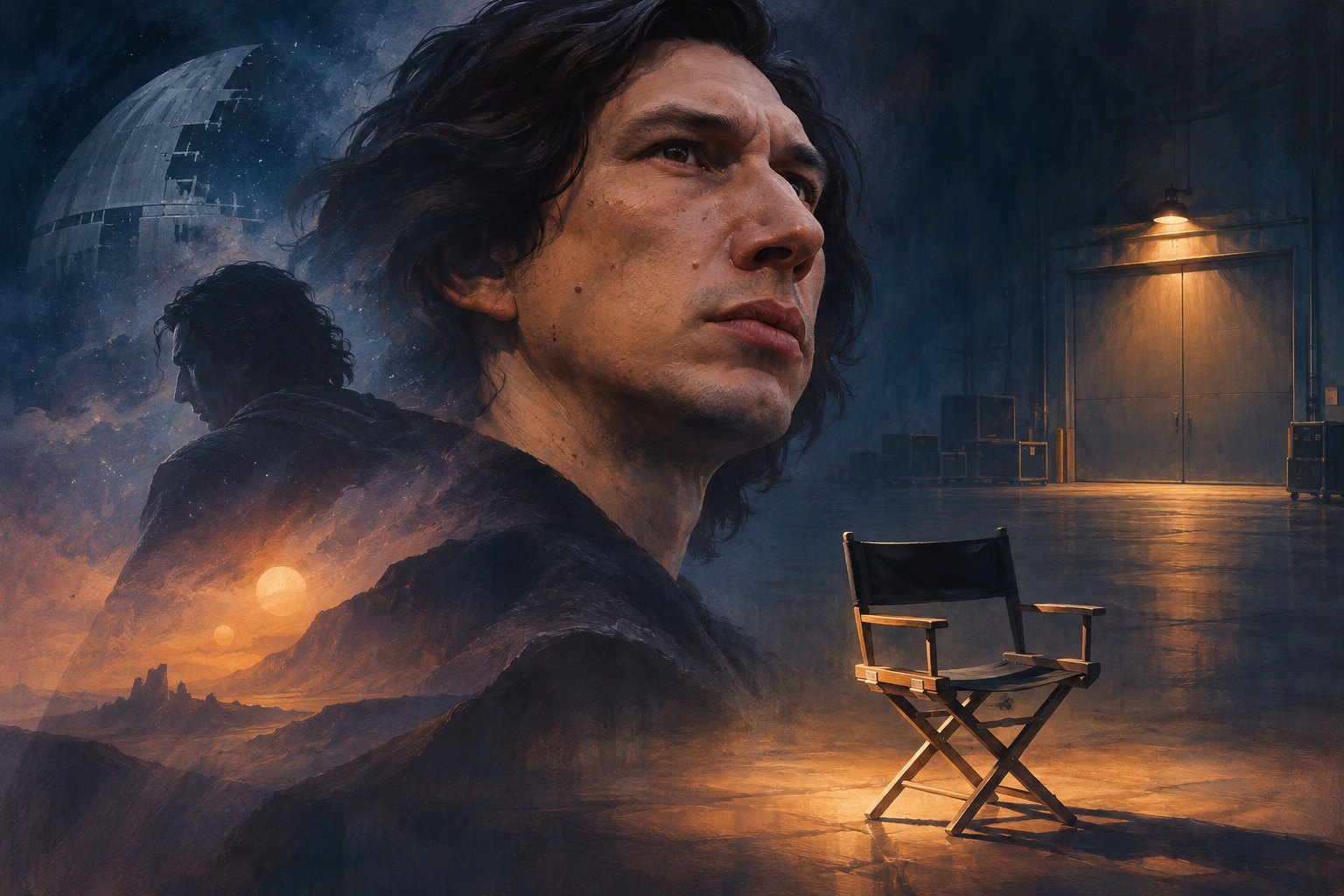
Adam Driver’s disappointment over The Hunt for Ben Solo touches a weakness in the way Star Wars ended its most conflicted sequel character. According to Variety, Driver described Disney’s decision to kill the project as feeling “criminal,” pointing to Steven Soderbergh’s interest in making a Star Wars movie. His frustration is understandable: an actor invested in a character and a filmmaker eager to enter that universe suggest an opportunity worth considering.
They do not establish that the proposed film would have worked. The stronger argument for another Ben Solo story comes from the films themselves. They show him abandoning cruelty, but give him almost no opportunity to practice a different way of living. His final choice is moving; the life that choice might have made possible remains unexplored.
Major spoilers follow for The Force Awakens, The Last Jedi, and The Rise of Skywalker. This is a retrospective character analysis prompted by Driver’s comments, not a review of the unmade project.
What Driver’s objection establishes—and what it leaves open
The reported remarks establish Driver’s dissatisfaction with Disney’s decision and his enthusiasm for the prospect of Soderbergh directing Star Wars. They do not, by themselves, establish the proposed story’s timeline, its solution to Ben’s death, or the studio’s complete reasoning. Reading a finished narrative into the title would turn anticipation into invention.
Driver’s word “criminal” is best understood here as an expression of creative frustration. The interesting issue is whether a promising collaboration was worth pursuing. An actor’s commitment can be a powerful reason to develop material, but commitment and execution remain different things.
That distinction also matters in our discussion of why an actor-director pairing ultimately depends on the role. A recognizable name creates interest. A character with difficult choices gives that interest somewhere to go. Ben has those choices in abundance, even before anyone imagines another adventure.
Kylo Ren makes cruelty look like an achievement
Driver’s most effective work as Kylo Ren makes evil seem effortful. My reading of the performance is that this man keeps trying to suppress feelings he considers humiliating. His anger becomes frightening because it accompanies uncertainty rather than replacing it. He wants the authority of someone who never needs reassurance, while repeatedly revealing that need.
In The Force Awakens, his confrontation with Han makes that contradiction devastating. “I know what I have to do” sounds, briefly, like the beginning of an admission. Instead, he kills his father. The scene makes vulnerability dangerous: Han recognizes his son’s anguish, but recognition cannot protect him from what his son chooses.
That choice should remain central to any sympathetic interpretation. Ben’s pain helps explain his behavior without making his victim responsible for resolving it. Driver allows us to see someone suffering inside a perpetrator. The performance becomes less interesting if we turn that suffering into proof that the perpetrator has already earned forgiveness.
From Ben’s perspective, destroying a family bond promises freedom from emotional dependence. From Han’s perspective, reaching out is an act of trust. Holding both perspectives together is what gives the scene its force. The tragedy belongs to the person killed as much as to the person who must live with the killing.
Rey exposes the limits of his rebellion
“Let the past die,” Kylo tells Rey in The Last Jedi. The line has the appeal of liberation, especially coming from someone burdened by family history. Yet his behavior makes it a deeply unreliable philosophy. He can reject an authority figure without rejecting domination.
Killing Snoke and fighting alongside Rey create the possibility of change. His subsequent offer to rule together closes that possibility on his terms. He wants companionship, but the arrangement he proposes still places power at its center. Rey’s refusal reveals the distance between wanting someone beside you and respecting the life that person chooses.
For me, this is the essential tension in their relationship. Rey can perceive his capacity to change without being obliged to endorse his present choices. Her compassion does not make her an instrument of his recovery. A story centered on Ben would lose something vital if everyone else existed merely to recognize his goodness.
The same standard applies across returning franchises: emotional investment needs people whose interests matter independently of the familiar figure. Our examination of why a franchise return needs characters worth caring about approaches that problem from horror. Here, the crucial supporting perspective belongs to anyone Ben has harmed or tried to control.
The Rise of Skywalker gives Ben a choice, then ends his future
Ben’s turn in The Rise of Skywalker arrives through an accumulation of mercy and loss. Leia reaches him during his duel with Rey. Rey wounds him, then heals him. His encounter with the memory of Han leads to his abandonment of the Sith lightsaber.
The scene with Han works because it brings the conflict down to an intimate scale. Ben cannot undo his father’s death. He can stop treating that death as a commitment to further violence. Remembering love becomes a way to choose differently rather than another reason to punish himself and everyone around him.
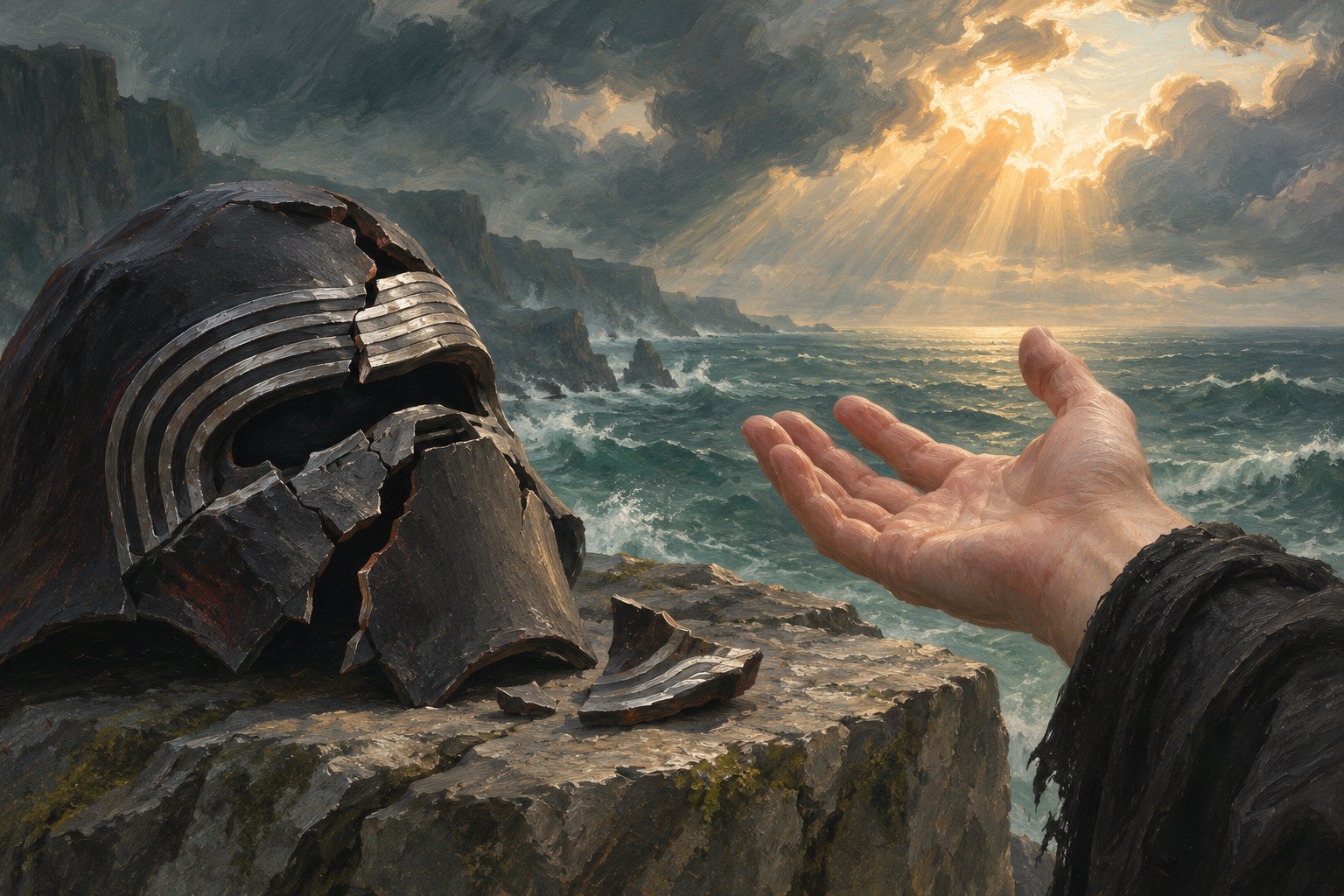
His final sacrifice makes that change concrete: Ben gives his life to restore Rey. Someone who repeatedly sought control finally gives without securing a future benefit. On that level, the ending is emotionally coherent.
My reservation is about its compression. The film places recognition, changed behavior, and death so close together that redemption becomes almost entirely a climactic act. Ben never has to sustain his new convictions through an ordinary disagreement, accept another person’s distrust, or do good without being welcomed for it.
That absence is not a plot hole. It is a consequence of the ending’s dramatic design. Sacrifice supplies a decisive conclusion, while survival would introduce slower, less easily resolved conflicts.
What another Ben Solo story would need to earn
This is where the case for more Ben Solo becomes persuasive as criticism, even without knowing Soderbergh’s proposed approach. A further story could examine the difference between rejecting an identity and accepting responsibility for what one did while inhabiting it. That is a possibility, not a claim about the canceled project’s screenplay.
Any continuation would also owe the existing ending serious consideration. Ben’s death has emotional weight because his gift to Rey costs him something final. A return that treated that cost casually could weaken the very moment that makes viewers want more of him.
The dramatic standard should therefore be demanding: preserve Rey’s independence, allow injured people their own judgments, and give Ben a goal beyond proving that he deserves affection. Remorse becomes dramatically useful when it changes conduct under pressure. Simply announcing that he is now good would leave the hardest work untouched.
The unfinished question is about living with change
Driver’s frustration resonates because Ben’s ending resolves his allegiance more completely than it explores his humanity. He stops choosing domination. We never see what happens when that decision must become a habit.
My deeper reading of the trilogy is that Ben mistakes emotional numbness for strength until he finally accepts the vulnerability he has fought. His sacrifice expresses that acceptance beautifully. It also closes the door just as a different kind of character study becomes possible.
That does not make The Hunt for Ben Solo a lost masterpiece by default. It makes the creative opportunity legible. The most compelling reason to revisit Ben would be to ask what goodness requires after the grand gesture—when forgiveness is uncertain, the past remains real, and choosing differently must happen again tomorrow.
Original content by this site's editorial team. Published: November 14, 2026 at 16:00:40 PST (Los Angeles time)