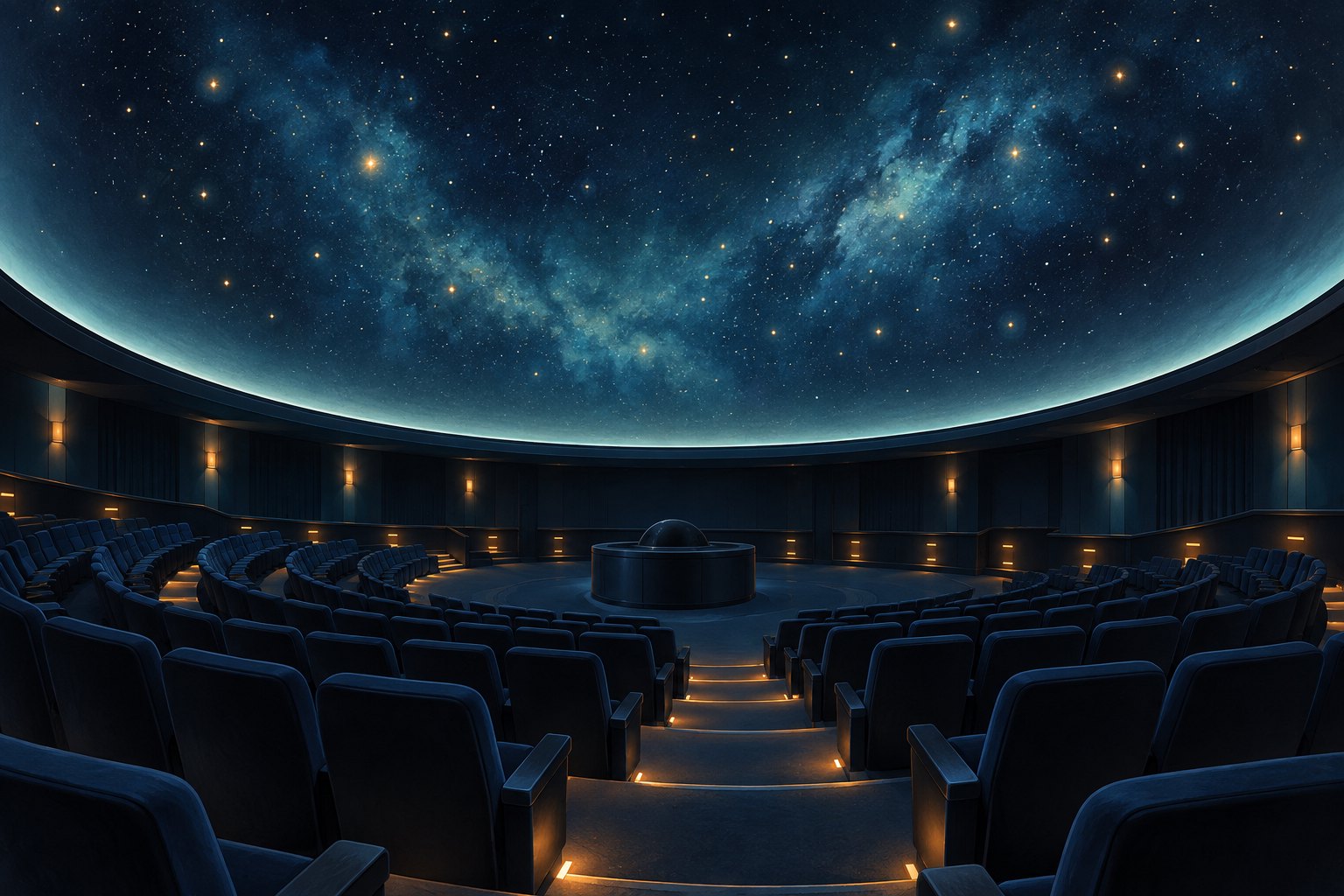
A planetarium will host the premiere of a director’s film, according to an announcement from West Virginia University’s E-News. For moviegoers, the setting is the immediate point of interest: it invites questions about how the film will be presented and whether its surroundings will become part of the experience.
The available announcement establishes that basic event, but this coverage cannot confirm the film’s title, the director’s identity, its story, or attendance arrangements. Those limits matter. A planetarium venue alone does not establish a space-themed subject, a documentary format, or imagery designed to fill a dome. What follows is a spoiler-free critical preview of the screening’s possibilities, rather than a review of an unseen film.
What the Premiere Announcement Establishes
The news connects a filmmaker’s work with a particular kind of exhibition space. It does not, on the information verified here, establish whether this is a world premiere, a local debut, or the first presentation at that venue. Readers should also distinguish a premiere event from a wider release: one screening does not establish when a film will become available elsewhere.
That distinction is especially useful for anyone deciding whether to attend. The immediate practical questions concern the exact title, screening date, reservation requirements, running time, and presentation format. A filmmaker introduction or audience discussion would be another reason to go, but neither should be assumed simply because the event is described as a premiere.
There is nevertheless a worthwhile film-culture story here. An unusual venue can encourage viewers to approach a screening with fresh attention. The critical challenge is to identify what the film contributes to that experience, rather than letting the novelty of the room determine the verdict.
The Venue Raises a Specific Question About Format
The first question to ask is straightforward: will the movie use the dome, or will it be presented as a conventional framed image within the space? These possibilities create different expectations. Until the format is confirmed, describing the premiere as an immersive film experience would get ahead of the evidence.
For a work composed for a surrounding image, directing attention becomes an especially interesting artistic problem. A filmmaker might use movement, brightness, sound, or stillness to establish where viewers should look. The useful question is whether those choices help an audience follow an idea or an emotional development. Filling the available surface is not, by itself, an expressive achievement.
A conventional presentation invites a different assessment. There, the relationship between the rectangular frame and the larger room may be incidental to the movie’s construction. Viewers should be able to enjoy the distinctive setting without treating it as proof that the director conceived the work for that environment.
Our discussion of how framing changes what viewers can understand approaches a related problem through sports footage. The connection is attention: seeing more becomes useful when the image helps us understand the relationship between its details.
Following a Perspective, Whatever the Screen Size
A character-centered reading of this film will require access to the film itself. No responsible analysis can assign motives, relationships, or turning points to people whose presence in the story has not been established. Still, perspective offers a concrete way to approach the eventual screening.
If the film follows characters, watch how it controls the distance between their knowledge and yours. Are you discovering something with them, anticipating something they cannot see, or reconsidering an earlier impression? A revealing shot earns its force through that relationship. Its significance depends on whose experience it changes.
If the work is nonfiction or primarily visual, a similar question remains useful: whose understanding organizes the material? A narrator, an observed participant, or the sequence of images may provide the guiding perspective. The important distinction is between being shown something impressive and being helped to understand why it matters.
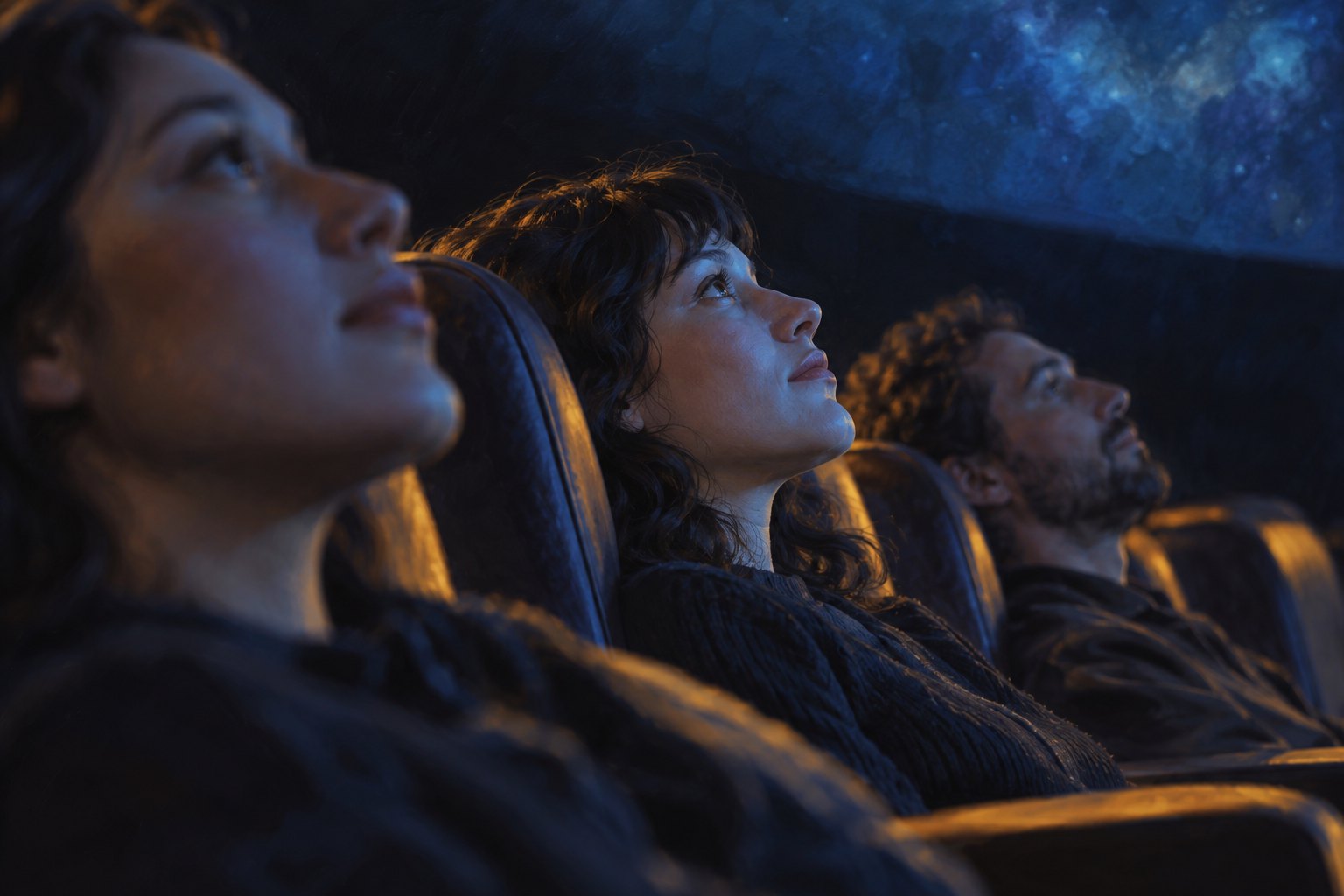
My critical preference is for spectacle that changes a viewer’s relationship to the subject. An expansive image can express vulnerability, isolation, curiosity, or connection. Its emotional meaning must emerge from context. Without that context, even a striking visual may remain a beautiful interruption.
Listen for What the Images Leave Unsaid
Sound deserves attention alongside the venue’s visual possibilities. At the screening, consider whether the soundtrack directs your attention toward something meaningful, gives an image room to develop, or supplies an emotion that the scene has not earned. These are questions to test against the finished work, not claims about its score or sound design.
The same care applies to language. A memorable line can crystallize a character’s outlook or sharpen the central idea of a nonfiction film. Quoting it meaningfully requires knowing who speaks, what precedes it, and whether later events complicate its apparent meaning. No dialogue or narration from this film has been verified here, so attributing memorable lines to it would be misleading.
That relationship between intention and execution also informs our commentary on the purpose behind Bruce Springsteen’s concert film. A stated ambition can guide attention, but the images, performances, and editing must give it substance.
What to Check Before Making Plans
For readers interested in the premiere, the most useful next step is to establish the event details with the organizer. A short checklist can prevent the announcement’s intriguing setting from obscuring basic questions:
- Identify the work: confirm the official film title, filmmaker credit, and synopsis.
- Confirm access: check the date, start time, admission terms, and whether reservations are required.
- Clarify the presentation: ask whether the film uses full-dome imagery or a conventional screen format.
- Check viewing needs: establish captioning, accessibility, running time, and any guidance about moving imagery.
These details are currently unresolved in this coverage. They should shape attendance decisions more directly than assumptions about what a planetarium premiere must involve.
The Artistic Promise Behind the Setting
The most interesting possibility raised by this premiere is a change in how closely people look. A distinctive room can interrupt familiar viewing habits and make an audience more conscious of its own attention. Whether the movie makes productive use of that attention remains an open question.
For me, the strongest eventual test is what survives beyond the setting: a perspective made clearer, a relationship understood differently, or an image whose meaning continues to develop after the screening. The planetarium gives this premiere an intriguing frame. The film’s achievement will depend on what it asks viewers to see within it.
Original content by this site's editorial team. Published: September 16, 2026 at 05:53:03 PDT (Los Angeles time)