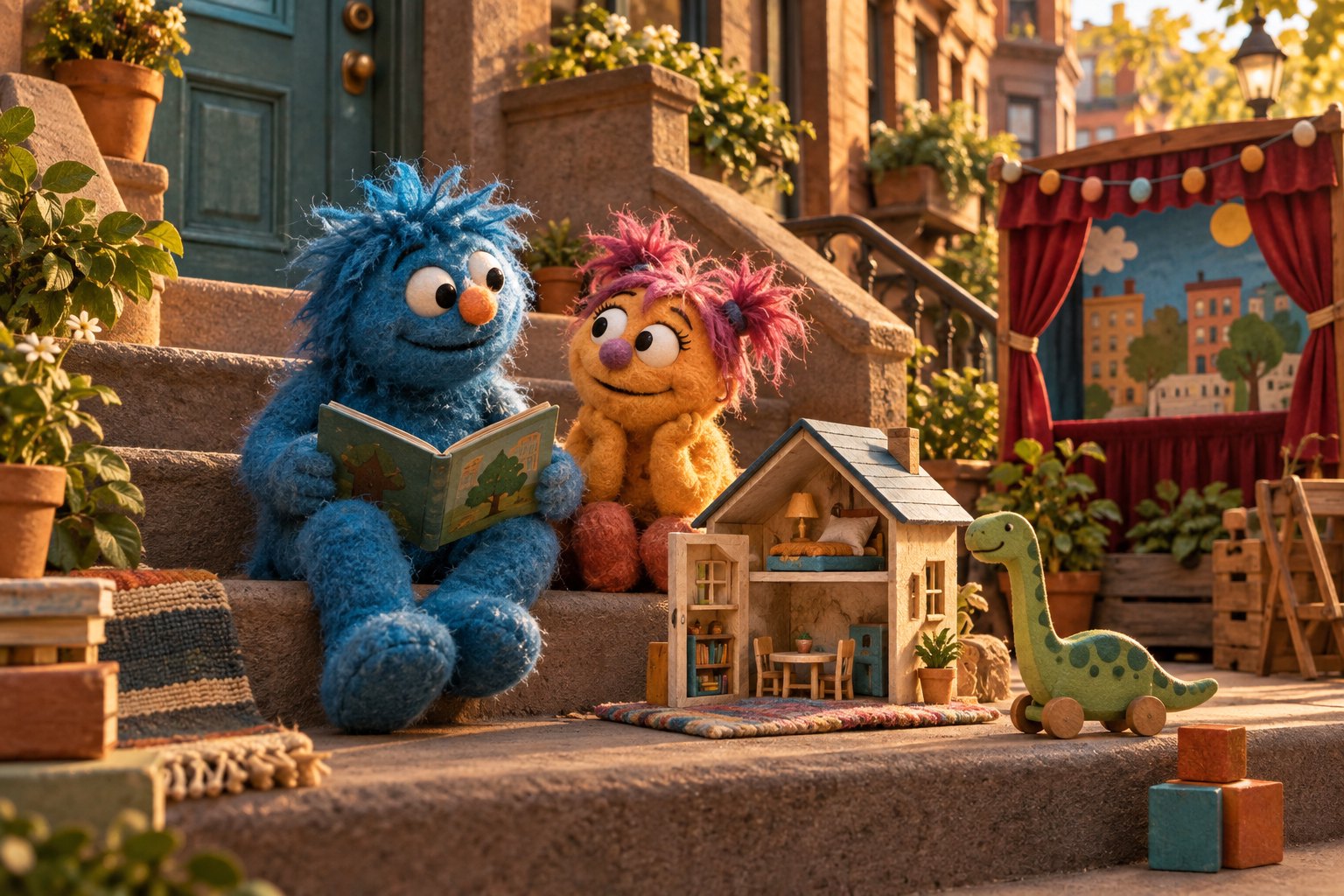
A new Sesame Street film is in the works, while more Gabby’s Dollhouse and Bad Dinosaurs are part of Netflix’s kids slate, according to Deadline. For families, the immediate appeal is straightforward: familiar titles are getting more room to grow. The more interesting creative question is whether that growth will give their characters something worth doing.
This is a development-stage commentary, not a review of a completed movie. The announcement does not provide a basis for judging the new film’s performances, dialogue, plot, or ending. Its promise lies in the possibilities of the project. Those possibilities deserve attention without being mistaken for achievements already on screen.
What the announcement means for your watchlist
The useful distinction is between a film being developed and a film being ready to watch. A development announcement signals work on a project; it does not, by itself, establish a release date or a finished story. Likewise, the inclusion of more Gabby’s Dollhouse and Bad Dinosaurs should not be read as proof that every title in this group is getting a feature film.
For now, the new Sesame Street movie belongs on an interest list rather than a dated family viewing calendar. Readers looking for a broader scheduling perspective can also consult our Netflix fall movie preview and guide to announced releases. The practical question here remains what form these particular projects will take and what viewing experience each will offer.
My initial reaction is cautiously positive. Returning to a familiar world can give a story a useful emotional starting point. But recognition only opens the door. The writing still has to create curiosity, sustain attention, and earn an ending.
The Sesame Street film needs a character’s reason to exist
The first question I would ask of a new Sesame Street feature is whose experience organizes the movie. An ensemble can fill a frame with appealing personalities, but a feature needs an emotional line that viewers can follow. Someone must want something, encounter resistance, and make choices that change the situation.
That does not require an enormous threat. From a young character’s perspective, being misunderstood or struggling to join a group can carry substantial dramatic weight. These are examples of the scale of conflict that could support a children’s film, not descriptions of this project’s undisclosed story. The important point is proportion: the audience needs to understand why the problem matters to the person facing it.
A film also gives relationships time to develop. One character might initially misunderstand another’s needs; a later choice can show that the misunderstanding has been corrected. That progression is more satisfying than having a narrator announce a lesson. It lets children recognize growth through behavior.
My preference would be for a feature that protects those moments even when the action gets bigger. A pause before an apology, a friend noticing someone has gone quiet, or a joke that reveals impatience can do essential storytelling work. Scale should make those relationships easier to feel, rather than crowding them out.
More Gabby’s Dollhouse should mean more agency
The creative test for additional Gabby’s Dollhouse material is slightly different. Expansion needs to provide a reason to spend more time with a character beyond the pleasure of recognition. A new setting or activity can attract attention, but the protagonist’s decisions should make that setting matter.
Agency is a useful standard here: does the central character notice a problem, try an approach, respond to a setback, and influence the result? Or does the story move forward while the character merely welcomes each new attraction? Both can produce busy entertainment. Only the former consistently gives a viewer someone to follow.
For an imaginative children’s project, a failed attempt can be particularly valuable. It creates suspense without requiring a frightening villain and makes the eventual solution feel earned. The crucial detail is whether the character changes their approach. Repeating encouragement is less dramatically persuasive than showing what persistence actually looks like.
These are expectations for the announced expansion, not claims about new episodes or scenes. The strongest outcome would offer a distinct emotional experience within a recognizable world: familiarity that supports discovery.
Bad Dinosaurs needs comedy with consequences
For Bad Dinosaurs, the title invites expectations of trouble. The critical question for further installments is what makes that trouble funny. A succession of mishaps can provide movement, but comedy becomes more engaging when viewers understand a character’s intention before everything goes wrong.
Consider the underlying mechanics of a visual gag: establish a goal, make the obstacle legible, and allow the attempted solution to produce a surprise. This is a general comic principle, not a description of an announced sequence. Its usefulness is that it gives even a simple action a miniature story.
Character makes repetition worthwhile. The same mistake can reveal stubbornness on one occasion and misplaced confidence on another. A reaction can be as funny as the incident itself. More material will feel creatively justified if it finds new behavior within familiar personalities, rather than merely increasing the size or frequency of disruptions.
That standard also matters when recognizable properties add fresh attractions. Our commentary on The Simpsons’ guest-star spotlight considers a related issue: an attention-getting addition still needs to serve character and comic timing.
What parents can look for when footage arrives
Trailers and previews will eventually offer a firmer basis for deciding which of these projects suits a household. Three questions can help cut through the excitement of an announcement:
- Can you identify the character’s goal? A clear desire gives children a way into the story.
- Does the pace leave room for reactions? Understanding how someone feels often requires a moment after the action.
- Do choices affect the outcome? Cooperation, curiosity, and persistence carry more weight when the story makes them consequential.
None of these questions demands solemn entertainment. An exuberant joke can reveal personality; a quiet exchange can be playful. The distinction is whether each moment contributes to an experience a child can understand and enjoy.
The deeper promise is being understood
What connects this slate, from a critical perspective, is the opportunity to treat young viewers’ feelings as worthy subjects. A child does not need a world-ending crisis to understand disappointment, pride, embarrassment, or relief. Those emotions already have scale.
The new Sesame Street film is the headline attraction, but all three projects face the same underlying test: can they turn familiarity into an encounter with a character whose choices matter? That is where my interest lies. A successful expansion should leave viewers remembering more than the return of a favorite face. It should give them a particular moment of recognition—someone trying, stumbling, and finding a way forward that feels true.
Original content by this site's editorial team. Published: September 27, 2026 at 05:43:08 PDT (Los Angeles time)