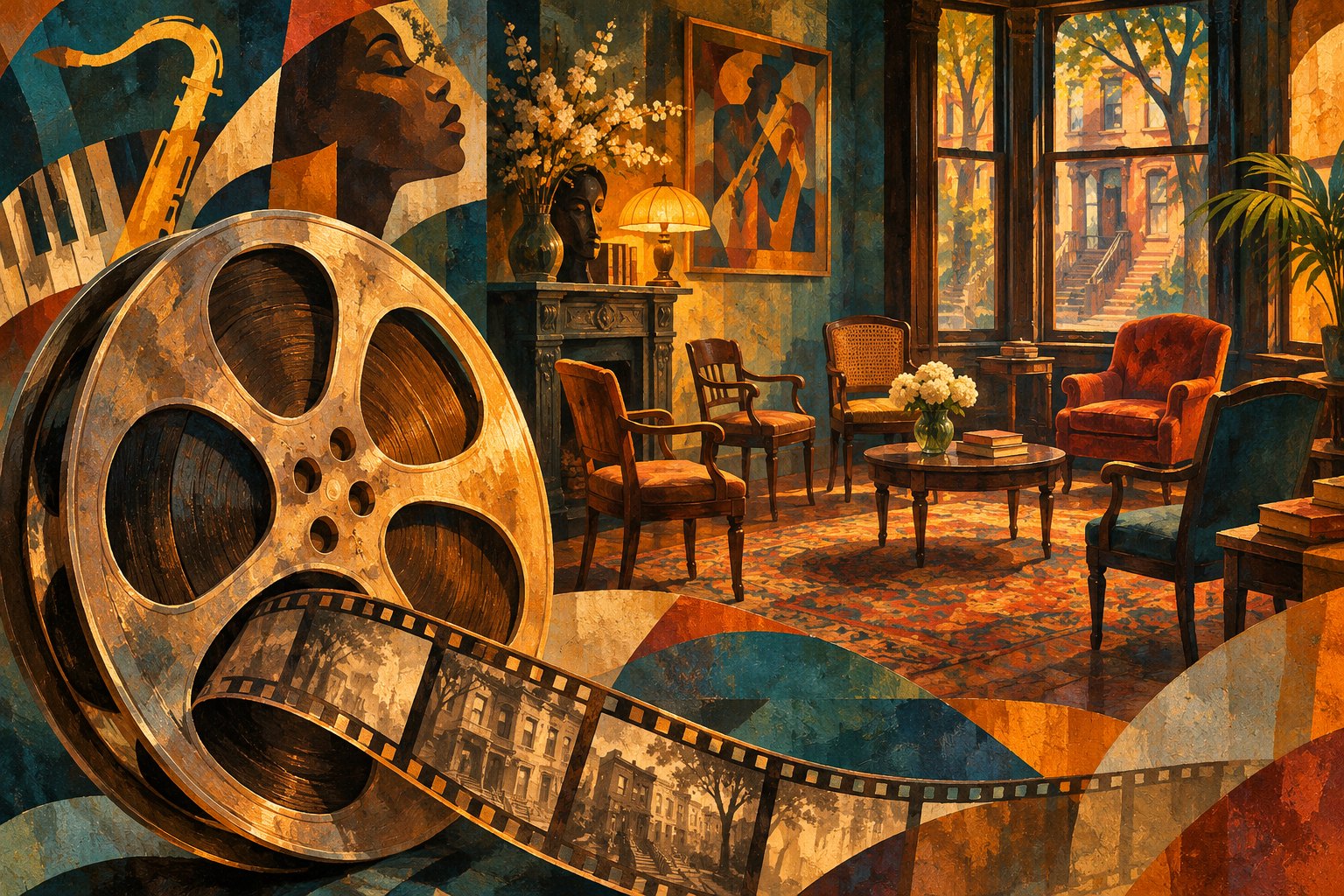
A Harlem Renaissance gathering preserved on film holds a particular attraction: the possibility of encountering cultural history through people sharing a space. Columbia University has highlighted such a gathering, directing attention to an occasion whose survival in moving images matters independently of any individual participant’s fame. For movie lovers, the central question is what that survival allows us to understand—and what a camera cannot establish by itself.
This is a critical essay about the significance of the preserved gathering, rather than a scene-by-scene review. It makes no claims about unverified dialogue, individual attendees, or the footage’s editing and sound.
Why a Gathering Offers a Different Kind of History
A cultural movement becomes easier to teach when it is organized into names, works, and dates. That structure is useful, but it can make creative life seem unusually orderly. A gathering offers another possible unit of understanding: people in relation to one another. Its importance lies partly in the opportunity to examine the social world around artistic achievement.
For a viewer approaching Harlem Renaissance material, this distinction matters. Knowing that a person produced an influential work is different from seeing how that person occupies a room. Film can preserve dimensions of presence that a list of accomplishments cannot: movement, physical distance, and the duration of an encounter. Where intelligible sound survives, it can also preserve vocal delivery. None of those qualities automatically explains the person, but each can complicate a simplified public image.
My critical starting point is that a gathering deserves attention as an event involving individuals, not merely as a collection of recognizable names. The most famous person in a frame need not be the only person worth watching. Someone at its edge may help us understand how attention is distributed, even when the image leaves their identity unresolved.
Looking at Participants Without Inventing Characters
Character-focused criticism becomes more demanding when its subjects are real people. In a scripted drama, an expression may belong to a carefully established pattern of motivation and consequence. In archival footage, an expression is a fragment of behavior. The viewer may see someone turn away without knowing what prompted the movement.
That uncertainty should shape the language of analysis. A visible smile is evidence of a smile; it does not establish approval of a particular argument. A pause may have several explanations. Even apparently meaningful eye contact needs spatial and conversational context before it can support a claim about a relationship.
This does not make interpretation pointless. It makes precision valuable. A useful reading distinguishes what is visible from what it might suggest. The distinction also leaves room for the participants’ complexity: they need not become proud elders, misunderstood artists, or cheerful representatives of an era simply because those roles make an appealing story.
The relationship between public identity and private experience also informs our discussion of performance and personhood in Interview with a Hero. Here, the same critical question takes an archival form: how much of an individual can an image reveal, and how much do we bring to it?
The Camera Preserves a View, Not the Entire Occasion
The phrase “preserved on film” can sound reassuringly complete. Yet every recorded gathering exists beyond its recorded boundaries. A camera has a position. A shot has a beginning and an end. Something takes place outside the frame, whether or not that unseen activity eventually proves important.
Those limits are especially relevant when interpreting a social occasion. A close view may make a person’s response legible while concealing the surrounding exchange. A wider view may clarify the arrangement of a group while losing a subtle expression. Neither perspective is inherently more truthful; each supplies different evidence.
If footage is presented in an edited work, another layer of interpretation enters. Placing two shots together can encourage viewers to perceive a response, a contrast, or a continuous interaction. Assessing that relationship requires attention to the sequence itself. The historical value of an image does not exempt its presentation from ordinary film analysis.
Our commentary on how cameras translate a live event considers a related problem in a different setting. Screen access is always shaped by a perspective. For a preserved Harlem Renaissance gathering, recognizing that perspective can deepen appreciation of the record while keeping interpretation proportionate to the evidence.
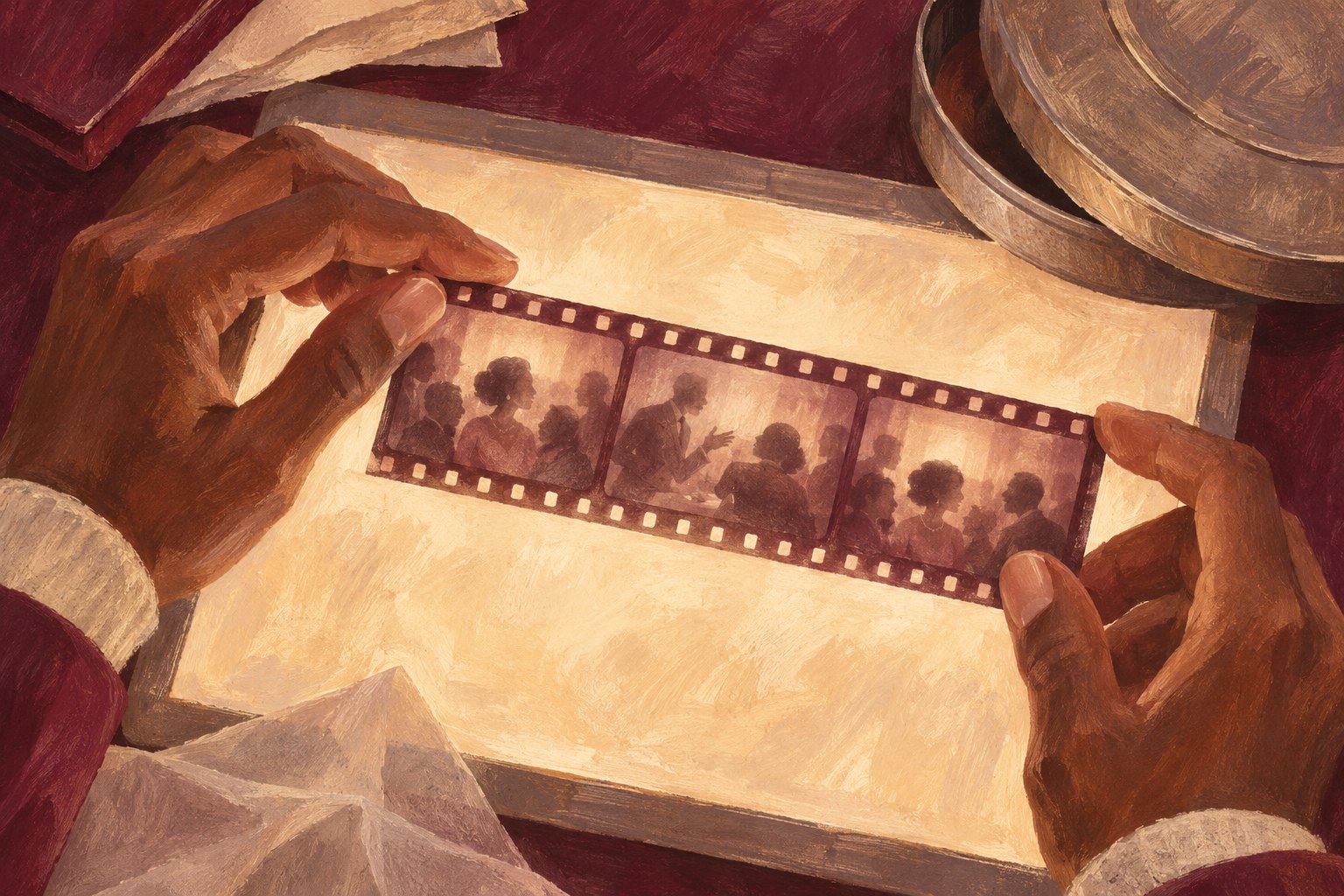
How to Watch Historical Gathering Footage Closely
A productive viewing approach begins with modest questions. Instead of searching immediately for the moment that defines an entire movement, look for what the recording actually makes available. These habits are particularly useful when approaching footage of people whose reputations may already shape your expectations:
- Establish the presentation’s context. Look for reliable identification of participants, the occasion, and the relationship between the original recording and the version being shown.
- Observe before assigning motives. Describe an action or expression before deciding what emotional meaning it carries.
- Attend to the group. Notice who shares the frame, who receives attention, and whether the image provides enough context to explain either.
- Check the status of speech. Distinguish audible dialogue from narration, captions, or later interpretation. Exact quotations require exact verification.
- Keep unresolved details unresolved. An unidentified person or ambiguous reaction can remain an open question without diminishing the footage’s value.
These are not obstacles to an emotional response. They help make that response more attentive. A historical image can be moving before we understand every detail, but emotion alone cannot supply the missing information.
Preservation Is Also a Question of Attention
There is a difference between an image surviving and an image being understood. Preservation makes an encounter possible; identification, contextual explanation, and careful viewing help make it meaningful. A gathering associated with the Harlem Renaissance invites both kinds of work.
Its framing also raises a question about historical emphasis. When viewers arrive expecting greatness, ordinary behavior can seem like a distraction. I would argue that the ordinary deserves serious attention. Cultural achievement takes place within human lives, and a record of people together may resist the habit of reducing those lives to their best-known accomplishments.
That is an interpretive principle, not a claim that this footage contains any particular revealing gesture. Its value is in changing the viewer’s posture: allowing curiosity to precede recognition, and allowing people to exceed the historical categories through which we first meet them.
The Deeper Meaning of Keeping a Gathering Visible
The strongest reason to care about a Harlem Renaissance gathering preserved on film is the opportunity to hold individual presence and cultural significance in view at the same time. A movement is a useful historical concept. The people associated with it remain more particular than the concept can contain.
For me, that is where archival cinema’s deepest promise lies. It can make us look again at lives we thought we understood through their legacies. The responsible response is neither to treat the camera as all-knowing nor to dismiss its incomplete record. It is to watch closely enough that surviving evidence can challenge our assumptions—and to leave space for the lives that extend beyond the frame.
Original content by this site's editorial team. Published: November 23, 2026 at 14:22:36 PST (Los Angeles time)