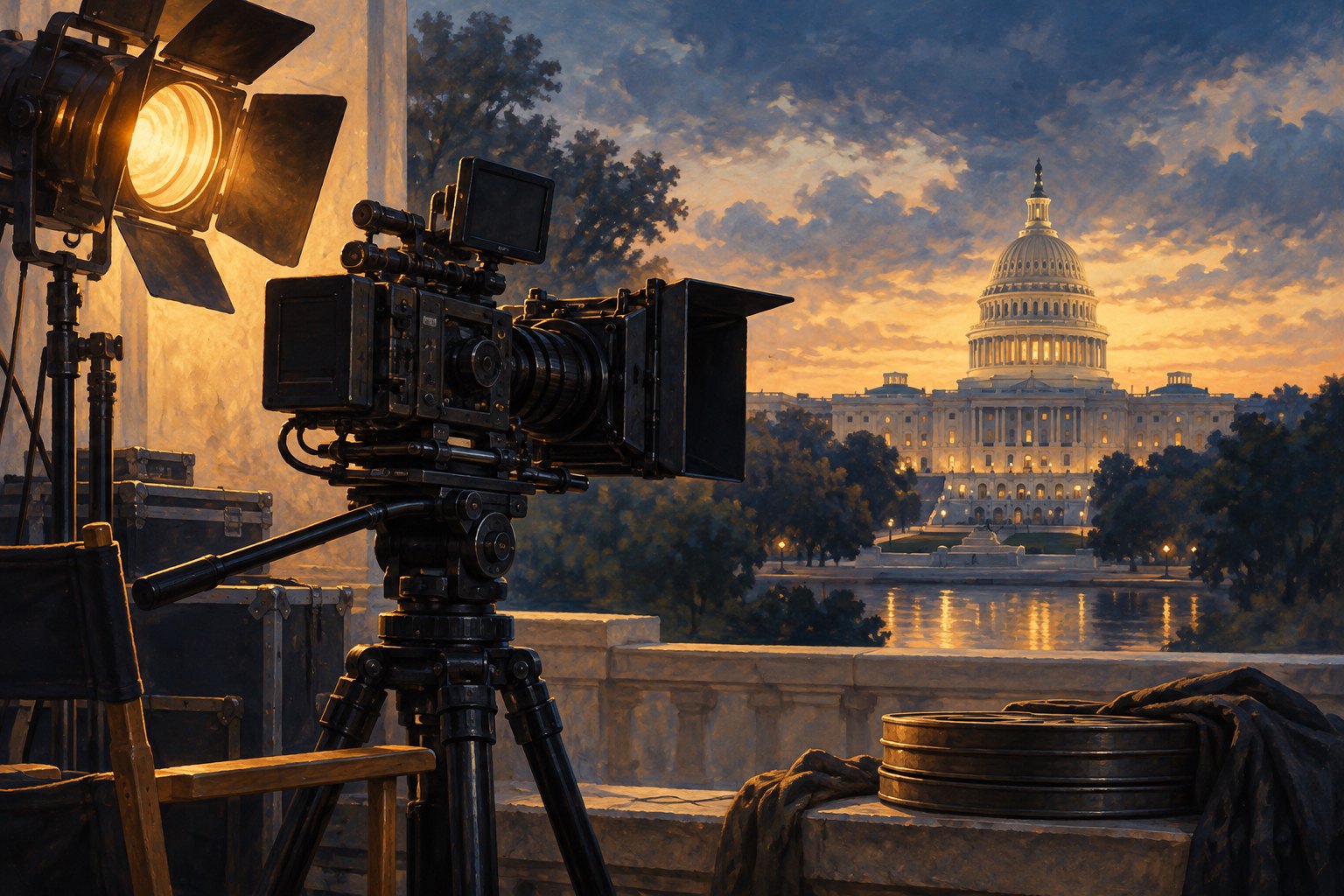
A federal film and television incentive could be moving toward a legislative proposal. Deadline reports that lawmakers are expected to introduce a bill this week. The essential distinction is that an expected introduction is an early step: it does not establish an enacted program, money available to productions, or a guaranteed change in where movies and television shows will be made.
For viewers, the useful question is what such support might make possible. Could it help sustain experienced crews? Could smaller films gain a realistic path into production? Would public spending encourage work that otherwise would not happen? Those questions deserve attention alongside any celebration of a potential boost to the industry.
Our view is that a worthwhile incentive should demonstrate both practical benefits for workers and a credible public return. A production announcement can generate excitement. The harder achievement is building conditions in which people can keep working and filmmakers can make a wider range of stories.
What the anticipated bill does—and does not—tell us
The reported development is narrow but significant: lawmakers are expected to propose a federal incentive for film and television. That creates a subject for legislative scrutiny. It does not, by itself, answer questions about eligibility, administration, cost, or implementation.
Readers should distinguish three separate milestones: a proposal being anticipated, legislation being formally introduced, and a program becoming operational. Each answers a different question. An announcement signals intent; legislative text reveals the proposed rules; implementation determines whether an eligible production can actually obtain support.
This article assesses the choices such a proposal would raise. It does not assume a particular incentive rate, spending limit, start date, or category of eligible production. Those details would need to be established before anyone could responsibly calculate a project's benefit or predict the program's reach.
The first test: would it change a production decision?
The central economic question is additionality: whether public support causes work to happen that would not otherwise occur. Consider a hypothetical production already committed to a particular location, with financing secured and facilities booked. An incentive might reduce its costs without changing its decision. Another project might genuinely depend on assistance to make its budget viable.
Both could show spending on paper, but they would present different arguments for public support. Evaluating an incentive therefore requires more than adding up the budgets of participating productions. The difficult comparison is with what would likely have happened without the program.
A strong proposal should make that comparison possible through clear reporting and independent evaluation. Readers should look for evidence about work created or retained, the duration of that work, and the public cost involved. Large spending totals can be informative, but they cannot settle those questions alone.
Public support also has an opportunity cost. Money directed toward one purpose cannot simultaneously serve another. Supporting filmmaking can be a defensible choice, but affection for movies should sharpen the demand for evidence rather than replace it.
For crews, continuity matters as much as activity
The human stakes become clearer when the discussion moves beyond stars and studio names. Think about the craftspeople who construct an apartment set, adjust a costume between takes, record clean dialogue, or make an ordinary room look convincing under production lights. Their work is part of what audiences experience as a believable fictional world.
From a worker's perspective, the most useful outcome would be a dependable sequence of paid opportunities. One busy shoot could help. A sustained production environment could offer something more: reasons to maintain equipment, train newcomers, and build a working life in a community.

That suggests specific evaluation questions. How much qualifying spending would reach workers? Would the program distinguish brief engagements from sustained employment? Would its reporting make working conditions and training opportunities visible? These are standards by which to assess a proposal, not claims about provisions already established.
It also helps to distinguish the excitement surrounding a possible shoot from verified activity. Our discussion of filming rumors and downtown Bellingham explores that gap at a local level. The same editorial discipline belongs in the federal debate: anticipation should not be counted as completed work.
Independent films need usable support
An incentive could be available in principle while remaining difficult for a small production to use. Eligibility is only the beginning. Application costs, documentation requirements, payment timing, and the certainty of receiving assistance could determine whether support belongs in a workable financing plan.
Imagine an independent drama that must pay its crew during a short shoot. A potential benefit arriving much later would not automatically solve its immediate cash needs. Depending on the eventual structure, the producers might still need interim financing, which could carry costs of its own.
The point is not to assume that the anticipated bill has this problem. It is to examine accessibility as a practical matter. A program should be judged by who can successfully participate, including filmmakers with limited administrative resources.
For audiences, this is where an industrial policy could become a cultural question. Would its design leave room for modestly budgeted dramas, documentaries, comedies, and first features? Supporting production volume and supporting a varied film culture are related goals, but neither automatically guarantees the other.
What could change on screen?
A production incentive cannot write a persuasive character or give an empty scene emotional weight. Its artistic significance would be indirect, through the choices a budget allows filmmakers to make.
Consider a hypothetical family drama in which a character returns to a hometown. Actual streets, the layout of a house, and the distance between workplaces and homes could help establish that person's circumstances. Time for careful location work or detailed production design might strengthen the storytelling. It could also be spent without producing anything memorable.
This is why our critical standard would remain the same: do the film's choices make the characters and their world convincing? A production's funding arrangements cannot substitute for that judgment. They can, however, influence which choices are feasible before the camera rolls.
Geography alone is no guarantee of authenticity. A resourceful filmmaker can create a persuasive setting far from the place depicted. The audience's interest lies in the finished work, while the policy debate must also account for the people and resources behind it.
Production support is only one part of film culture
Even a successful production program would not automatically solve the separate problems of distribution, visibility, and exhibition. Completing a movie and connecting it with viewers are different achievements.
Our commentary on Milwaukee's Oriental Theatre and the value of a working cinema considers the places where that connection happens. The federal incentive discussion concerns an earlier stage, but a healthy film culture needs both opportunities to make work and opportunities to encounter it.
The anticipated bill deserves attention without a premature verdict. Once its provisions can be examined, the strongest case would rest on accessible rules, accountable spending, and evidence of meaningful work. For movie lovers, the deeper promise is a durable creative environment: one in which skilled people can keep practicing their craft and more stories have a chance to reach the screen.
Original content by this site's editorial team. Published: September 24, 2026 at 01:38:10 PDT (Los Angeles time)