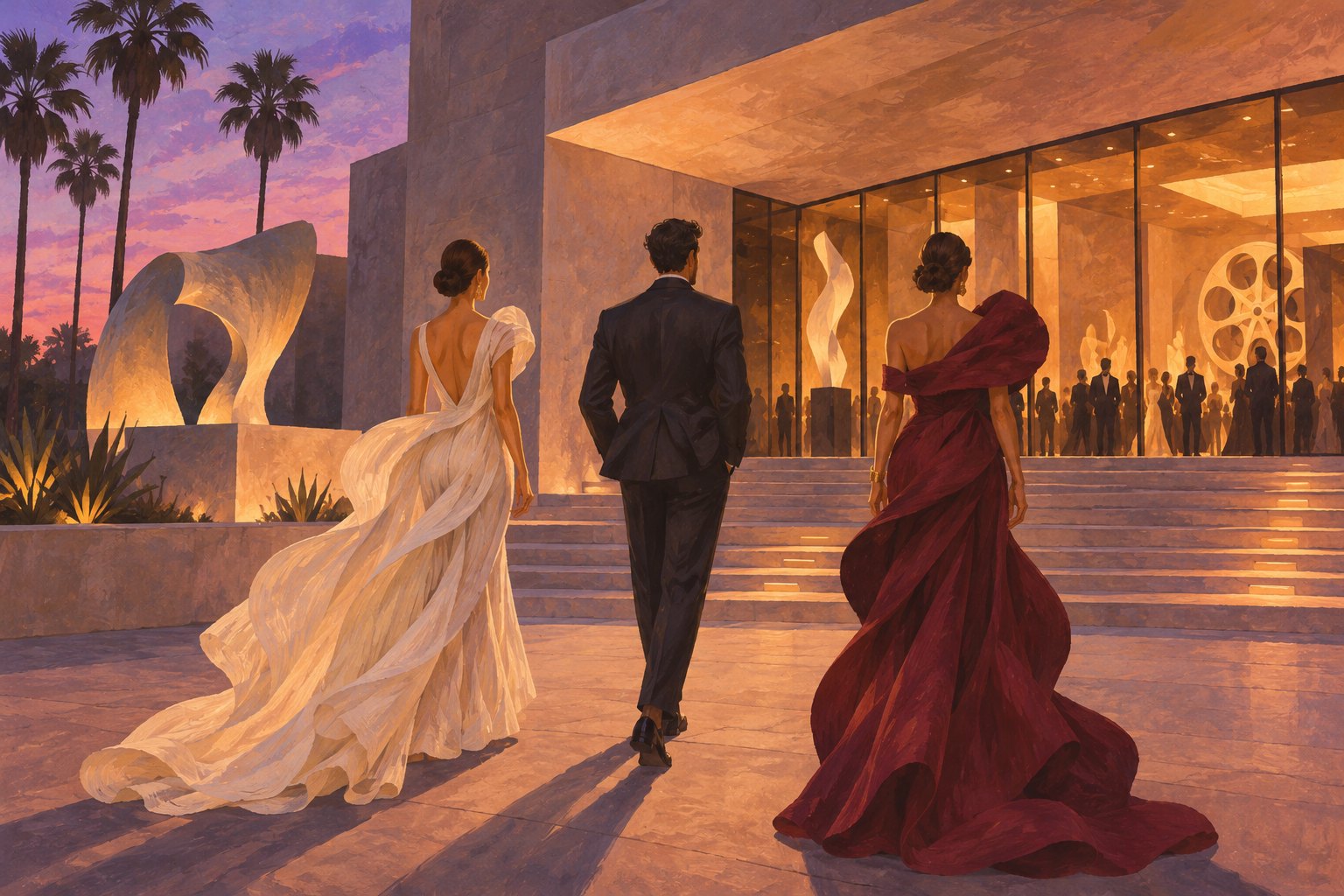
The 2026 LACMA Art + Film Gala brings an irresistible question into focus: what makes an evening look worth remembering? With Vogue presenting its selection of the event’s best looks, the immediate attraction is fashion. For movie lovers, there is another pleasure available: examining how clothes, posture, lighting, and framing work together to create an image.
My critical starting point is simple: a memorable gala look gives the eye something specific to follow. That might be an unexpected proportion, a convincing relationship between fabric and movement, or a detail that changes the impression of the whole outfit. This commentary explores those visual qualities and their connection to film, without assigning an unsupported best-dressed winner.
Start With the Silhouette, Before the Famous Face
Recognition can overwhelm observation. We see a performer we admire and bring an entire history of roles, interviews, and favorite scenes into the photograph. That emotional attachment is part of celebrity culture’s appeal, but it can make an ordinary outfit seem more distinctive than its design warrants.
A useful first step when considering the LACMA gala’s looks is to study the outline. Where does the garment create width? Where does it narrow? Does the eye travel continuously from shoulder to hem, or stop at an abrupt change in volume? These questions turn a vague reaction into an observation someone else can assess.
Consider two hypothetical silhouettes: a narrow column interrupted by a dramatic sleeve, and a full skirt paired with a restrained upper half. Each concentrates attention differently. The first makes the interruption its subject; the second builds its effect through balance. Neither deserves automatic preference. The interesting question is whether the proportions sustain the intended impression across the entire look.
What Film Analysis Adds to Fashion Commentary
In a film, clothing enters a network of relationships. It interacts with a character’s surroundings, gestures, circumstances, and changing behavior. A garment can appear commanding in one scene and awkward in another because the story changes how we read it.
A gala photograph gives us much less narrative evidence. We can describe an appearance as severe, playful, romantic, or theatrical, but those words express our reading of the image. They cannot establish the wearer’s private feelings or intentions. A rigid pose does not prove discomfort; a smile does not prove confidence.
That distinction helps keep fashion criticism precise. “The angular shoulders give the image a stern quality” identifies a visible feature and an interpretation. “The actor is asserting dominance” invents a psychological explanation. The first leaves room for disagreement while giving the reader something concrete to consider.
Our discussion of the pleasure of being surprised after years of movie reviewing offers a related principle: attention works best when familiarity has not already settled the verdict. An actor’s established image should be the beginning of a reading, not its conclusion.
Texture Changes the Story a Silhouette Tells
Once the outline is clear, look at the surface. A sharply structured shape rendered in a soft-looking fabric can create an appealing tension. A simple shape with an intricate surface may ask for slower inspection. The silhouette establishes the broad impression; texture can complicate it.
Photographs also mediate what we think we see. Lighting can make a surface appear glossy, flatten folds, or hide construction in shadow. It is reasonable to describe visible sheen or apparent softness. Identifying an exact fiber, technique, or material requires firmer evidence than a visual impression.
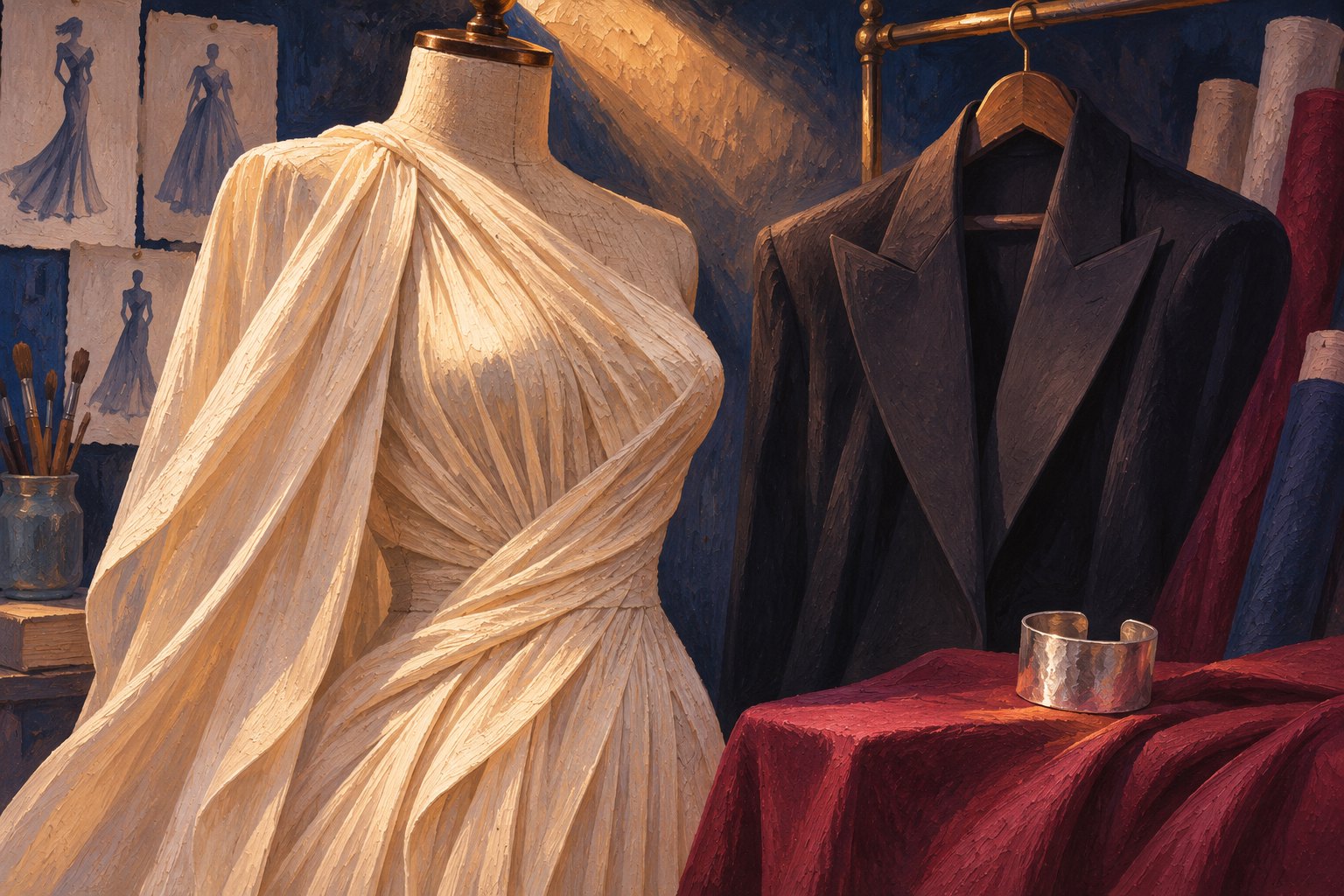
The accompanying illustration explores this relationship through imagined garments. The pale folds attract attention through changes in light, while the dark jacket relies on its edges and structure. Those are useful features to notice when studying gala imagery, but the illustration does not reproduce an attendee’s outfit.
Movement Is the Missing Test in a Still Photograph
Movie viewers are accustomed to seeing clothes in motion. We watch someone turn, cross a room, sit down, or hesitate at a doorway. Those actions reveal how an outfit occupies space and how the person wearing it negotiates that space.
A single red carpet image captures only one arrangement. A train may produce a striking line when spread across the ground; a sleeve may become more interesting when an arm moves. Neither observation tells us how the garment behaves throughout an evening.
When several views or moving footage are available, compare them. Does a detail become clearer from the side? Does the outfit maintain its proportions during a turn? Does movement reveal an unexpected layer? For my taste, a look becomes especially compelling when another angle adds information instead of merely repeating the first impression.
Accessories Should Reward a Second Look
Jewelry, shoes, hair, and other styling choices influence where attention lands. Their contribution is easiest to judge in relation to the garment. A small bright detail can provide a deliberate stopping point in an otherwise continuous shape. Several competing accents can divide attention, although that complexity may itself be the desired effect.
Restraint is not inherently more sophisticated than abundance. A heavily embellished ensemble can have an intelligible rhythm; a minimal outfit can feel unresolved. The useful standard is whether the details create relationships you can explain.
Try describing a look without using “stunning,” “iconic,” or “effortless.” If the description becomes difficult, return to the image. Which line, color relationship, or contrast produced the reaction? That exercise makes praise more meaningful and criticism less arbitrary.
A Practical Way to Choose Your Own Favorites
When considering the 2026 LACMA Art + Film Gala’s best looks, give each appearance more than the moment it takes to recognize the guest. A short sequence can sharpen the judgment:
- Read the whole shape. Identify the dominant line and the main point of emphasis.
- Examine one detail. Notice how a fold, fastening, accessory, or surface changes the larger impression.
- Consider the photograph. Separate the clothing’s visible qualities from effects created by pose, crop, and lighting.
- Explain the preference. State what holds your attention and why it works for you.
The broader cultural setting deserves attention, too. As our commentary on looking beyond the red carpet at a film festival suggests, arrival imagery is one part of how an arts event reaches its audience. Glamour can invite curiosity about film, but it cannot substitute for engagement with the work.
The Most Interesting Connection Is Between Image and Interpretation
For me, the strongest reason to examine LACMA gala style through a film critic’s eyes is the opportunity to practice looking carefully. We respond to an image, identify the choices shaping that response, and recognize where our own associations enter the picture.
A memorable look can be understood immediately and still reward another glance. Its lasting appeal may lie in a proportion that initially seemed strange, a detail that quietly organizes the composition, or a movement that transforms the garment. That is where fashion commentary becomes satisfying criticism: when admiration develops into an explanation, and the explanation sends us back to look again.
Original content by this site's editorial team. Published: November 7, 2026 at 20:04:18 PST (Los Angeles time)