
Phoebe Bridgers and the Gallagher brothers feature in CNN’s coverage of arrivals at the 2026 Venice Film Festival, bringing a distinctly musical thread to the event’s celebrity conversation. For readers drawn to Venice by those names, the immediate appeal is recognition: people associated with listening, concerts, and personal memories now occupy the setting of a film festival.
That crossover raises an interesting question for movie lovers. What happens to the way we watch when we already have a strong emotional relationship with someone’s public identity? A familiar musician can enter our experience of cinema carrying associations that a film has yet to earn—or may deliberately challenge.
This is festival commentary, not a review of a particular screening. The arrival coverage alone does not establish a performance, soundtrack contribution, or creative role for any of these musicians. It does, however, offer a useful starting point for examining how music fandom shapes attention, character interpretation, and expectations.
The audience brings a history into the theater
A song can become attached to a place, a friendship, or an entire period of someone’s life. When its performer appears in a cinematic context, that private history can arrive with them. A viewer may feel an immediate sense of intimacy before encountering a character, hearing dialogue, or understanding the story.
My view is that this attachment can enrich filmgoing, provided we recognize what belongs to our experience and what the film itself establishes. Familiarity makes us attentive. It can also encourage us to fill gaps too quickly, reading sensitivity into a neutral expression or treating confidence as evidence of a character’s authority.
Bridgers and the Gallagher brothers provide a useful focus because different listeners will bring different expectations to those names. There is no single fan response to predict. One person may arrive with detailed musical knowledge; another may recognize only a face. A worthwhile film must remain legible across that difference.
The critical question is therefore specific: what does the work communicate to someone who arrives without that history? If a scene depends entirely on recognition, its emotional reach may be narrow. If recognition adds another layer to an already persuasive scene, the crossover becomes more rewarding.
A familiar person is not yet a fictional character
When watching any musician act, begin with the character’s circumstances. What do they want? What prevents them from getting it? What can they afford to reveal to the person opposite them? Those questions give a performance a dramatic context and keep the viewer from treating every gesture as a disclosure about the performer.
Consider a hypothetical scene in which someone waits before answering an ordinary question. That pause could suggest calculation, embarrassment, distraction, or an effort to protect another person. The surrounding action should help us interpret it. Knowledge of the performer’s songs cannot settle the matter.
This distinction matters especially when an artist’s work feels personal. Emotional candor in music does not make every screen role autobiographical. Nor does a forceful public presence mean a fictional character must share that force. Acting can involve withholding the qualities audiences came hoping to see.
The most useful review would follow the character through changing circumstances and ask whether those changes register in the performance. Does their manner shift around different people? Do their choices have consequences? Can we understand a contradiction without explaining it through the artist’s offscreen reputation?
Listen for what a voice does within a scene
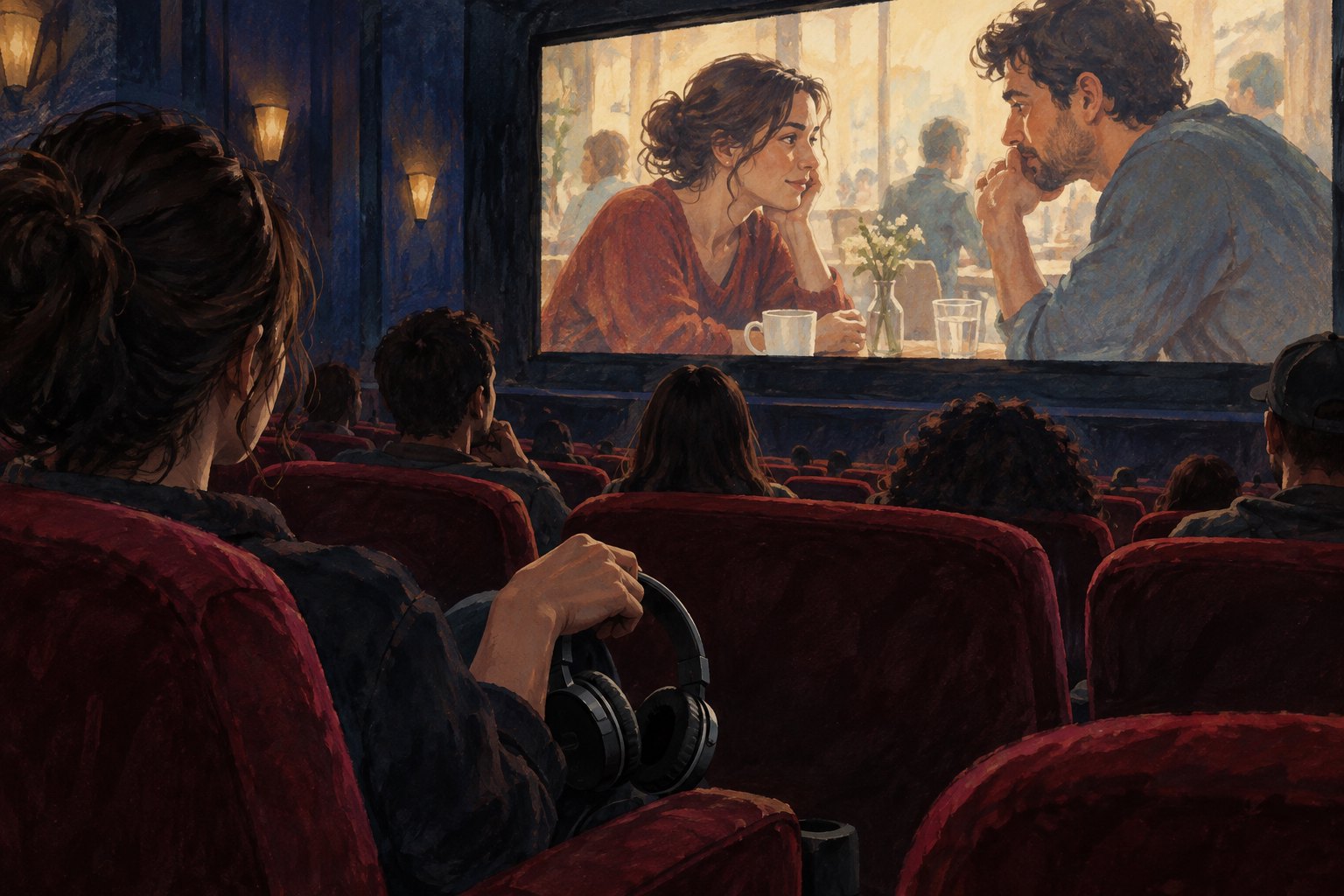
Music fans are well positioned to notice vocal detail. Timing, breath, emphasis, and restraint matter in spoken performances as well as songs. The adjustment is to listen for how those choices serve an interaction. A beautifully delivered sentence may be less revealing than the awkward breath that follows it.
One practical approach is to pay attention to listening. Watch the person who is not speaking. Does a response begin before the other character finishes? Does someone remain still because they feel secure, or because moving would expose them? A reaction can change the meaning of dialogue without adding a word.
Editing complicates that judgment. A held close-up gives us time to study a face; a cut can make an expression seem like a response to something filmed separately. Sound and framing also guide our attention. Film criticism becomes more precise when it considers the performance and the choices that present it together.
For anyone following Venice because of a favorite musician, these details offer a satisfying next step. Recognition gets you looking at the screen. Watching how attention passes between characters helps you understand what the scene is doing.
When music enters a film, ask whose emotion it expresses
A musician’s festival presence should not be treated as evidence of a soundtrack credit. Still, the encounter between music fandom and cinema invites a broader listening exercise: distinguish your attachment to a song from its function in a particular movie.
Music heard by a character can reveal taste, habit, belonging, or an attempt to control a situation. Music heard only by the audience can guide our interpretation from outside the character’s experience. A familiar recording may operate very differently in those two positions.
Try a simple thought experiment after a scene: imagine it without the song. What remains clear through behavior, dialogue, and visual detail? Then consider what the music adds. It might establish tension, supply historical context, complicate an apparently happy moment, or simply amplify an emotion already present.
I find the most interesting uses of familiar music leave room for friction. A listener’s comforting association can encounter a character’s discomfort. The resulting tension encourages us to reconsider both the scene and our own response. That judgment must come from the actual sequence, however, rather than from admiration for the artist.
Turn interest in the arrivals into a better watchlist
Readers following Bridgers or the Gallagher brothers do not need to abandon their enthusiasm to become thoughtful film viewers. Start by establishing the exact connection between a person and a title through confirmed credits and program information. Attendance, acting, documentary participation, and musical contribution are different relationships.
Then look for criticism that describes concrete artistic choices. A useful account of a performance explains how a character behaves under pressure. A useful account of music explains its placement and effect. Broad praise offers less guidance than a clearly described observation.
Our guide to reading festival reactions for character and craft develops that approach. The same patience applies to availability: a festival appearance does not tell a reader when a film will reach their local theater. Our discussion of what distributor interest actually tells audiences explores that separate part of the journey.
The pleasure of allowing a familiar artist to surprise you
The deeper possibility in this Venice crossover is a change in the audience’s relationship with familiarity. Fandom can make recognition feel like understanding. Cinema asks us to keep watching: an expression changes, another character interrupts, or a later choice revises our first impression.
Bridgers and the Gallagher brothers give music listeners an accessible point of entry into the festival conversation. What makes that entry valuable is the possibility of discovering something beyond the associations they already hold. Bring the memories, the curiosity, and the affection. Then give the person on the screen enough room to become someone you have not met before.
Original content by this site's editorial team. Published: September 9, 2026 at 06:48:46 PDT (Los Angeles time)