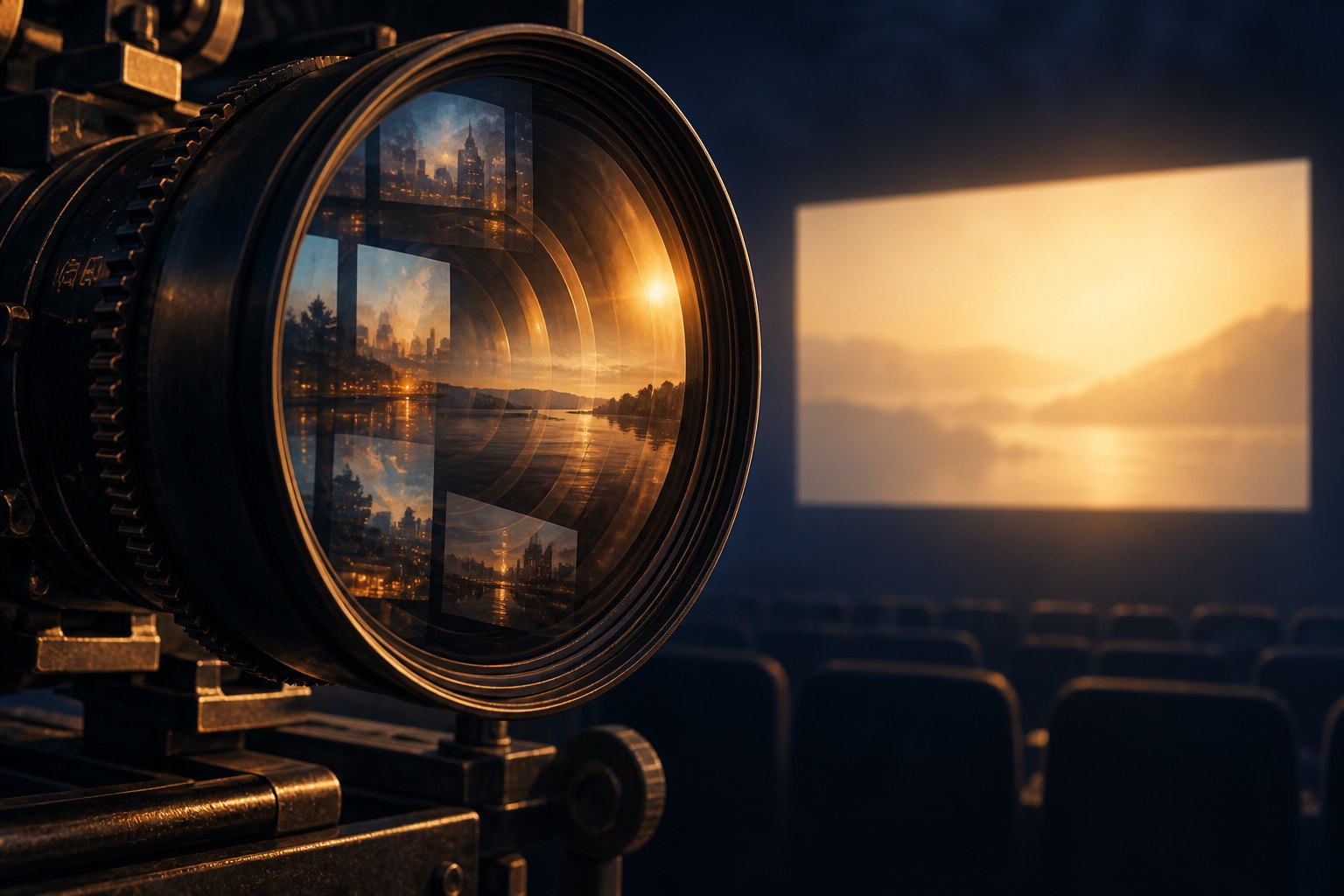
Greater Cincinnati’s first 4DX movie theater has opened with motion seats and special effects, according to WLWT. For local moviegoers, the attraction is straightforward: the screening offers a physical dimension beyond watching and listening. The more interesting question is what that extra sensation contributes once the novelty wears off.
A moving seat can make an action scene feel more immediate. Whether it makes the scene more involving depends on the relationship between the effect, the filmmaking, and the person whose story we are following. Our critical standard is simple: an enhancement earns its place when it helps us experience the movie more fully.
This is commentary on the opening and the viewing questions it raises, rather than a firsthand assessment of the auditorium or a review of a particular film. The illustrations depict imagined cinema settings.
What the opening means for local moviegoers
The confirmed news is the arrival of a regional first built around motion seating and special effects. That gives Greater Cincinnati audiences another way to plan a theatrical outing. It does not, by itself, establish how enjoyable any particular screening will be. A theater’s equipment and a movie’s dramatic strengths are separate things, even when they work beautifully together.
For someone considering a ticket, the useful starting point is the exact screening being sold. Check the film, format designation, date, and total price together. An opening announcement cannot tell you which presentation best suits your preferences, and the presence of a specialty auditorium should not be taken to mean every screening uses it.
There is also a difference between wanting to see a movie and wanting to try an experience. Both are valid reasons to go. Recognizing which one matters more can prevent disappointment: someone eager for physical spectacle may judge the evening differently from someone primarily interested in an actor’s performance.
The character test: Whose experience does the movement express?
The strongest way to think about motion seats is through character perspective. Consider an imagined chase scene. A driver might feel confident, a passenger might feel terrified, and a person watching from the sidewalk might barely understand what is happening. Those are three emotional experiences of the same movement.
Film language distinguishes them through framing, editing, performance, and sound. A close-up of a passenger’s tense expression asks us to register fear. A wide view of a vehicle taking a difficult corner might invite admiration for skill. Physical movement could reinforce either response, but its dramatic value depends on which perspective the scene establishes.
That is the question worth carrying into a first 4DX screening: does an effect connect you to somebody on screen? If a sensation makes a character’s loss of control more tangible, it may strengthen identification. If your attention shifts entirely toward anticipating the seat’s next movement, the experience may become entertaining in a different way.
Neither reaction requires an argument about the correct way to enjoy movies. They simply describe different pleasures. For our purposes as film critics, however, the distinction matters. Feeling an impact and understanding its consequence are separate achievements.
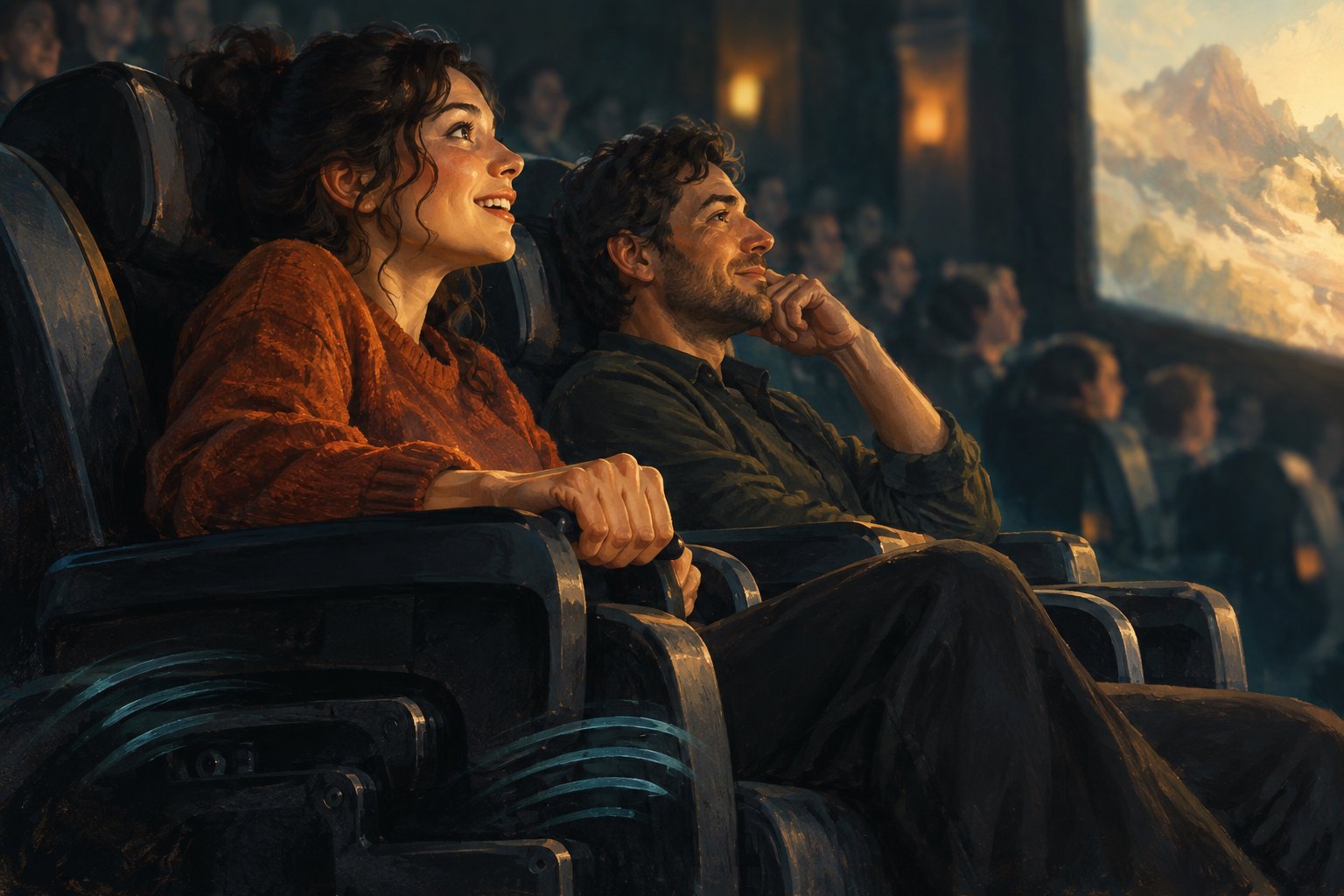
Why rhythm matters more than constant intensity
Action depends on variation. Anticipation, acceleration, interruption, and release give a sequence its shape. If everything feels equally forceful, individual moments can lose their identity. That principle applies to editing and sound, and it provides a useful standard for judging physical effects too.
Imagine a scene in which someone hesitates before stepping into danger. The hesitation may carry more emotional weight than the movement that follows. An effective presentation would preserve that pause as part of the experience. More activity would not necessarily mean more suspense.
Restraint also protects performances. A glance can reveal that a character has recognized a threat before anyone else. A breath can expose uncertainty beneath bravado. Those details deserve attention even in a movie full of spectacle. Our preference would be for effects that support the scene’s changing emphasis and leave room for small gestures to register.
This makes the transition out of an action sequence particularly revealing. When the danger passes, can you settle back into the relationships and consequences? The quality of that return may tell you more about the presentation than its biggest jolt.
Choosing a movie for your first visit
Start with a film you want to see on its own merits. A format can add interest, but relying on it to supply all the evening’s enjoyment creates a demanding test for the technology. Premise, tone, pacing, and character appeal remain useful guides.
Our discussion of building a watchlist around character and craft offers a related approach: identify the qualities you actually respond to before allowing the surrounding excitement to make the choice. Here, that means considering whether physical sensation sounds like a welcome addition to this particular story.
A familiar movie could make an interesting comparison if one becomes available in the format. Knowing the story might let you notice how the presentation changes your attention. A first viewing offers a different experiment: discovering the narrative and the physical experience together. Neither approach guarantees a better evening.
Before buying, check these details
- The exact format: Confirm that the selected showtime is explicitly listed as 4DX.
- The full ticket cost: Compare the checkout total with other available presentations of the same movie.
- Participation requirements: Read the theater’s current restrictions and suitability guidance for everyone attending.
- Access and seating: Ask the venue about accommodations and any requirements relevant to your group.
- Available controls: If you want to limit an effect, verify what the auditorium actually allows before purchasing.
These checks are particularly useful for a group outing. One person’s main attraction may be another person’s distraction. Agreeing on the kind of evening you want is easier before the tickets are booked.
How to judge the experience after the credits
Try separating your response into three questions. Did you enjoy the movie? Did you enjoy the physical effects? Did the effects improve your experience of the movie? The answers can differ without contradicting one another.
You might love an energetic screening while finding the story thin. You might admire a performance but prefer to revisit it in a conventional presentation. You might also find that a physical cue made one moment unusually memorable. Describing that specific contribution is more useful than assuming the format is always an upgrade.
The distinction connects with our examination of how spectacle around cinema shapes audience expectations. Presentation influences the way we approach a film. Critical attention begins when we notice that influence and ask what the work itself contributes.
A moving seat still needs a story worth following
Greater Cincinnati’s 4DX opening offers a fresh opportunity to explore how bodily sensation and storytelling interact. Its most compelling possibility, in our view, is a closer connection between a character’s physical situation and the audience’s response.
But physical proximity is only one kind of intimacy. We understand characters through what they want, what they conceal, and what they choose when circumstances become difficult. An effect may help communicate the force of an event; the film must establish why that event matters. The most rewarding screening would bring those experiences together, leaving us with a clear memory of both the sensation and the person who gave it meaning.
Original content by this site's editorial team. Published: September 9, 2026 at 06:02:08 PDT (Los Angeles time)