
The Road Between Us: The Ultimate Rescue is streaming on Paramount+ in the United States. Barry Avrich’s documentary follows retired Israeli general Noam Tibon’s effort to reach his family during the Hamas attacks of October 7, 2023. One date distinction matters: October 7 identifies the events depicted. The Jerusalem Post reports that the film arrived on the service on September 29, 2026. [The Jerusalem Post’s streaming report](https://www.jpost.com/israel-news/culture/article-910829).
The central question is immediately understandable: what can a parent do when their child calls from a place they cannot escape? The more difficult question concerns everyone encountered along the way. When saving your family is the urgent objective, what responsibility do you retain toward strangers?
Spoilers follow for the rescue and its outcome. This analysis draws on published descriptions of the documentary, reported dialogue, and filmmaker interviews; it does not offer a firsthand assessment of the streaming presentation.
What to know before watching
Search for the full title, The Road Between Us: The Ultimate Rescue, to identify the documentary. Paramount+ lists it as a 2025 film, rated R, with a running time of one hour and 31 minutes. Its listing confirms subscription streaming availability. Viewers should expect distressing material concerning real violence, rather than a fictional rescue adventure. [Paramount+ film listing](https://www.paramountplus.com/movies/video/ALVE01M13G5NCWEDYTVCRYX30M16VF/).
The family relationships provide the essential orientation. Noam and his wife, Gali, travel toward Nahal Oz, where their son Amir, his wife Miri, and their two young daughters are sheltering in their home’s safe room. The reported journey also includes assistance to people fleeing the Nova festival and wounded soldiers. Gali takes soldiers to a hospital; Noam continues toward the kibbutz and ultimately reaches his family.
Noam: expertise becomes a family obligation
Noam’s military background matters because it gives him practical abilities in an emergency. Yet treating those abilities as his entire identity would flatten the story. A grandfather who knows how to assess danger still has to confront the possibility that his judgment will fail the people he loves.
In Nell Minow’s published account of the film, Noam describes “something terrible about this quiet” when observing an empty road. The line makes a useful distinction between calm and safety. An absence of visible activity can offer reassurance to an inexperienced observer; to someone reading the surroundings for danger, it can indicate that ordinary life has broken down. [Nell Minow’s account of the documentary](https://www.rogerebert.com/reviews/the-road-between-us-documentary-review-2025).
As a character detail, that observation is more revealing than a declaration of fearlessness. It suggests attention: the ability to notice what should be present and is missing. My reading is that the story’s most compelling version of courage rests there. Noam’s experience gives fear a practical task—observe, interpret, decide—without making the danger disappear.
Gali: a rescue has more than one center
Gali’s transportation of wounded soldiers deserves attention in its own right. A synopsis centered exclusively on the person who reaches the final destination risks making other lifesaving actions seem secondary. Moving someone away from danger and toward treatment belongs to the same moral effort as reaching someone still trapped.
This distinction also changes how we understand partnership. Two people can share an objective while performing different tasks, accepting different uncertainties, and losing the reassurance of remaining together. The useful question is not simply who takes the greatest visible risk. It is whose decisions make other people’s survival possible.
Our character-focused discussion of Hidden Figures and Gifted explores a related critical habit: attending to the person behind the role a story assigns them. Here, that means recognizing Gali as a participant with consequential decisions, rather than reducing her to a supporting relationship.
Amir and Miri: waiting is part of the action
For Amir and Miri, the situation reverses the rescue narrative’s usual emphasis. The person traveling can make progress measurable through distance. Those sheltering cannot translate endurance into anything so visible. Their responsibility is concentrated around their children while the outcome depends partly on events beyond their knowledge.
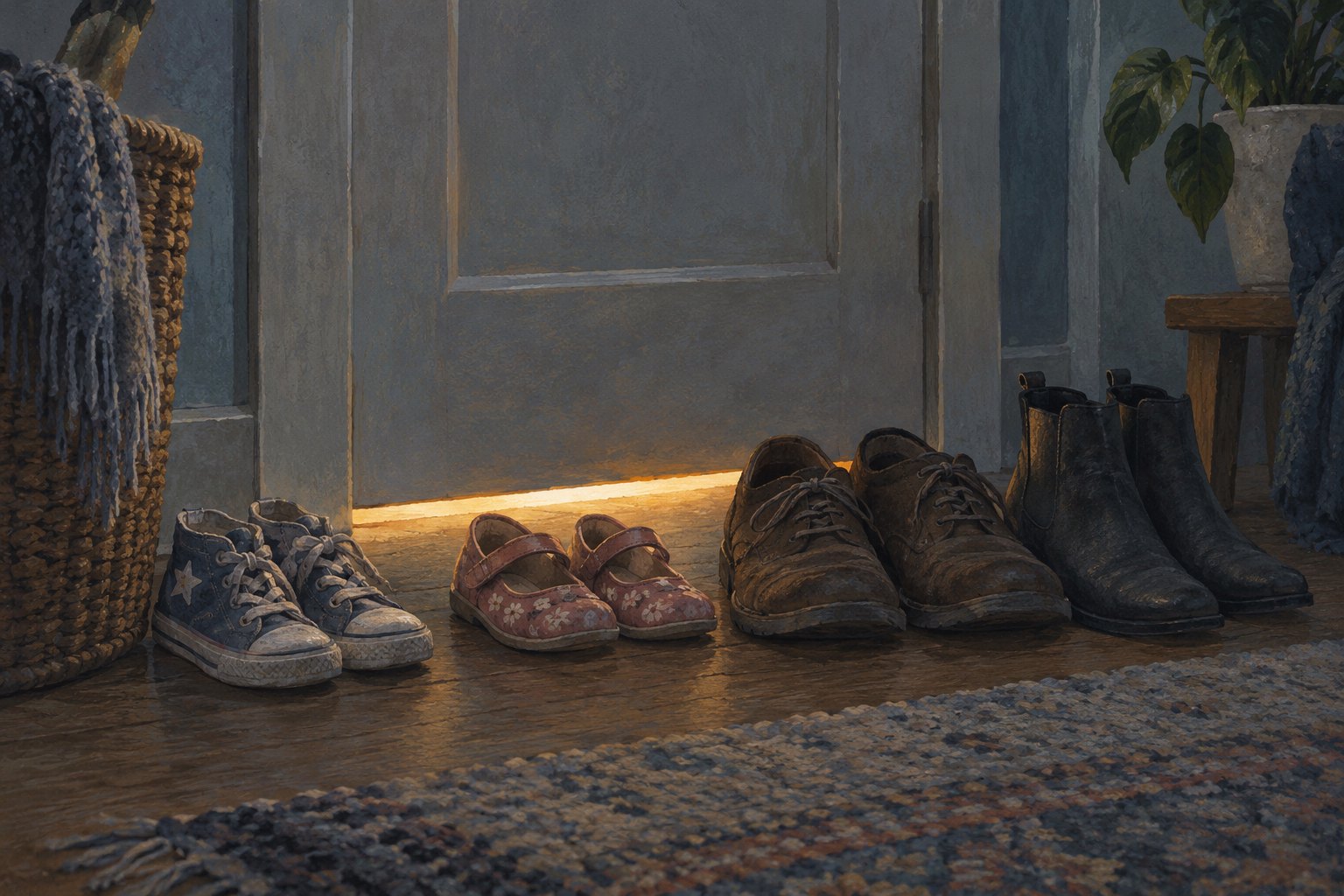
A character-centered reading should resist equating movement with agency. Staying sheltered can involve sustained judgment and restraint. It is possible to recognize that burden without inventing conversations, gestures, or private thoughts for the family. Their documented predicament is sufficient: parents must remain responsible for children while being unable to guarantee their protection.
For viewers, this offers a useful discipline. Whenever the journey becomes the dominant source of suspense, remember the people at its destination. They are experiencing their own emergency, not merely providing the rescuer with a goal.
The strangers who change the mission
Another brief line recorded in Minow’s account describes helping people fleeing the festival: “it became part of the mission.” That wording matters because it expands the obligation. Someone outside the immediate family becomes a person whose survival must also enter the calculation.
In an interview with POV, Avrich discusses his astonishment that Noam continued helping others even near his son’s home. Noam explains the importance of proceeding carefully through the kibbutz with soldiers rather than rushing directly to the house. [POV’s interview with Avrich and Tibon](https://povmagazine.com/barry-avrich-and-noam-tibon-on-the-road-between-us-the-film-is-not-political-its-a-story-about-a-family/).
The interpretive value lies in the tension between urgency and responsibility. Love creates a powerful reason to hurry, but it does not automatically identify the safest next action. Nor does concern for one household make other households irrelevant. That is a richer ethical question than whether a determined protagonist can overcome obstacles.
What the rescue can—and cannot—resolve
A successful rescue supplies a clear narrative endpoint. It cannot supply an equivalent endpoint to grief, institutional accountability, or the wider Israeli-Palestinian conflict. These operate on different scales. Recognizing the family’s survival does not require treating their experience as a complete explanation of the surrounding history.
This is also a question about how documentary images work. Our analysis of TORN and the hostage-poster debate considers how an individual face can become a larger public argument. A comparable caution applies here: people deserve attention as people, even when their stories circulate within fiercely contested political narratives.
The deeper interpretation I find most valuable is about the distribution of responsibility. Noam’s journey, Gali’s assistance, and the parents’ endurance invite us to recognize several forms of care. None makes survival a simple test of deservingness. People who could not escape were not less loved; families without a successful rescuer did not possess less courage.
Approached with that distinction intact, The Road Between Us offers a meaningful subject for discussion beyond the mechanics of reaching safety: what happens when private love must carry responsibilities that reliable public protection should have helped shoulder? The rescue answers whether one family can be reached. The harder question remains why reaching them required such extraordinary action.
Original content by this site's editorial team. Published: October 7, 2026 at 17:58:54 PDT (Los Angeles time)