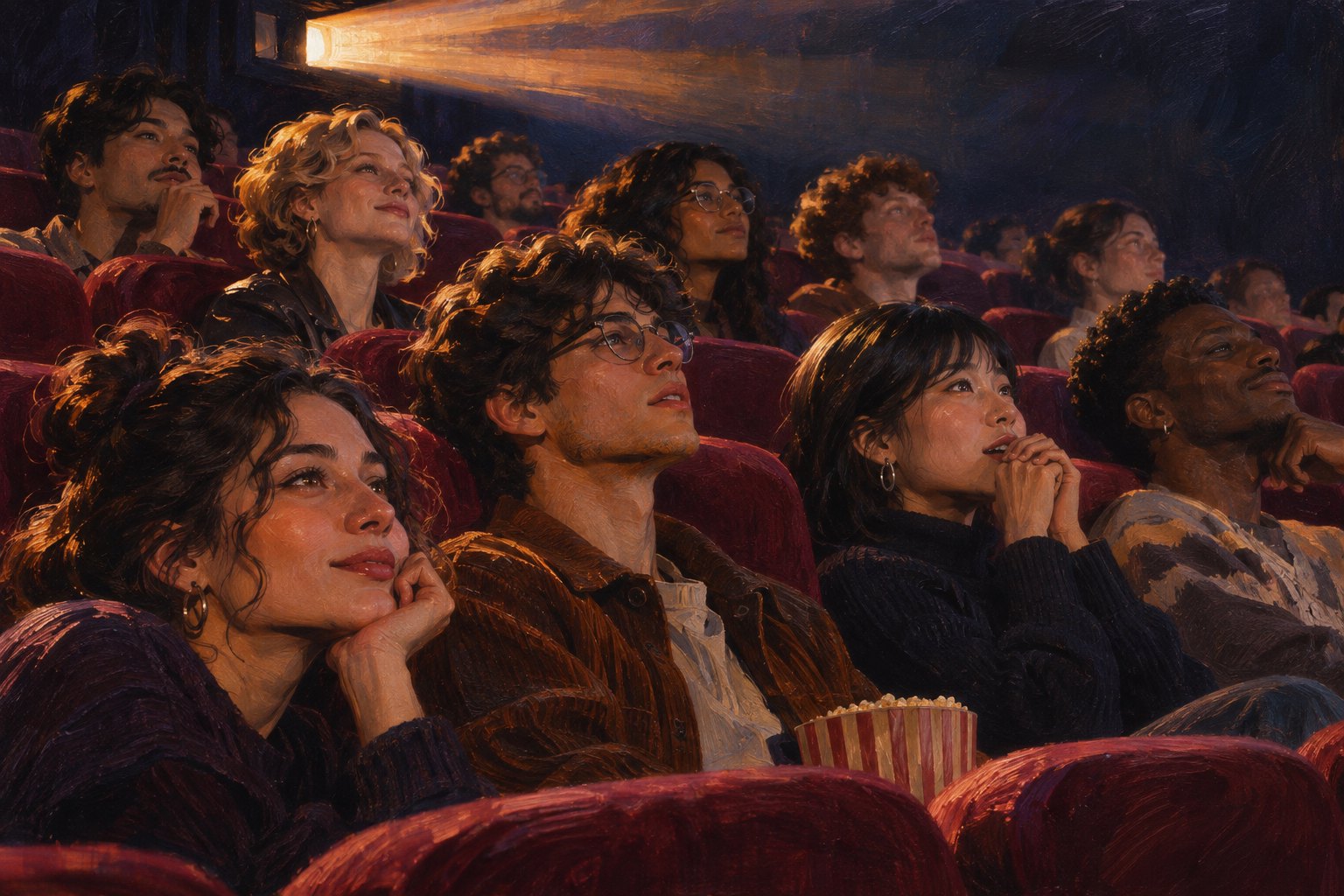
The rise of the Gen Z cinephile invites an appealing possibility: a new generation can make movie culture more curious, more conversational, and less concerned with having the approved favorites. The interesting question is how young viewers turn discovery into judgment. Watching widely is part of that process. Learning to explain why a particular scene moves, irritates, or surprises you is where a personal relationship with cinema takes shape.
This is spoiler-free cultural commentary. The New York Times has put young movie lovers in focus with “The Rise of the Gen Z Cinephile.” The subject deserves attention without treating an entire generation as a single audience. My view is that the most valuable version of this enthusiasm gives viewers permission to develop distinctive tastes—and enough confidence to revise them.
Being a cinephile should begin with curiosity
A cinephile is a movie lover. The word becomes less useful when it functions as an entrance exam: name the right directors, defend the right classics, dismiss the right blockbusters. Historical knowledge can deepen pleasure, but requiring it before someone joins a conversation reverses the order in which enthusiasm often develops. An encounter comes first; questions follow.
For a young viewer, the first encounter might be a comedy, a horror movie, an animated feature, or an unfamiliar film recommended by a friend. None is an inferior starting point. What matters is the next question. Why did that joke land? Why did a quiet hallway feel threatening? Why did an animated character's hesitation seem more truthful than a speech?
Those questions lead toward performance, framing, sound, and editing. They also prevent film appreciation from becoming a collection of prestigious titles. A viewer who can describe one scene precisely contributes more to a discussion than someone who can recite twenty masterpieces without explaining their appeal.
A recommendation can start the conversation, but cannot finish it
Public taste offers a useful shortcut through an overwhelming number of choices. A friend's enthusiasm or an arresting clip can give an unfamiliar movie a point of entry. The difficulty begins when the recommendation also supplies the reaction you feel expected to have.
A short clip may isolate a beautiful image while removing the waiting that gives it emotional force. A punch line may seem definitive until the surrounding scene reveals embarrassment or cruelty. Encountering a film through fragments is an invitation to watch; those fragments cannot establish how the whole work behaves.
For young cinephiles forming a public identity around movies, there is a particular temptation to arrive with a verdict already prepared. One useful habit is to leave the rating undecided until you can identify both a moment that worked and a moment that resisted you. Mixed feelings are often the beginning of an interesting review.
Start with what the character knows
Character analysis gives enthusiasm something concrete to work with. Begin by distinguishing your knowledge from the character's knowledge. Viewers may recognize a danger because of an earlier scene, a musical cue, or a familiar genre pattern. A person inside the story may have none of those advantages.
Before calling a decision foolish, ask what alternatives the film actually makes available. Fear, money, loyalty, shame, and incomplete information can restrict a character's choices. Understanding those pressures does not require approving the resulting behavior. It helps establish whether the screenplay has made that behavior convincing.
Then examine how the movie directs your sympathy. Does the camera stay with the person speaking or turn toward the person absorbing the damage? Does a cut interrupt an explanation? Does the soundtrack make an ordinary gesture feel heroic? These decisions shape the argument a film makes about its characters.
This approach also makes disagreement more productive. Two viewers might agree on what happened while differing on whether the filmmaking excuses it. That is a richer debate than declaring a character likable or unlikable. Our discussion of how framing and editing shape judgments about power develops this connection between perspective and interpretation.
Memorable dialogue needs the scene around it
Quoting a favorite line can be a joyful form of recognition. But dialogue becomes more revealing when you consider its dramatic purpose. Who is speaking? Who needs to believe the words? What does the speaker risk by saying them?
A declaration of confidence might conceal panic. An apology might repair a relationship or try to end an uncomfortable conversation. The words alone cannot settle the distinction; delivery, reaction shots, and subsequent behavior supply the evidence.
When writing movie reviews, verify the wording before quoting and explain what the line accomplishes. A short, accurate quotation followed by a close reading is more useful than a string of famous sentences. Equally, leave room for performances whose defining moments contain no dialogue. A delayed answer or an unfinished movement can reveal what a character refuses to admit.

Make disagreement part of movie night
A healthy film conversation allows people to be uncertain. Asking which moment stayed with someone opens more possibilities than demanding an immediate score. A friend might remember a background sound you missed or find a supposedly moving reconciliation unearned. Their response gives you something specific to reconsider.
There is no obligation to reach consensus. The useful standard is whether an interpretation can account for what appears on screen. Personal experience explains why a moment matters to you; close attention helps explain how the movie produced that response.
Access matters here, too. A young viewer's taste should not be measured by the number of screenings they can afford or the distance they can travel. Welcoming discussion means making room for different viewing circumstances. The questions explored in student outreach and first encounters with international cinema are relevant: an invitation to discover something unfamiliar works best when it comes without a demand to prove sophistication.
Build taste through a few repeatable habits
For anyone developing a deeper interest in film, these practices turn casual reactions into usable observations:
- Record a scene before assigning a score. Describe what happened, then identify the image, sound, or performance detail behind your response.
- Separate confusion from criticism. State what you could not follow before deciding whether the film failed to communicate it.
- Follow one connection. Explore another performance, a related theme, or a different film by the same director without treating discovery as homework.
- Revisit a disputed moment. Check whether your interpretation survives another look, and acknowledge it when your memory was inaccurate.
- Keep some favorites undefended. Pleasure does not always require a public argument, even when understanding that pleasure can be rewarding.
The freedom to change your favorite movie
My strongest hope for Gen Z cinephilia is that it makes changing your mind feel ordinary. A favorite can lose its hold. A film that once seemed distant can become intimate. Neither development invalidates the earlier response; it gives you a reason to examine what changed in the work you noticed and the person doing the watching.
That is the deeper promise of a new generation's movie love. Cinema offers sustained encounters with people whose motives, circumstances, and contradictions exceed a quick judgment. A film culture built around those encounters has room for excitement and scrutiny, popular entertainment and difficult art. Its most interesting participants will be the ones willing to look again.
Original content by this site's editorial team. Published: November 10, 2026 at 07:29:47 PST (Los Angeles time)