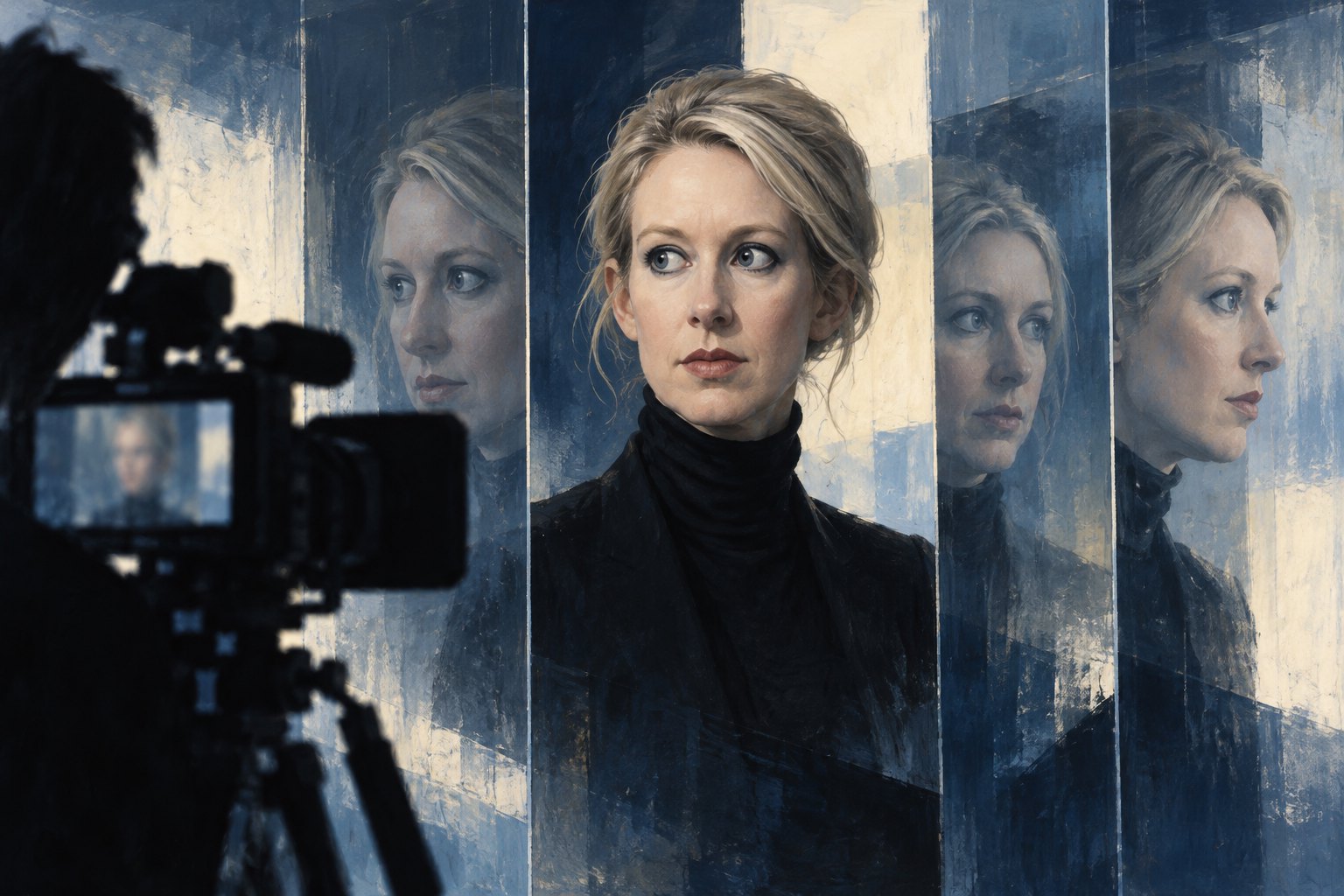
Ken Russell’s The Devils makes a frightening distinction between being a flawed person and being guilty of the crime that power needs you to have committed. Its central priest deserves criticism. He does not deserve what happens to him. Holding those thoughts together is the essential challenge of this extraordinary, exhausting film.
Released in 1971 and starring Oliver Reed as Urbain Grandier and Vanessa Redgrave as Sister Jeanne, the film sets religious persecution within the political struggle over seventeenth-century Loudun. The British Film Institute identifies that collision of institutional authority, sexuality, and individual resistance as central to Russell’s work. [BFI’s introduction to Ken Russell](https://www.bfi.org.uk/features/where-begin-with-ken-russell).
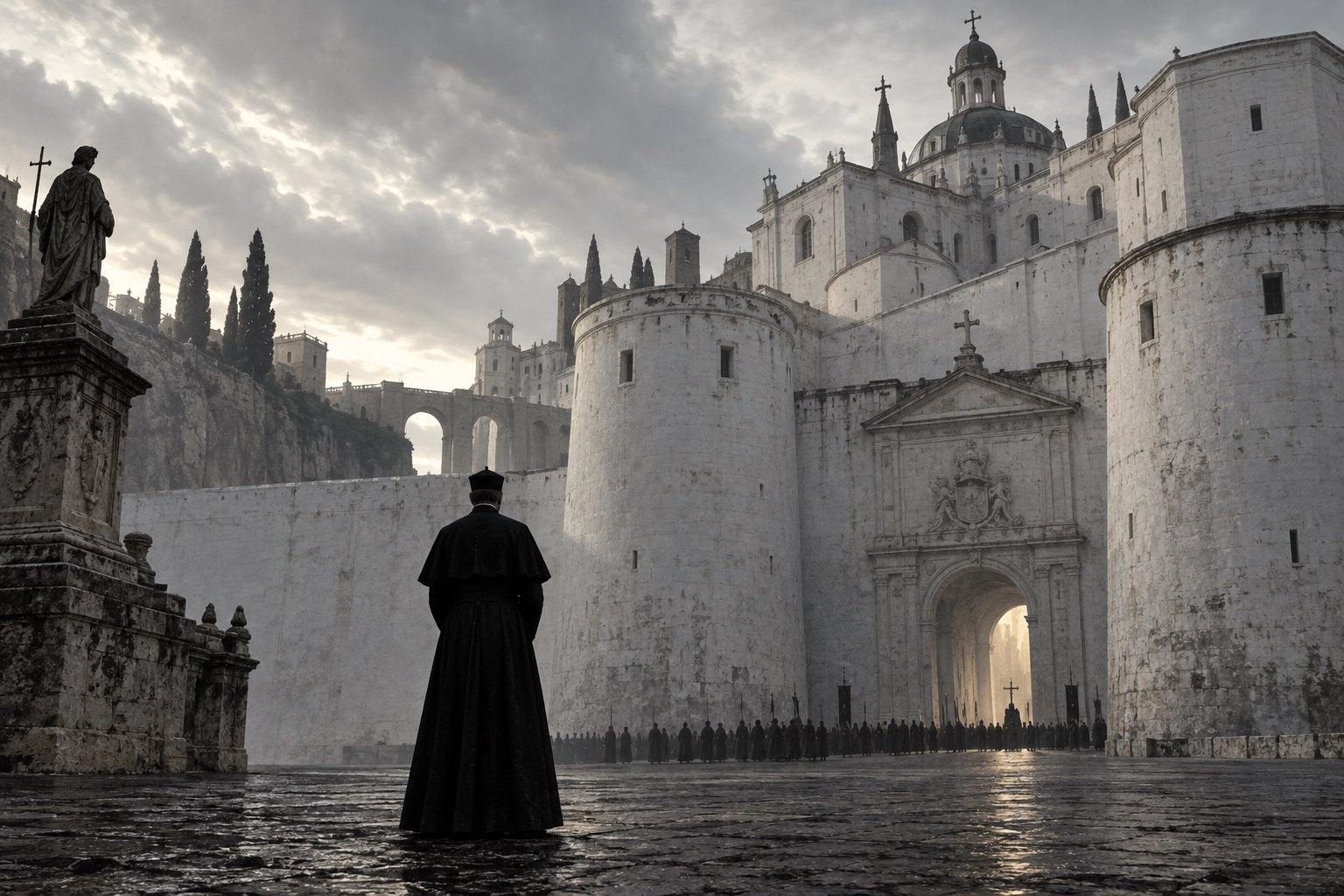
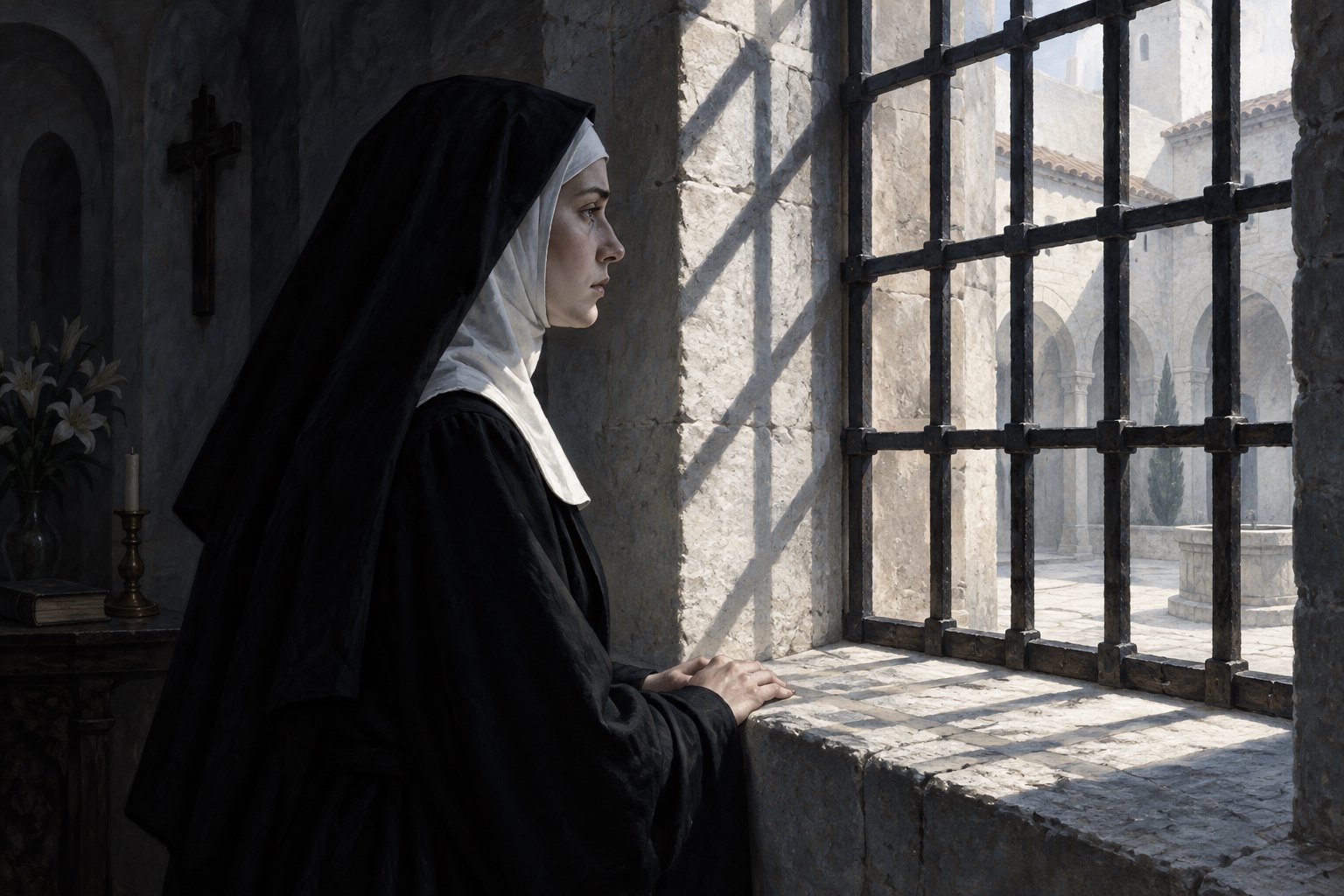
Full spoilers follow, including the ending. The film contains sexual imagery, religious desecration, torture, and execution. The illustrations accompanying this review are conceptual artwork, not film stills.
Grandier: A Man Worth Defending Without Excusing
Grandier initially treats his authority as permission. He abandons the pregnant Philippe, then develops a different relationship with Madeleine, whom he marries. Meanwhile, his resistance to the destruction of Loudun’s fortifications makes him politically inconvenient. These intersecting personal and public conflicts establish the prosecution’s opportunity. The narrative and character credits are documented in the [AFI Catalog’s account of The Devils](https://catalog.afi.com/Film/54241-THE-DEVILS).
Reed’s performance makes confidence feel almost architectural. Grandier occupies space as though the world has already agreed to accommodate him. That physical assurance is attractive, but it also exposes his assumption that intelligence and charisma will protect him from consequences.
The crucial distinction is between accountability and persecution. Grandier’s sexual conduct gives viewers reasons to distrust his self-image. It gives his enemies a useful atmosphere of scandal. It does not establish witchcraft. Russell makes us confront how readily a reputation can become a substitute for evidence.
This is also why the character’s eventual dignity matters. A conventionally spotless hero would make the audience’s ethical task easy. Grandier requires us to defend a principle while remaining dissatisfied with the person protected by it. Our discussion of public heroism and private responsibility in Animals considers a related problem: a compelling moral narrative can obscure the people its central figure has hurt.
Sister Jeanne: When Private Longing Becomes Public Evidence
Jeanne’s erotic fixation on Grandier gives his enemies their opening. Her imagined intimacy acquires the authority of an accusation, and the convent becomes the center of a public possession spectacle.
Redgrave makes Jeanne difficult to reduce to either villain or victim. Her desire is real as an experience, however false the account built around it becomes. From her perspective, Grandier represents access to a life beyond confinement: bodily recognition, affection, and the possibility of being chosen.
Yet recognizing deprivation does not erase responsibility. Jeanne’s suffering becomes dangerous when another person is made answerable for it. The film’s moral pressure comes from watching an intimate fantasy enter a system that rewards its most destructive interpretation.
There is a troubling limitation here, too. Russell’s treatment of Jeanne’s disability can lean on a cruel visual association between bodily difference and psychological disturbance. Redgrave’s emotional specificity gives the character more complexity than that shorthand deserves. Admiring the performance does not require accepting every implication of the imagery around it.
Her predicament becomes most revealing when she tries to retract her accusation and the retraction is dismissed as demonic interference. An institution has appropriated her voice so completely that even contradicting it supplies further confirmation. She has gained attention without gaining control.
Father Barre: A Spectacle That Cannot Admit Failure
The exorcist Father Barre, played by Michael Gothard, turns religious authority into performance. In the empty-reliquary episode, the supposed cure works even though the sacred contents are absent. Exposure does not stop the proceedings.
That is the film’s most incisive account of institutional dishonesty. We might expect decisive evidence to end a deception. Russell instead shows how an accusation can survive because too many participants benefit from keeping it alive.
For Barre, doubt would mean surrendering the role that makes him important. For political operators, it would jeopardize a useful prosecution. For spectators, it would interrupt the pleasure of watching forbidden behavior under the respectable cover of condemnation.
The crowd’s appetite is especially uncomfortable because Russell gives the movie audience a similarly overwhelming show. We are invited to recoil, but also encouraged to keep looking. That tension connects with the difference between looking closely and understanding a subject: access to an intimate spectacle does not automatically produce insight.
Why the Film’s Excesses Matter—and Sometimes Overwhelm
Derek Jarman’s sets and Peter Maxwell Davies’s dissonant score are essential to the film’s sensory force, as the [BFI’s film description](https://shop.bfi.org.uk/the-devils-2-dvd-set/) notes. The architecture and sound make religious order feel unstable from within.
To my eye, the pale surfaces are particularly effective. Their apparent cleanliness offers no moral reassurance. Against them, bodies become conspicuous, vulnerable, and available for inspection. The surroundings suggest a world obsessed with purity that has lost the ability to recognize cruelty.
Russell’s crowded compositions also deny the comfort of isolating evil in one sinister face. Authority, curiosity, embarrassment, and pleasure coexist within the same frame. The disturbance is social before it is supernatural.
Still, the relentlessness can flatten distinctions that the characters otherwise sustain. When nearly every register reaches an extreme, another grotesque flourish may add less than a quiet reaction would. The film is strongest when Reed’s stillness or Redgrave’s hesitation interrupts its frenzy. Those pauses give suffering an individual owner.
Madeleine and the Ending: What Martyrdom Leaves Behind
Grandier’s declaration, “I am innocent of the charges,” is followed by something less heroic and more affecting: “And I am afraid.” These brief lines preserve the difference between moral resolve and emotional invulnerability. [Grandier’s speech in the film](https://clip.cafe/the-devils-1971/my-lords-i-am-innocent-of-the-charges/).
Fear gives his refusal weight. He does not become courageous by ceasing to understand what will happen. He remains frightened and refuses the lie anyway. Reed allows dignity to emerge through the collapse of the character’s earlier assurance.
Grandier is executed, the fortifications fall, and Madeleine leaves through the ruined city. The sequence makes political victory visible while denying it any moral legitimacy.
Gemma Jones’s Madeleine supplies the ending’s necessary change of perspective. A martyr narrative can make death appear to complete a meaningful design. Her survival asks what that design offers the person left behind. She must continue living after the public has consumed the catastrophe.
The Devils Within the Desire for Certainty
My reading of The Devils is that its deepest subject is the temptation to make another person carry everything we cannot acknowledge in ourselves. Jeanne’s longing, Grandier’s vanity, Barre’s authority, and the spectators’ appetite are distinct weaknesses. Political power gives them a common target.
The film’s achievement is to preserve faith as a possibility even while showing religious institutions committing atrocities. Grandier’s final integrity depends on accepting responsibility for his own life without accepting an invented crime. That distinction is the moral clarity the surrounding spectacle tries to destroy.
The Devils remains a demanding, sometimes punishing film. Its strongest accusation reaches beyond its persecutors: certainty can feel most righteous precisely when it has become least interested in another human being.
Original content by this site's editorial team. Published: October 15, 2026 at 07:08:41 PDT (Los Angeles time)