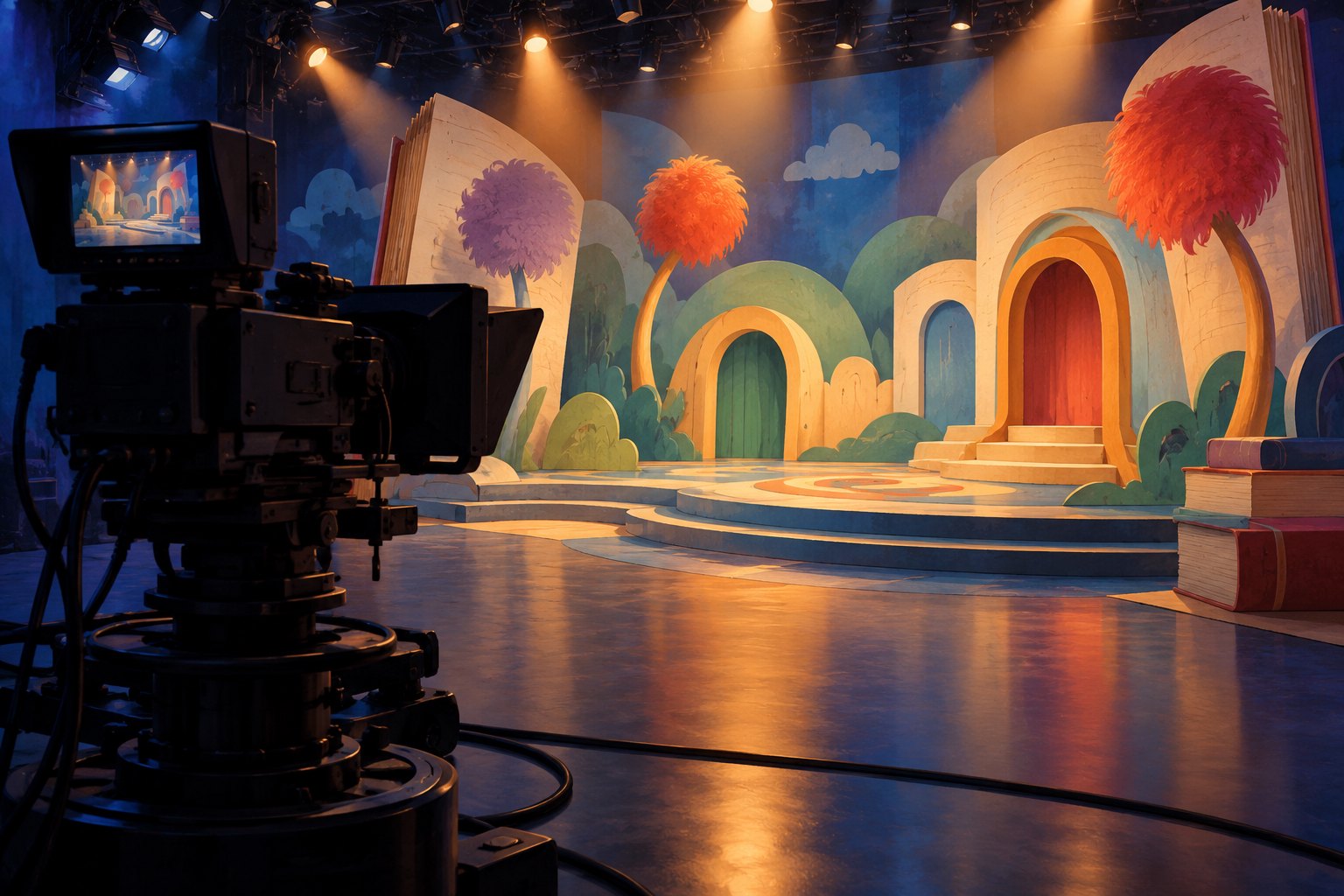
Shane Gillis accidentally dropped an F-bomb while hosting Saturday Night Live during a Dr. Seuss-inspired sketch, according to Variety’s reporting. The incident brings together two sharply different expectations: the controlled, familiar language associated with children’s stories and the possibility that anything spoken on live television might escape its intended boundaries.
The immediate question is straightforward: did Gillis swear during the sketch? The reporting says yes and characterizes the profanity as accidental. The more interesting critical question concerns what happens to a performance when a mistake becomes its defining detail. A sketch asks viewers to follow fictional people through a comic situation. An accidental expletive can redirect that attention toward the person performing it.
That shift is the focus here. This is commentary on the reported incident and its comic implications, rather than a scene-by-scene verdict on the complete sketch or episode.
Why the Dr. Seuss Setting Matters
A Dr. Seuss-inspired sketch arrives with associations before anyone delivers a joke. Readers recognize a world of patterned language, playful invention, and stories commonly encountered in childhood. Those associations give an adult comedy show something immediate to work against. The audience brings an expectation of verbal order; comedy can exploit a departure from it.
Profanity creates an especially blunt departure. Its effect does not depend entirely on how offensive a viewer finds the word. An expression that passes almost unnoticed in an adult conversation becomes conspicuous when placed beside a storybook frame. Context changes the force of the language.
My reading is that this contrast makes the reported accident more distinctive than an isolated instance of a comedian swearing. The setting supplies a second layer of surprise. The interruption crosses between registers as well as between planned performance and live mishap.
That does not establish what the writers intended, or prove that the slip improved their material. A comic contrast can be legible without being purposeful. Keeping those possibilities separate helps preserve the difference between analyzing an incident and assigning credit for it.
The Moment Attention Moves Away From Character
In a scripted scene, dialogue ordinarily belongs to a character. We interpret its tone through that character’s desires, frustrations, and relationships. Even an outrageous sentence can feel coherent when it expresses what someone in the fictional world wants.
An acknowledged performance error introduces another explanation. Instead of asking only what the character means, viewers may start asking what the actor meant to say. The practical circumstances of the broadcast become part of the experience: memorized language, timing, concentration, and the challenge of continuing when something unexpected happens.
For Gillis, the reported accident makes that boundary the central issue. It would be a mistake to treat an unintended word as a definitive statement about his fictional character. It would also be too simple to treat every striking moment involving a provocative comedian as deliberate provocation. Intent still matters, even when the result attracts attention independently of it.
Character-centered criticism depends on watching how a performance directs our attention. Our analysis of Chiron’s quiet story in Moonlight approaches that question through sustained dramatic identification. This incident presents a very different version of the problem: attention can move away from a fictional person and toward the performer’s immediate circumstances in a single word.
A Memorable Accident Is Not a Complete Review
There are several different judgments available here, and they should not collapse into one. The profanity may be surprising. The interruption may be memorable. The surrounding sketch may succeed or fail on its own comic terms. None of those conclusions automatically settles the others.
A useful review of the complete performance would examine its premise, the specificity of its characters, and whether successive beats develop the joke. It would ask what changes as the scene continues. Does a character’s response complicate the situation? Does repetition build pressure? Does the ending pay off an idea introduced earlier?
The accidental word cannot answer those questions. At most, it gives the performance an additional event that viewers may remember alongside its intended structure. A sketch can contain an unforgettable mishap and ordinary writing; it can also contain strong writing that becomes overshadowed by a mishap.
For that reason, I would resist calling the incident either a comic triumph or proof of failure. The defensible observation is narrower: it creates a conspicuous break between the material’s storybook associations and the realities of its live delivery.
Why This Deserves a Separate Conversation From the Monologue
Gillis’s hosting appearance also prompted discussion of his opening monologue. But a monologue and an accidental interruption inside a sketch present different critical problems. One invites scrutiny of the language a comedian chooses to present as part of an address to the audience. The other requires care about attributing intention to something reported as unintended.
Our commentary on Gillis’s monologue and the mechanics of provocation examines how a joke establishes its target. Applying exactly the same framework to this slip would miss the distinction between constructing a provocative line and accidentally uttering a prohibited word.
Neither distinction amounts to an exemption from criticism. It simply identifies the appropriate subject of criticism. Writing can be evaluated for its argument and construction; performance can be evaluated for control, timing, and responsiveness. A fair assessment allows those elements to produce different verdicts.
What the Slip Reveals About Live Comedy
The deeper appeal of a live mishap is that it briefly exposes the work beneath the illusion. Scripted comedy depends on people making rehearsed actions feel spontaneous. An actual accident reverses that arrangement: spontaneity arrives without the protection of a planned payoff.
Viewers can find that exposure engaging because the stakes become immediately understandable. Whatever fictional situation the sketch has established, there is now also a real person working through a performance that cannot simply restart. That human pressure can command attention without becoming evidence of artistic excellence.
Gillis’s reported F-bomb is therefore most interesting as a change in the audience’s relationship to the scene. The Dr. Seuss framework promises a recognizable verbal world; the accidental profanity makes the act of performing suddenly visible. The lasting critical question is whether the surrounding comedy remains compelling once the surprise has worn off. A mistake can make a sketch famous. Its characters, construction, and delivery still determine what is worth revisiting.
Original content by this site's editorial team. Published: October 11, 2026 at 06:37:22 PDT (Los Angeles time)