Ridley Scott is producing a new Alien movie, according to Gizmodo. That reported involvement gives audiences a reason to revisit what his original film does so well: it makes a spaceship feel like somewhere people reluctantly go to work.
A producer credit alone cannot establish the next movie’s story, performances, or effectiveness. But it raises a useful creative question. Which qualities of Scott’s Alien deserve protection as the series continues? My answer starts with three characters who rarely dominate the franchise’s mythology: Parker, Brett, and Lambert.
Spoilers follow for the theatrical version of Alien (1979), including character deaths. This is a retrospective review and commentary on the production news, not a review of the forthcoming movie.
The people behind the spaceship’s machinery
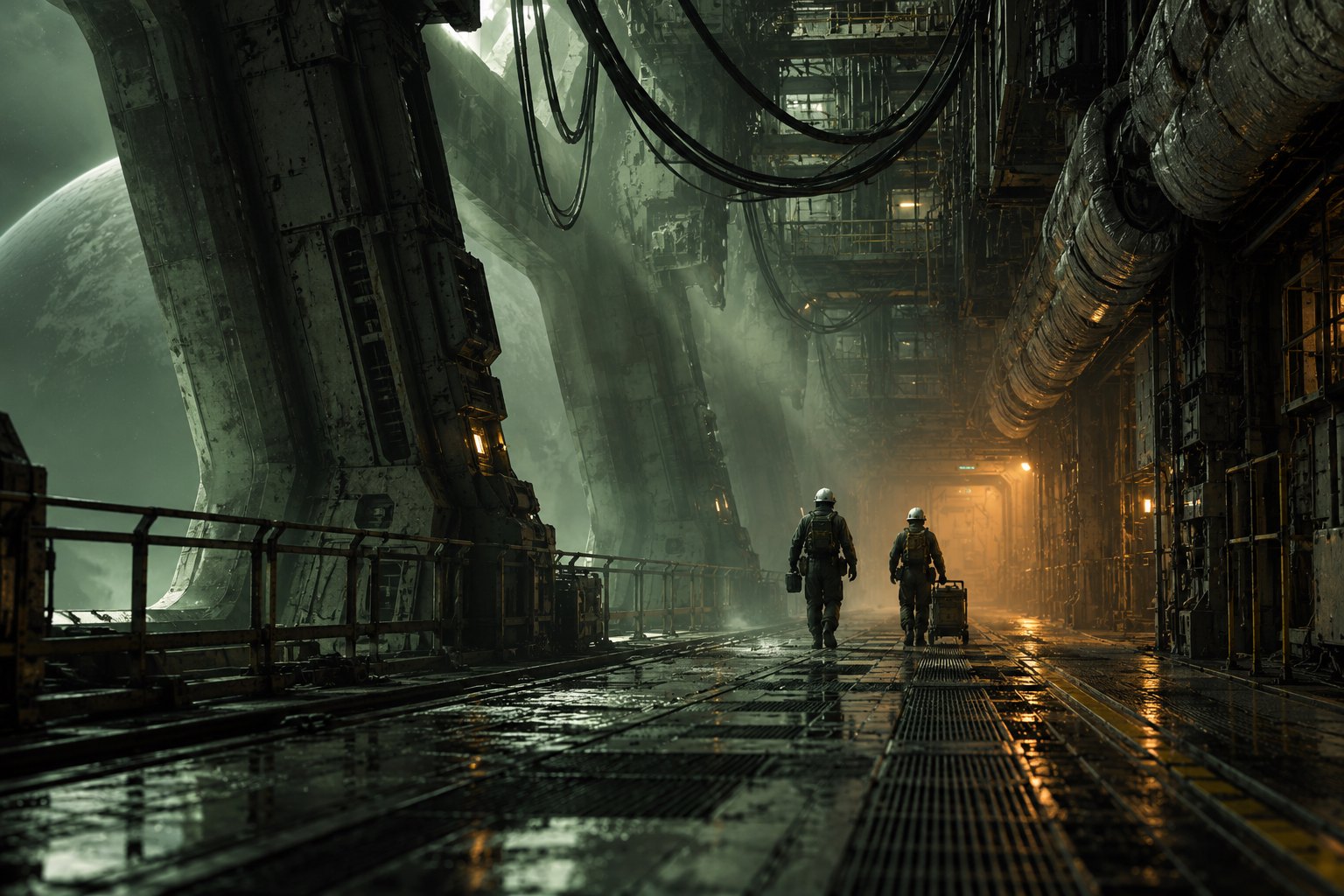
Directed by Scott, with a screenplay credited to Dan O’Bannon, Alien introduces the commercial towing vessel Nostromo as a workplace with an established social order. Its crew members have different responsibilities, different levels of authority, and different opinions about what their labor is worth.
Parker’s interest in “the bonus situation” initially supplies comedy. He and Brett want a better deal. Their persistence interrupts the smooth business of taking orders, and that interruption gives the film its texture. These people have concerns that existed before the audience arrived.
Yaphet Kotto makes Parker’s complaints feel like an assertion of standing. He expects his work to count. Harry Dean Stanton gives Brett a quieter presence, with his familiar “Right” becoming a small expression of allegiance. Together, they suggest a friendship formed through repeated shifts, shared irritation, and knowing which colleague will back you up.
That relationship matters because a horror film needs something for violence to interrupt. Here, the interruption destroys a recognizable social world. The crew’s ordinary grievances give the extraordinary danger a human scale.
Our earlier discussion of the human challenge facing another Alien screenplay considered the franchise through judgment and betrayal. Parker and Brett offer a complementary perspective: the people who keep the machinery functioning have a particularly clear stake in getting home.
Why the meal table matters as much as the monster
The crew’s shared meals make the Nostromo briefly seem habitable. People talk across one another, occupy familiar places, and tolerate personalities they probably would not choose as companions on vacation. The casual rhythm helps establish the difference between living together and trusting one another completely.
When Kane appears to recover and rejoins the group, the meal offers a temporary return to that rhythm. His violent death breaks more than the expectation of medical recovery. It turns a communal space into somewhere nobody can feel safe.
For me, the scene’s enduring force depends on this lost normality. The table has already been a place for jokes and complaints. The horror invades an activity the characters understand, then leaves them without a useful response.
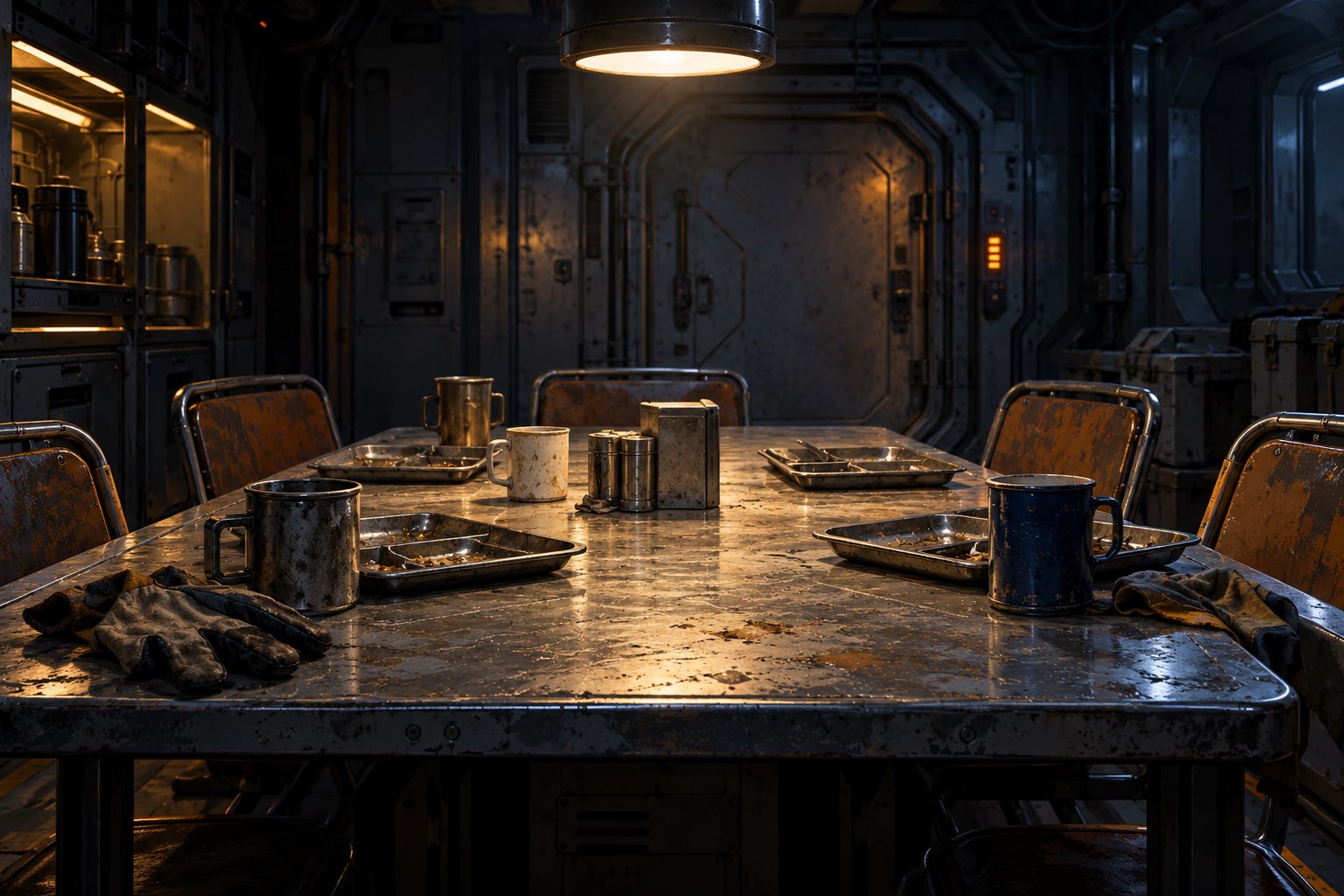
That is a practical storytelling lesson for the new production. Give the audience time to recognize how people behave together. A distinctive creature can produce a startling image; an established routine gives its arrival something to destroy.
Brett makes an ordinary task feel unbearable
Brett’s search for Jones, the ship’s cat, is one of the original film’s most effective changes of scale. The immediate task is small and understandable. The surrounding space becomes enormous.
Scott allows the search to take time. Machinery, moisture, and shadow complicate what we can see. Brett moves through an environment that belongs to his working life, yet familiarity no longer provides security. The creature’s attack reveals how thoroughly the ship has changed around him.
Stanton’s understated performance is crucial. Brett does not suddenly acquire a heroic speech or an elaborate personal revelation. The film lets an ordinary man remain ordinary at the moment he becomes vulnerable.
My reading is that this restraint makes the loss more disturbing. A character should not have to announce his importance before his death matters. We have already heard his voice and understood his connection to Parker. That is enough.
Lambert’s fear deserves to be taken seriously
Lambert, played by Veronica Cartwright, exposes the emotional cost of the crew’s predicament. During the expedition to the derelict vessel, her wish to leave supplies a counterweight to the others’ continued investigation. Her discomfort belongs inside the scene’s logic: the surroundings are threatening, and understanding them offers no immediate guarantee of safety.
Later, as Dallas enters the air shafts, Lambert follows the tracking display. She can see danger approaching without being able to make the information translate cleanly into escape. The sequence turns communication into another source of helplessness.
It is easy to evaluate horror characters as though they were contestants being scored for composure. Cartwright makes that approach feel inadequate. Lambert’s fear registers what sustained exposure to danger might actually do to someone.
The film does give her less room to develop beyond distress than it gives its eventual survivor. That limitation deserves acknowledgment. Even so, her presence prevents the ensemble from settling into one uniform mode of resourcefulness. Fear has a face and a voice, and neither is reassuring.
Parker’s final choices change how his complaints sound
Near the end, Parker and Lambert gather coolant for the escape shuttle. Their practical work continues even as the ship becomes almost impossible to inhabit. When the creature confronts them, Lambert’s position prevents Parker from safely using his flamethrower.
His shouted “Get out of the way” expresses a terrible conflict: he has a weapon, but using it risks the person he wants to protect. The scene makes capability insufficient. Strength and determination cannot resolve the situation in time.
Seen from this endpoint, Parker’s earlier concern with compensation gains weight. Wanting fair treatment never meant he lacked concern for other people. His behavior resists the convenient assumption that a character who talks about money must eventually reveal selfishness.
This is where the film’s ensemble writing earns its bleakness. The deaths feel consequential because individual temperaments remain visible under pressure. A future installment can pursue very different characters while preserving that specificity.
What Scott’s producer role invites us to watch for
The announcement supports interest, not a verdict. As with judging what an opening sequence can actually reveal, expectations should remain proportional to the evidence. A name attached to a production cannot tell us whether its scenes will sustain tension.
When material from the new movie becomes available, the useful questions will concern behavior. Do the characters seem to have relationships beyond the immediate emergency? Does their work shape how they respond? Can we distinguish their fears without relying on exposition?
Those questions leave plenty of room for invention. Another Alien does not need another bonus argument or another cat search. It needs people whose everyday choices make the danger particular.
The deeper horror: a working life can become disposable
My strongest reading of Alien begins with the distance between the crew’s view of themselves and the value assigned to them. Parker and Brett understand their labor as something worth negotiating over. Lambert understands her fear as a reason to stop. Their lives contain claims that deserve to be heard.
The film places those claims inside a system that can disregard them. That makes its industrial setting morally significant: the workplace promises order and purpose while offering remarkably little protection.
Scott’s involvement in a new movie is intriguing because his original film makes that contradiction tangible. Its lasting achievement is the attention it gives people before they disappear. Whatever shape the next story takes, that attention remains the franchise’s most valuable inheritance.
Original content by this site's editorial team. Published: October 24, 2026 at 07:56:53 PDT (Los Angeles time)