
Resident Evil leads the global box office in Deadline’s reporting, which also flags a record for Zach Cregger. Other Mommy follows in second place worldwide with more than $45 million. Together, those headlines put horror at the center of the theatrical conversation. But the most interesting question surrounding Resident Evil is about the two names now sharing its success: the familiar title and the filmmaker.
A recognizable property offers audiences an expectation. A director offers a way of seeing. When both appear to be working commercially, it becomes tempting to declare that one explains the other. The more useful critical question is how a film turns that combination into an experience that matters moment by moment.
This is spoiler-free box-office commentary, not a scene-by-scene review. Plot developments, dialogue, and Easter eggs are not assessed here without verification.
What the reported result establishes
The central reported developments are straightforward: Resident Evil occupies the leading global position, Cregger has a record attached to the result, and Other Mommy has passed $45 million worldwide. The precise category of Cregger’s record matters, however. A career milestone, an opening record, and a franchise record describe different achievements; they should not be treated as interchangeable.
Likewise, the $45 million-plus figure should retain its worldwide label. It should not become a domestic total or a profit estimate through casual retelling. Without a matching figure and measurement period for Resident Evil, calculating a gap between the films would create precision the available reporting does not support.
Those boundaries leave plenty to discuss. The association of Cregger’s name with the commercial result makes authorship part of the news. That is a different issue from the immediate reputations explored in our commentary on Other Mommy and the expectations created by opening-weekend coverage. Here, the question is whose creative identity audiences believe they are buying into.
A familiar title and a filmmaker make different promises
A franchise title can promise recognition before a viewer knows anything about a particular installment. The attraction might be a fictional world, an atmosphere, or simply the possibility of revisiting something that once frightened them. A filmmaker’s name can create a separate expectation: curiosity about how the material will be staged, paced, and interpreted.
My view is that the strongest version of this relationship allows both promises to remain active. Familiarity can provide an entrance, while direction makes the experience specific. Problems arise when recognition becomes the whole reward, or when the desire to announce a fresh interpretation overwhelms the story’s emotional logic.
The commercial result cannot tell us how that balance was achieved. Nor can it isolate why individual viewers bought tickets. Someone might have come for Resident Evil, for Cregger, for a companion’s recommendation, or simply for a frightening night out. These are possible motivations, not measured explanations of this result.
That distinction also changes how much credit a record can carry. It is reasonable to discuss Cregger’s visibility alongside the film’s reported performance. It is a larger, unsupported leap to claim that his name alone produced it. Commercial authorship is rarely as tidy as a headline makes it sound.
Character perspective is where horror earns its identity
For criticism, the most revealing place to look is the relationship between what a character knows and what the audience knows. A recognizable setting can make viewers feel informed. Horror becomes more demanding when the person inside that setting has incomplete information and must act anyway.
Consider the basic dramatic problem of approaching an unfamiliar doorway. The tension depends on more than what might wait beyond it. Why must the character enter? What alternative appears available? What earlier experience shapes the decision? These are general examples of how suspense works, not descriptions of scenes in Cregger’s film.
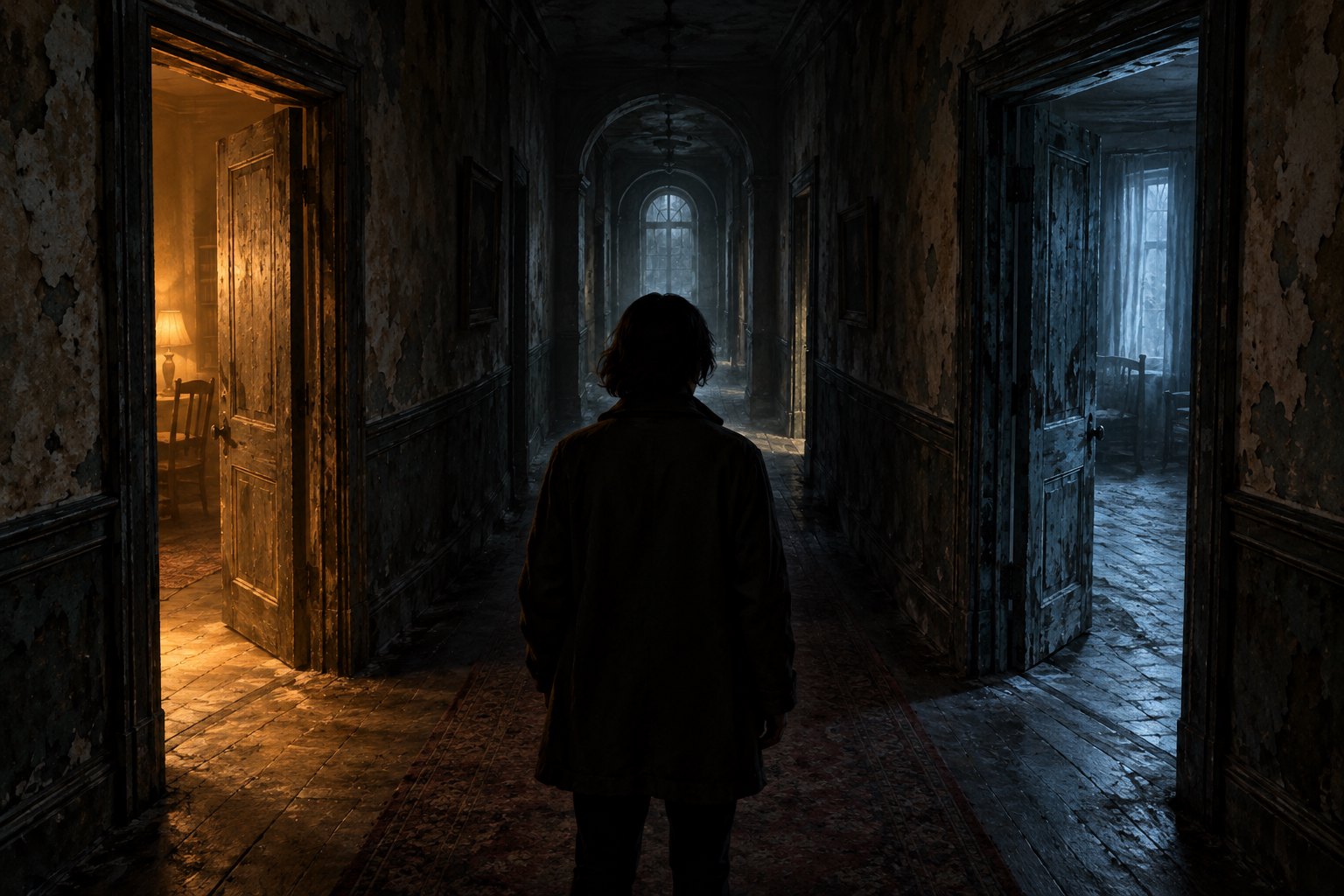
From a character’s perspective, danger has to be interpreted before it can be confronted. Framing can restrict what is visible. Sound can suggest a threat without locating it. Editing can grant enough time to consider an escape, then make that possibility uncertain. These choices give a director’s interpretation substance beyond the presence of recognizable imagery.
This is the standard I would bring to a close reading of Resident Evil: whether its construction of fear makes the protagonist’s decisions intelligible. A frightened person does not have to behave perfectly. Their mistakes should reveal pressure, limited knowledge, or competing loyalties. Otherwise, suspense risks depending on the audience overlooking behavior the film has failed to motivate.
Other Mommy keeps the conversation bigger than one success
Other Mommy matters here because the reported worldwide result places another horror title prominently beside Resident Evil. That supports a narrow but meaningful observation: this box-office story has room for more than one film. It does not, by itself, establish that the same audiences embraced both or that both satisfy the same appetite.
For viewers, the useful comparison would concern the experiences each film offers: the kind of uncertainty it creates, the emotional relationships it develops, and the extent to which its scares change our understanding of its characters. Those distinctions require evidence from the films. A worldwide dollar figure cannot supply them.
Our earlier examination of Other Mommy’s opening beside The Social Reckoning considered a different commercial comparison. This pairing invites a broader question about horror’s range. The opportunity for criticism is to explain differences between successful titles, rather than flattening them into a single formula for what audiences supposedly want.
The lasting question is what recognition becomes
Cregger’s reported milestone makes his association with Resident Evil a significant part of the film’s public story. My deeper interest is in the creative tension behind that association. A familiar title encourages viewers to arrive with knowledge; effective horror can make that knowledge feel insufficient.
That tension offers a useful way to think about adaptation and authorship. Recognition becomes dramatically valuable when it changes how we experience a character’s uncertainty, rather than merely reassuring us that we recognize the reference. The director’s achievement then lies in organizing our attention: making us watch, listen, anticipate, and sometimes misunderstand alongside someone in danger.
The reported global lead establishes a commercial achievement. A lasting critical case for this Resident Evil would need to show how its filmmaking gives fear a particular human perspective. That is where a familiar name can become a memorable movie.
Original content by this site's editorial team. Published: October 11, 2026 at 12:01:46 PDT (Los Angeles time)