
Resident Evil is showing two encouraging early signs: people are turning up, and many of those registering a reaction appear pleased. Deadline reports estimated previews of $8 million–$9 million, describing the performance as a potential franchise best, alongside a 91% Rotten Tomatoes audience score. The combination deserves attention because ticket purchases and post-screening approval answer different questions.
The estimate measures business already developing around the release. The audience figure offers an early indication of satisfaction. Together, they make a stronger opening argument than advance enthusiasm alone. They still leave an interesting critical question: what kind of experience is Resident Evil giving viewers that they might want to recommend?
Limited spoilers follow for the setup and individual moments. The character analysis below draws on scenes described in published reviews; it is not a firsthand screening verdict.
What the preview estimate actually establishes
The $8 million–$9 million range should remain a range. Turning it into a definitive $9 million haul would erase the uncertainty in the reporting. Likewise, a franchise-best preview performance is a specific achievement, separate from a record opening weekend or a record total theatrical run.
Previews capture the first wave of attendance. They cannot, by themselves, establish how much demand remains after the most eager viewers have bought tickets. A familiar title may attract people immediately, while subsequent business depends on whether interest continues beyond that initial group.
That makes the audience response especially relevant. A strong start accompanied by favorable reactions gives the film a plausible route toward further recommendations. It does not provide a reliable formula for calculating the weekend. Applying an arbitrary multiplier would create precision that the available figures cannot support.
Our earlier look at Resident Evil’s box office expectations considered the anticipation surrounding the reboot. This report advances the conversation: there is now an early attendance estimate to discuss alongside an early measure of approval.
How to read the 91% audience score
A 91% audience score does not mean the average viewer awarded the film 9.1 out of 10. Rotten Tomatoes describes its audience percentage as the share of participating users whose ratings are positive. It also distinguishes audience responses from the professional reviews represented by the Tomatometer. Those are separate measures. [Rotten Tomatoes’ scoring explanation](https://www.rottentomatoes.com/about).
The figure also needs its reporting context. The cited 91% is a snapshot, not a permanent rating. Without an accompanying count and identification of the rating category, it should not be expanded into claims about the entire moviegoing public or a precisely defined group of verified ticket buyers.
For someone deciding whether to watch, the useful takeaway is narrower: the reported response is encouraging. It does not reveal whether people most appreciated the scares, the jokes, the creatures, or the connection to the games. Understanding that appeal requires looking at the film’s dramatic choices.
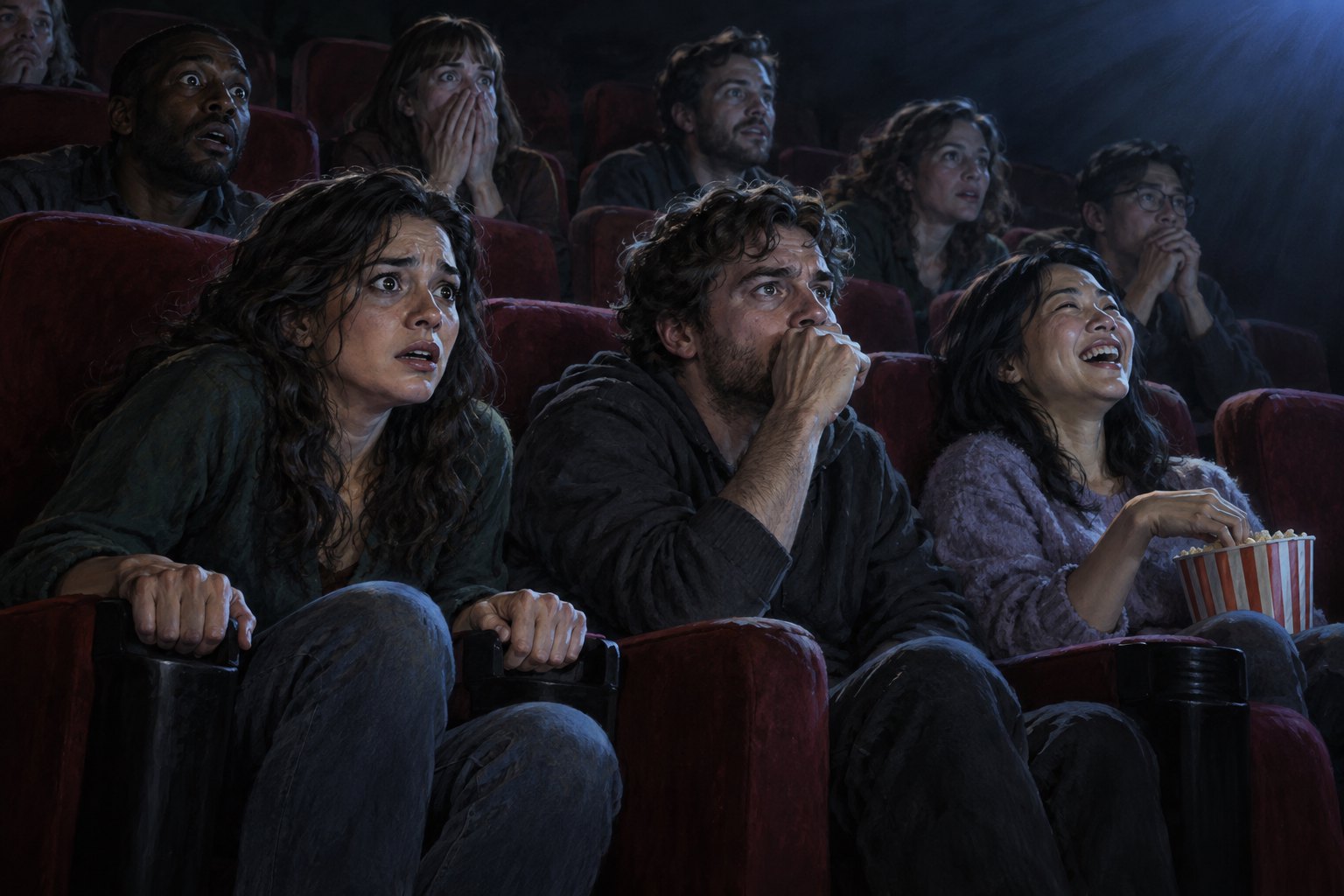
The audience knows more than Bryan does
One revealing moment comes early. TheWrap describes medical courier Bryan, played by Austin Abrams, striking a zombie with his vehicle and initially interpreting her condition as injuries from the collision. His attempt to help makes matters worse. [TheWrap’s account of the setup](https://www.thewrap.com/creative-content/movies/resident-evil-2026-review-zach-cregger/).
Read from Bryan’s perspective, that mistake is reasonable. He responds to an apparent accident using the assumptions of ordinary life. Viewers arriving at a movie called Resident Evil have an advantage: they can recognize danger before he understands its rules.
My reading is that this gap offers a particularly effective basis for audience participation. We can anticipate his error while still sympathizing with the impulse behind it. A frightening encounter becomes more involving when the person walking into it has a defensible reason to do so.
That gives a different emphasis to our closer analysis of Bryan’s vulnerability: his limited knowledge also creates a relationship between the character and the people watching him.
Why a frightened confession can beat an action quip
The Associated Press quotes Bryan struggling with a firearm: “I only use guns in video games.” His follow-up is equally revealing: “It’s confusing in real life!” The humor rests on a recognizable mismatch between imagined competence and actual ability. [The Associated Press review](https://apnews.com/article/82a73a5e863c0b726fcbf001038323a0).
Those lines invite laughter without requiring Bryan to stop being afraid. His admission gives the audience permission to acknowledge the absurdity while remaining invested in his predicament.
There is a useful distinction here for evaluating horror comedy. A joke can release accumulated tension, making room for the next scare. It can also make danger feel inconsequential. The critical question is whether laughter changes our concern for the person at risk. A favorable percentage cannot settle that question, but it makes the balance worth examining.
Recognizing the game does not mean controlling the outcome
Slant describes Bryan overlooking useful elements of his surroundings and struggling with weapons, including the contrast between expending ammunition on a door and finding a key. These reported details suggest a form of suspense built around imperfect decisions. [Slant’s discussion of the film’s game elements](https://www.slantmagazine.com/film/resident-evil-review-austin-abrams-zach-cregger/).
My interpretation is that this approach gives experienced players an additional source of anxiety. Recognizing a possible solution does not let them execute it. The film places them in the uncomfortable position of watching someone else misunderstand a situation they think they could manage.
For viewers unfamiliar with the games, the basic frustration remains legible. A blocked passage, a badly handled tool, and a person under pressure need little explanation. That accessibility offers a plausible artistic reason for broad appeal, although the audience score cannot prove which choices produced its favorable responses.
What would make this opening momentum meaningful?
The next useful evidence is straightforward: firmer preview figures, the completed weekend result, and audience responses from a larger group. Each answers something the opening report leaves unresolved. The weekend will show more of the initial demand; later attendance will say more about its durability.
For criticism, the standard is different. A film can be commercially successful while leaving a viewer emotionally untouched. It can also deliver exactly the nervy, funny theatrical experience someone wanted without becoming their favorite installment. Recommendations become more useful when they explain that distinction.
A deeper reading: knowledge without safety
The most suggestive connection between this opening story and the reported scenes is the distance between confidence and certainty. Audiences can arrive confident in a familiar franchise. Bryan can believe he understands an accident or recognizes a useful weapon. Neither kind of familiarity guarantees control.
That is the interpretation worth carrying beyond the percentages: survival horror makes knowing something feel painfully different from being able to act on it. The early business suggests people want to enter that experience. The audience response suggests many are glad they did. How fully the film earns that satisfaction remains a question for individual viewers.
Small references with a purpose
TheWrap also identifies a typewriter and a silver gun case among the game references. Such objects can reward recognition without explaining Bryan’s predicament for him. Their value, in this reading, lies in preserving that divide: the audience may recognize a familiar object, but recognition alone cannot make the character safe.
Original content by this site's editorial team. Published: September 18, 2026 at 01:08:10 PDT (Los Angeles time)