Peyuluk: Volcano has been selected for an international film festival, according to an announcement from the Geophysical Institute. For readers looking for the essential news, that is the reported development: a festival selection. It is a reason to pay attention to the film, while leaving its artistic achievement open to examination.
The title immediately gives that attention a direction. A volcano suggests scale, force, and a landscape that can overwhelm the frame. Yet the most interesting question for a film bearing this title may concern perspective: whose understanding of that landscape will shape ours?
This is a spoiler-free editorial preview, not a screening-based review. The festival’s identity, screening arrangements, and the film’s detailed content have not been independently established for this article. There is consequently no star rating, reconstructed storyline, or quotation presented as dialogue from the movie.
What the festival selection tells viewers
The announcement places Peyuluk: Volcano in an international festival context. That matters as a point of discovery. A title that readers might otherwise encounter only in passing now has a specific reason to enter their viewing plans.
Selection and an award are different claims, however. The reported news does not establish a competition win, a premiere designation, a distribution agreement, or a general release. Nor does the word “international” tell readers where they can watch. Those distinctions affect practical decisions, especially for anyone hoping to buy a ticket or find a legitimate streaming option.
A useful next step is to look for a matching entry in the festival’s official program when its identity is established. The title, credited filmmakers, running time, screening format, and access conditions should agree across the relevant announcements. A festival screening may have a limited window or location; its existence alone does not establish wider availability.
For criticism, the selection is an invitation to look more carefully. It cannot answer whether the film sustains attention, develops its ideas, or finds an expressive relationship between image and sound. Those judgments belong to the work on screen.
A title that creates expectations before the first image
Even without assigning a genre, “Volcano” encourages viewers to imagine particular images: a distant summit, rough terrain, perhaps the contrast between stillness and sudden activity. These are expectations created by a word, not a description of scenes verified in Peyuluk: Volcano.
That distinction is especially useful here. Arriving with a disaster-movie template could make a viewer impatient with observation, explanation, or quiet passages, should the film contain them. Arriving expecting an informational film could lead someone to overlook expressive choices. The title provides an entry point; it does not settle how the movie should be watched.
My critical preference would be to let the opening establish its own terms. Does the film first ask us to notice a place, listen to someone, understand a process, or anticipate an event? Each approach creates a different relationship with the audience. An opening deserves attention because it teaches us what kinds of details may matter later.
That approach connects with our discussion of how framing, sound, and editing guide a film’s perspective. The relevant habit is to describe what the film actually does before deciding what it means.
The human perspective deserves more than a supporting role
A character-centered reading of Peyuluk: Volcano must wait until its people and their roles can be verified. Inventing a protagonist, a personal struggle, or a climactic decision would replace the film with a familiar story that may have nothing to do with it.
There is nevertheless a meaningful question to bring to a viewing: if people appear, how much interpretive authority do they receive? Someone can be visible without substantially shaping the account. A person might explain an image, contradict an assumption, recall an experience, or simply occupy the landscape while another voice defines its meaning. Those are very different uses of screen presence.
For any real participants, attention should extend beyond whether they make compelling “characters.” Their words may carry knowledge, uncertainty, memory, or practical concerns that resist a neat dramatic arc. A responsible review should recognize those functions before reducing someone to a symbol of courage, vulnerability, or resilience.
How images can change our understanding of a landscape
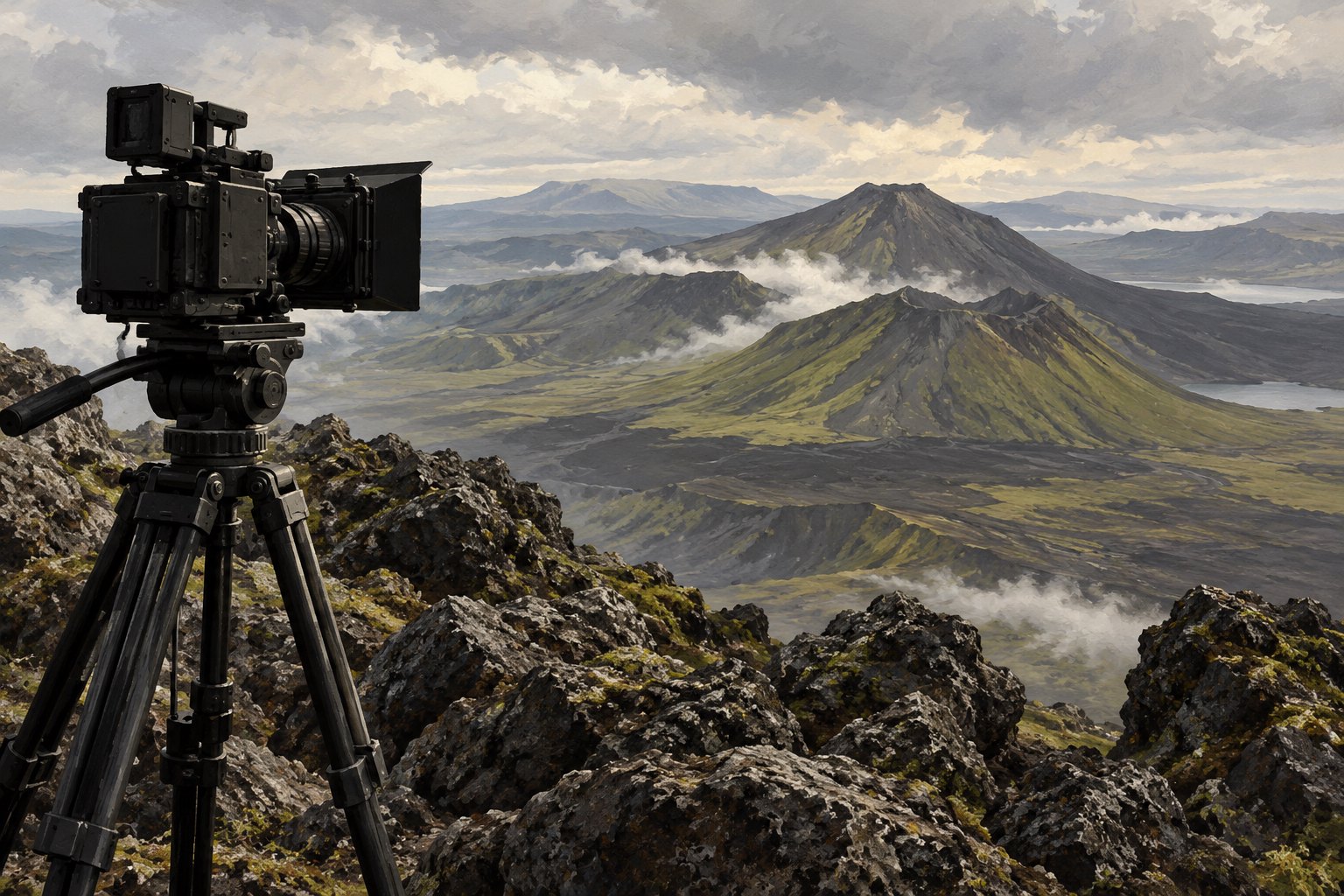
A volcanic landscape offers an immediate problem of proportion. A broad view can make a person appear almost incidental; a close view can bring attention back to a gesture, an object, or a patch of ground. Neither choice is inherently more truthful or more cinematic. What matters is the relationship the film builds between them.
When watching Peyuluk: Volcano, a useful question will be whether changes in scale also change our understanding. Does a wider image reveal something necessary? Does a closer image supply information that distance concealed? These questions test the purpose of a shot without assuming which shots the movie contains.
Sound deserves the same scrutiny. Music can encourage anticipation before anything changes visually. Speech can make an otherwise unfamiliar image intelligible. A pause can allow attention to settle. A future review should identify the film’s actual sound choices and their effects, rather than applying ready-made descriptions such as “haunting” or “immersive.”
The strongest evidence for an interpretation is usually specific: a contrast, a transition, a repeated image whose meaning develops. An attractive landscape alone does not establish a theme. The film has to create the connection.
What a full review still needs to establish
The next substantial critical step is access to the film itself. A complete review would need to establish its form, identify the people or perspectives it follows, and examine how its structure changes the viewer’s understanding. It would also need to distinguish information supplied by the film from conclusions drawn by the reviewer.
Memorable lines require particular care. A quotation from publicity or educational material cannot automatically be treated as dialogue heard in the selected film. Until wording and context are verified, presenting a polished sentence as its defining line would create a false impression of familiarity.
The same applies to hidden references and Easter eggs. A recurring object or image might reward close reading, but there is no basis here for promising concealed clues. Interpretation becomes more useful when it can point to evidence readers can recognize for themselves.
Our reflection on turning festival impressions into lasting viewing judgments explores that move from initial attention to considered criticism. For this film, that process remains ahead.
The question worth carrying into the screening
The festival news gives Peyuluk: Volcano an occasion to be discovered. Its title gives viewers a subject to anticipate. The deeper question is what the film will teach its audience to notice—and whose perspective will make that noticing possible.
My interest lies in whether the eventual viewing changes the meaning of the landscape, rather than simply enlarging its appearance. That is a critical question, not a verdict. For now, the selection merits attention; the film deserves the opportunity to supply its own answers.
Original content by this site's editorial team. Published: October 27, 2026 at 15:51:42 PDT (Los Angeles time)