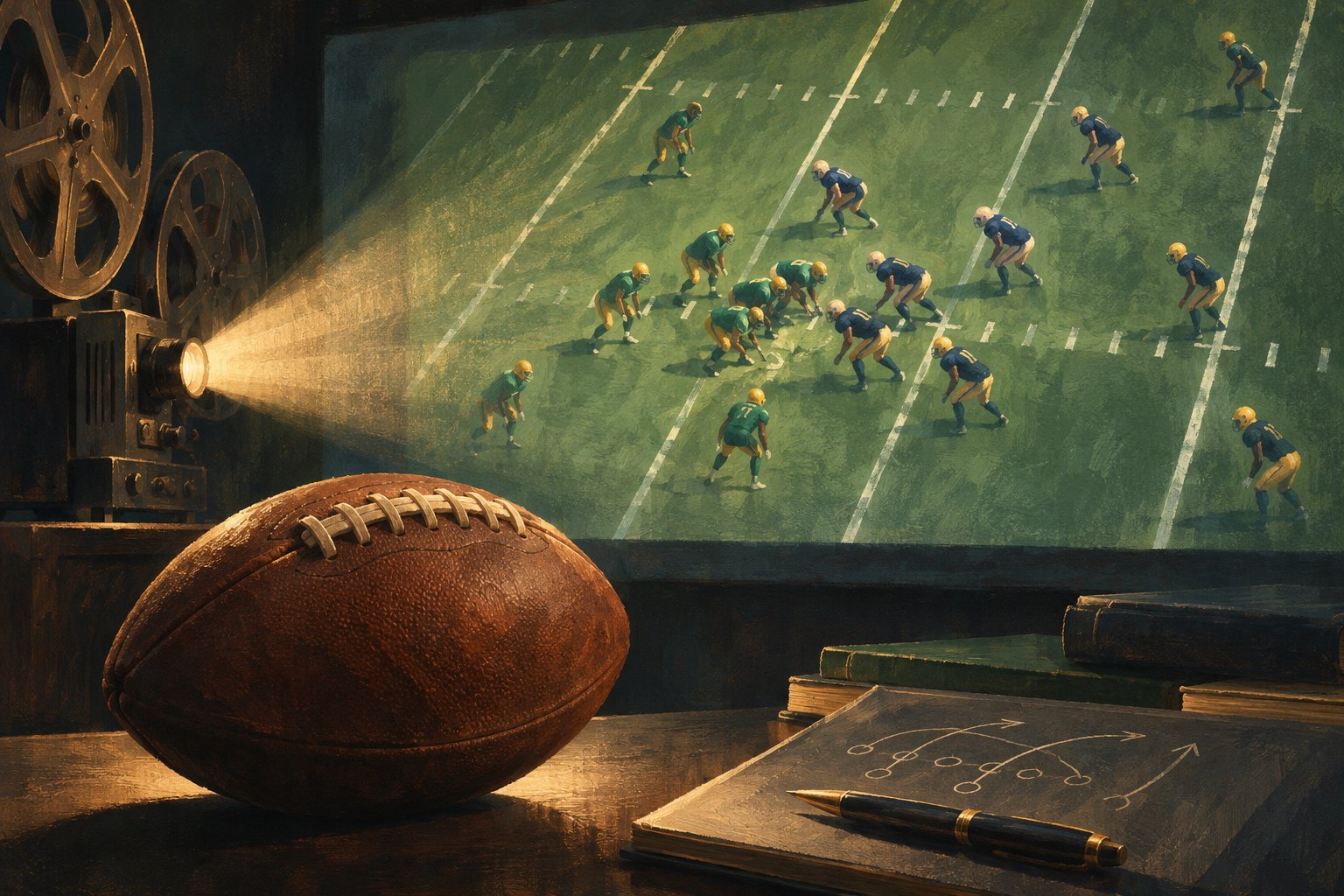
Oregon fans approaching Michigan football through Duck Tape film analysis have a useful question to ask before judging any highlight: what forced the player to react? The touchdown, tackle, or incompletion supplies an ending. The more revealing action often happens earlier, when a defender shifts position, a blocker commits his shoulders, or a quarterback loses an available throwing lane.
Addicted To Quack’s 2026 Michigan installment places the Wolverines under an Oregon-focused film-study lens. Here, film means football footage. This article offers a viewing framework for that subject, rather than a play-by-play assessment of the installment or a scouting verdict on Michigan’s personnel. Specific claims about formations, assignments, and tendencies require the relevant footage.
My central argument is simple: the most useful opponent study follows reactions across a sequence. For Oregon readers, the payoff is understanding what a successful play demands, not merely noticing that somebody else made it work.
Start with Michigan’s choices, not Oregon’s hopes
Watching an opponent creates an understandable temptation: every mistake looks like an opportunity for your own team. A receiver finds space, and the next thought is that Oregon should attack the same area. But space has a history. It may exist because an earlier action pulled a defender away, because the situation encouraged a particular defensive approach, or because one player lost an individual contest.
Those explanations lead to different conclusions. A repeatable conflict can inform a broader tactical argument. An isolated mistake offers much less certainty. Before translating a Michigan clip into an Oregon opportunity, identify the conditions that made the opening possible.
Write down the visible situation first: down and distance, field position, formation, and the players included in the camera’s view. If that context is missing, preserve the uncertainty. A short completion on third-and-long, for example, cannot be evaluated solely by how much open grass appears around the receiver.
Follow the first consequential reaction
The ball attracts attention because it determines the immediate outcome. Film study becomes more informative when attention moves briefly away from it. Choose one defender and watch his initial movement. Does he step toward the line, widen toward the sideline, retreat, or remain balanced?
Then connect that movement to something visible. Perhaps an offensive player crosses the formation. Perhaps the line’s movement resembles a run. Perhaps a receiver’s release changes the defender’s path. These are hypothetical viewing examples, not claims about Michigan’s 2026 tape.
The distinction matters because a reaction can be observed more confidently than an assignment can be inferred. You can see a defender move inward. Without additional evidence, you may not know whether he followed his responsibility, responded to a teammate, or misread the play.
Use motion as a question
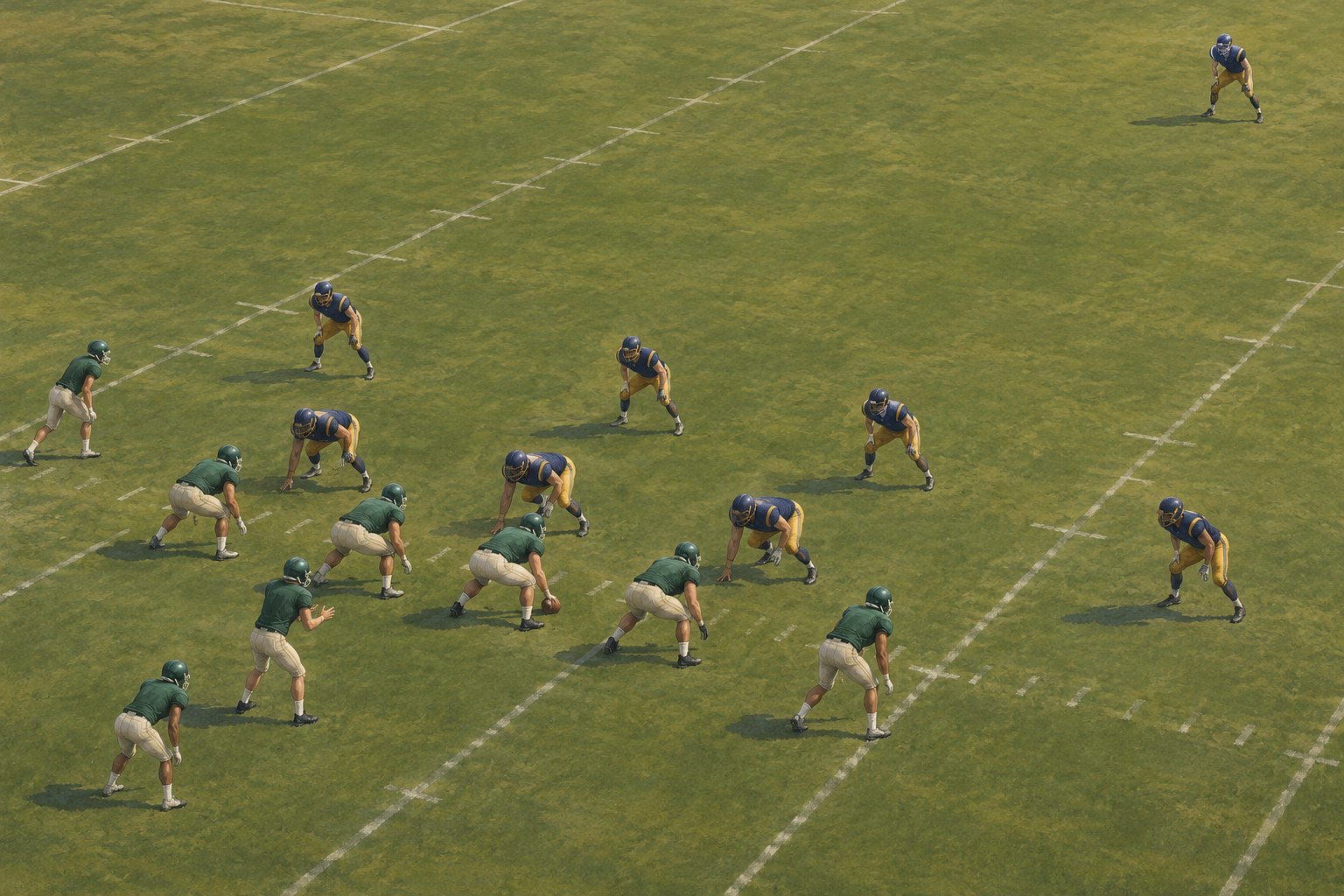
When an offensive player moves before the snap, watch the defense’s response rather than immediately naming the coverage. Does one defender travel with him? Do several defenders redistribute themselves? Does the alignment change only after the ball moves?
One response is a clue, not a complete answer. The useful Oregon-facing question is whether similar movement repeatedly creates the same adjustment—and whether that adjustment leaves a particular player handling competing responsibilities.
Give each player his own field of view
A high camera angle can make decisions appear obvious. The quarterback’s experience is different: bodies obstruct passing lanes, pressure changes his footing, and an opening may disappear before the throwing motion can finish. A receiver who looks available in a freeze-frame was not necessarily available at the moment a decision had to begin.
Watch the sequence at normal speed before slowing it down. Then return to the instant before the player commits. What information was visible? What space remained usable? Which alternatives required more time than the play allowed?
This attention to limited knowledge also matters in character-centered criticism. Our discussion of Ginny’s resourcefulness in Friday the 13th Part 2 approaches action through a character’s understanding of danger. Football demands a different kind of evidence, but the interpretive discipline carries over: judge the decision from the participant’s position before judging it from the audience’s privileged view.
For Michigan analysis, apply that generosity to both sides of the ball. A defender conceding space may be protecting against another threat. A runner changing direction may be responding to penetration rather than overlooking an obvious lane. Neither explanation should be assumed; both deserve consideration.
Separate a tactical opening from an individual win
A play can succeed because its design creates favorable spacing. It can also succeed because a player overcomes unfavorable circumstances. Those outcomes may look similar on a highlight reel while suggesting very different things about an opponent.
Imagine a hypothetical run that gains ground after the ball carrier escapes an early tackle. The final yardage alone does not establish that the blocking consistently opened a path. Conversely, a dropped pass might follow a well-created opening. The result and the process need separate descriptions.
Our Cam Ward commentary on timing and shared responsibility develops a related problem with scoring packages. For an Oregon-focused examination of Michigan, the additional step is transferability: which part of the sequence could another team reasonably reproduce, and which depended on a particular individual effort?
Require a counterexample before naming a weakness
One successful attack suggests a possibility. A recurring pattern supports a stronger argument. A useful viewing habit is to seek a comparable play that ends differently before deciding what the first clip proves.
- Compare the setup: Were formation, spacing, and game situation meaningfully similar?
- Compare the reaction: Did the same defender or position respond in the same way?
- Compare the execution: Did protection, blocking, or timing change the outcome?
- Check the camera: Is the relevant action visible in both examples?
If Michigan handles a similar action differently, that difference may be the most valuable part of the study. It can reveal the limits of an apparent opening or identify the conditions necessary to create it. Avoid turning a handful of selected clips into a frequency claim about an entire season.
The deeper value of an opponent’s film
The strongest reason for Oregon fans to study Michigan is to replace a team-wide label with a more precise account of decisions. Descriptions such as physical, vulnerable, disciplined, or explosive become useful only when connected to observable actions and their circumstances.
My preferred reading of opponent film therefore ends with a conditional judgment: this action created this response under these conditions. That conclusion is less dramatic than declaring a weakness exposed, but it gives the viewer something concrete to test on the next play.
Read that way, Duck Tape’s Michigan subject invites an active kind of spectatorship. Follow the player who must choose between two threats. Notice what changes his choice. Then ask whether the opening survives a different response. That is where watching football becomes analysis.
Original content by this site's editorial team. Published: November 14, 2026 at 18:20:42 PST (Los Angeles time)