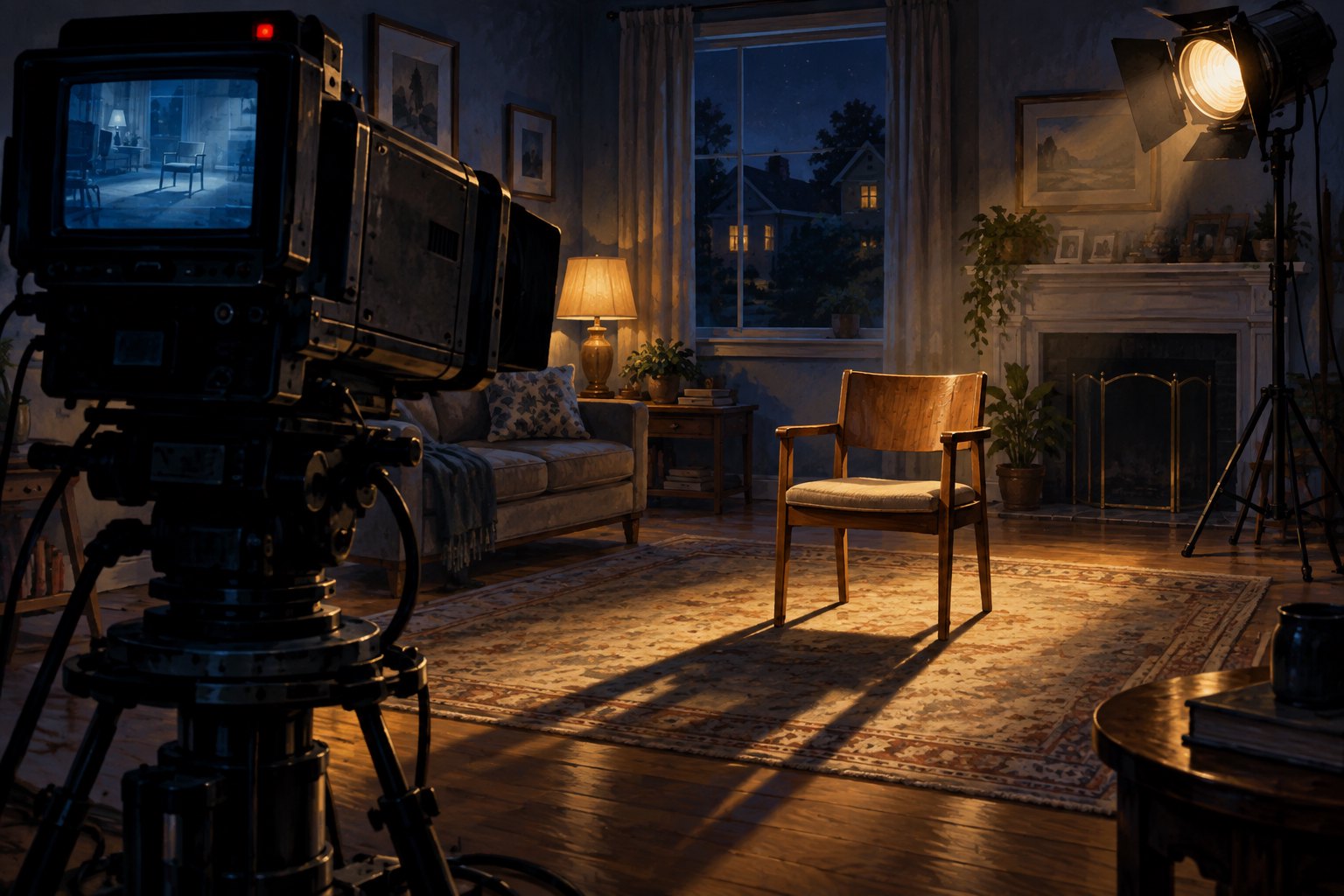
Netflix’s alleged 2026 film “low point” raises a question that matters before anyone chooses tonight’s movie: low by which measure? A decline in audience attention, a disappointing release, and a weak year of filmmaking are different problems. Treating them as interchangeable turns a potentially useful conversation into a verdict too broad to help viewers.
The Ankler’s headline characterizes Netflix as hitting a film low point this year. That wording alone does not establish a particular movie as a failure, identify the measurement behind the claim, or demonstrate a collapse in quality. The critical question remains open: what would make Netflix’s films feel less rewarding, and what evidence on screen would justify that judgment?
This is spoiler-free film commentary, not a review of an identified release. The assessments below are editorial judgments about how to evaluate the claim.
Separate a business slump from a disappointing movie
A business assessment needs a defined measure and a fair comparison. Is it examining one release or several? A brief interval or a sustained pattern? Without those distinctions, “low point” can suggest a scale of failure that the phrase itself cannot explain.
An artistic assessment needs different evidence: scenes, performances, images, dialogue, and the relationship between a film’s ambitions and its execution. A movie can disappoint commercially while taking worthwhile creative risks. It can also attract attention without giving its characters much of an inner life.
For viewers, the practical consequence is simple. Do not turn a platform-wide concern into an automatic rejection of every individual film. Equally, a favorite release cannot settle every question about the larger operation. The film and the business deserve arguments suited to their respective strengths and weaknesses.
The character test: does anyone make a consequential choice?
My preferred starting point for judging a Netflix movie is the same one I would use anywhere else: identify what the central character wants, what they fear losing, and the decision that makes those desires collide. A compelling premise becomes drama when somebody has to act under pressure.
A character biography is not enough. Grief, ambition, loneliness, or a troubled childhood can explain a person, but those details acquire dramatic force through behavior. Does pride make someone reject help? Does loyalty keep them in a damaging relationship? Does an apparently generous act conceal an attempt to retain control?
This distinction matters when a movie feels polished but strangely weightless. The problem may be that its characters keep explaining themselves while the plot moves them between predetermined events. A strong performance can make those passages engaging. It cannot always supply the missing connection between choice and consequence.
Our character-focused analysis of Angh approaches criticism through conflicting needs. That is also a useful standard for streaming releases: begin with what each person stands to lose, then examine how the film makes that pressure visible.

A movie’s images should know more than its synopsis
The illustration above depicts an invented situation, not a scene from a Netflix release. Its dramatic possibilities are nevertheless recognizable: a suitcase suggests departure, the table creates distance, and the doorway offers an exit. Before anyone speaks, the arrangement invites questions about who is leaving and who wants them to stay.
That is the kind of visual evidence worth looking for in a movie. Where does a director place people within a room? Who occupies the foreground? Whose reaction receives attention after an accusation? Does the camera allow a painful silence to continue, or cut away before discomfort can develop?
Beautiful photography is welcome, but beauty alone does not establish a point of view. An attractive room can function as decoration. The same room can become expressive when its layout reveals intimacy, exclusion, dependence, or power.
If Netflix’s creative health is the concern, the useful criticism should get this specific. Saying a film looks expensive tells us little about whether its images are doing dramatic work. Saying its framing repeatedly denies a supposedly central character a meaningful perspective identifies something a reader can actually examine.
Memorable dialogue has to belong to somebody
A memorable line earns its place through the person saying it and the circumstances surrounding it. A confession can become an evasion through hesitation. An apology can expose entitlement when the speaker expects immediate forgiveness. A joke can reveal who feels entitled to humiliate whom.
One useful test is to imagine transferring an important line to another character. If it fits just as comfortably, the writing may be giving everyone the same voice. Distinctive dialogue reflects differences in attention: one person notices status, another danger, another the chance to avoid an uncomfortable truth.
There is no responsible basis for attaching famous dialogue to this particular debate without an identified film to examine. The broader criterion remains valuable, however. Ask whether the words change a relationship or simply explain information the audience already understands.
What a convincing creative recovery would look like
A meaningful recovery, in my view, would involve films with distinct dramatic identities. Variety of genre helps, but a thriller, comedy, and family drama can still feel alike if each smooths away difficult behavior and resolves conflict through convenient explanation.
Consider the difference between an ending that completes the plot and one that completes a character’s reckoning. Catching the culprit resolves an investigation. Admitting why the investigator ignored an obvious warning may resolve something deeper. The strongest endings bring external action and internal conflict into contact, even when they leave room for uncertainty.
Consistency also requires looking beyond a single showcase release. Our examination of how strong movie trilogies sustain character development offers a related principle: evaluate the connections between achievements, rather than letting one exceptional installment carry the whole argument.
How to make the debate useful on your next movie night
You do not need to turn leisure into homework. After a Netflix film ends, three questions can make your response more precise:
- Which decision could only this character have made? Look for behavior shaped by a particular history, desire, or blind spot.
- Which moment depended on filmmaking? Recall an image, cut, sound, or performance detail that a plot summary would miss.
- What did the ending change? Consider your understanding of the people involved, not just whether their immediate problem was solved.
These questions leave plenty of room for pleasure. A broad comedy can reveal character through comic timing. An action movie can express loyalty through the way people move together. Seriousness is not a prerequisite for substance.
The deeper issue is whether a film earns your attention
The most productive interpretation of the Netflix low-point debate concerns the relationship between access and attachment. Having a movie available makes watching possible. Becoming invested in its people requires the movie to do something with that opportunity.
For me, the strongest evidence of creative health is a film that leaves behind a specific human complication: a decision worth arguing over, a gesture whose meaning changes afterward, or a reconciliation that carries a believable cost. Those experiences cannot establish business performance. They can explain why an individual movie matters.
Netflix’s 2026 films deserve that level of scrutiny, one release at a time. A sweeping label may start the discussion. Close attention to what happens on screen is what makes the discussion worth having.
Original content by this site's editorial team. Published: September 26, 2026 at 15:37:42 PDT (Los Angeles time)