Jordan Peele’s Monkeypaw and Universal are planning a second cohort of No Drama, continuing a filmmaking initiative whose most interesting promise is creative: the opportunity to discover how someone else experiences fear. The second-edition plans are the subject of [Variety’s reporting](https://malaysia.news.yahoo.com/jordan-peele-monkeypaw-productions-universal-180000664.html). For moviegoers, the question is what kinds of characters and perspectives that opportunity might eventually bring to the screen.
My hope is that the resulting work feels personal enough to surprise even viewers who associate Peele’s name with a particular kind of horror. A recognizable sponsor can draw attention. The films themselves need individual reasons to hold it.
This is commentary on the initiative’s creative possibilities, not a review of its second-cohort films. The discussion of Get Out below contains major spoilers.
What a second cohort means—and what it cannot establish
The central news is the planned continuation of No Drama through a second cohort involving Monkeypaw and Universal. That gives audiences a reason to follow the initiative. It does not, by itself, establish the quality, themes, or originality of the work that will emerge.
That distinction matters because a filmmaker’s name can become an advance interpretation of somebody else’s movie. Attach Peele to a project and audiences may start looking for social satire, concealed threats, and a late revelation before meeting the protagonist. Those expectations can generate interest, but they can also narrow the space in which a new filmmaker is allowed to work.
The standard I would apply is straightforward: does each film make its character’s experience specific enough that the danger could not simply be transferred to another protagonist? A frightening premise gives a movie a situation. A character gives that situation consequences.
The Get Out lesson: fear depends on whom you trust
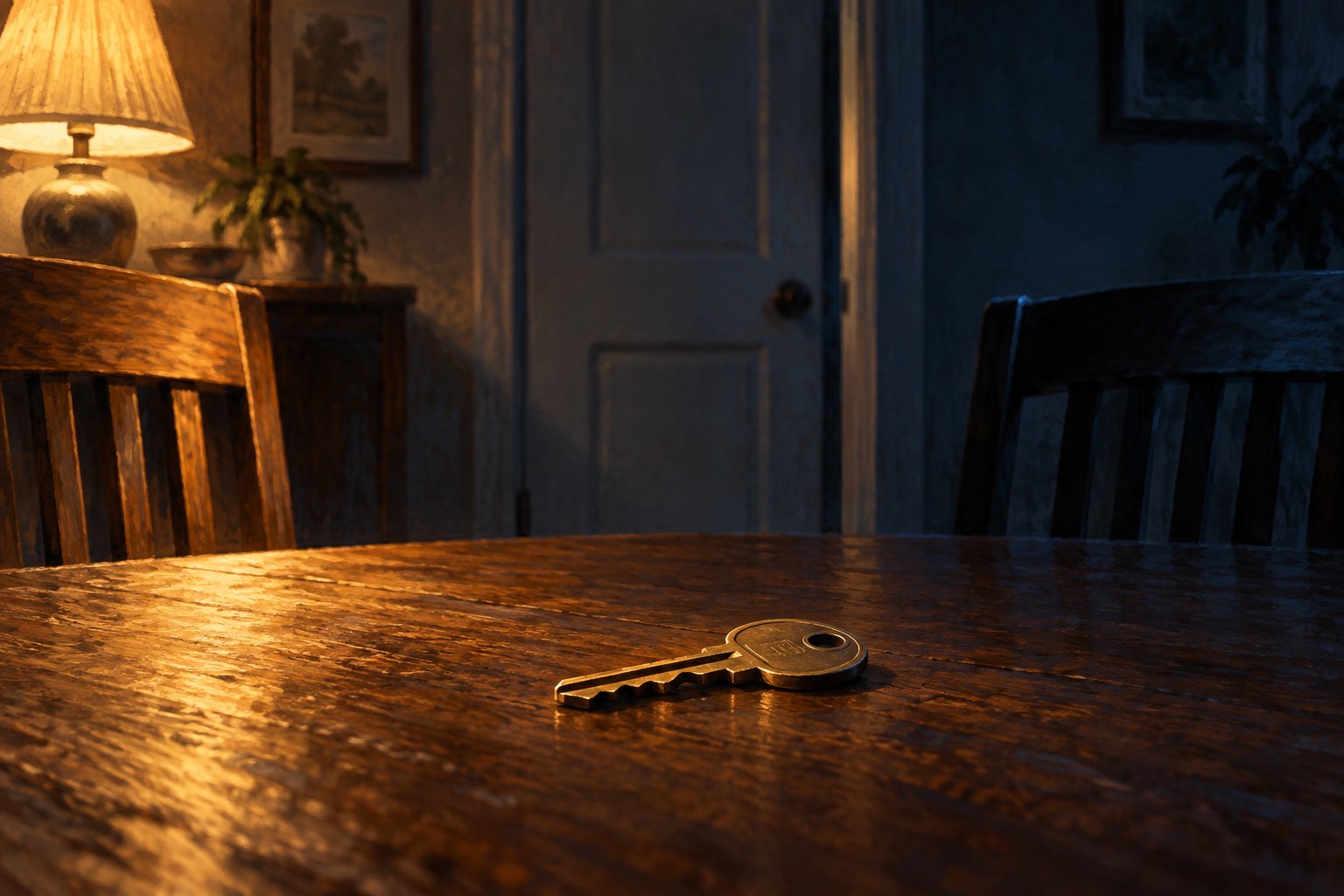
Consider one concentrated example from Peele’s Get Out. Chris’s attempted departure becomes a confrontation over car keys. His demand, “Rose! The keys!” gives the scene an immediate physical objective. Rose’s answer contains the devastating refusal: “You know I can’t give you the keys.” Both appear in [Peele’s screenplay](https://assets.scriptslug.com/live/pdf/scripts/get-out-2017.pdf?v=1729114915).
From Chris’s perspective, the terror is a relationship changing meaning. The person he needs as an ally becomes another barrier between him and the exit. From Rose’s perspective, withholding the keys ends the performance of cooperation. A familiar object makes the imbalance of power visible.
My judgment is that this is sharper horror than a revelation that merely explains a villain’s plan. The exchange changes what Chris can do and whom he can believe. Its emotional force lies in that convergence: betrayal becomes a practical obstacle to survival.
For No Drama’s next cohort, the useful lesson is a question: what does your character need from another person, and what happens when that need becomes dangerous?
A distinct perspective must change the storytelling
Calling a film a fresh perspective means little unless that perspective affects its construction. Whose discomfort does the camera notice? Who gets time to hesitate? Which apparently harmless remark makes someone reconsider the room? These choices determine whether viewers inhabit a character’s uncertainty or merely observe a sequence of ominous events.
Imagine, as a hypothetical example, a protagonist who cannot afford to offend the person making them uncomfortable. The scene already has two competing objectives: escape the encounter and preserve something necessary. Suspense can develop through the effort to satisfy both. No elaborate mythology is required to make that conflict legible.
This is also where social commentary earns its place in a thriller. An argument becomes dramatically persuasive when it changes a decision and makes that decision costly. Our analysis of what happens when a thriller’s hero already has every answer approaches the related problem of certainty crowding out dramatic discovery.
For the No Drama films, I would look for characters capable of surprising their creators’ apparent arguments. Fear becomes more interesting when someone responds imperfectly, protects the wrong relationship, or understands a threat before finding the courage to act.
How to judge the films when they arrive
A cohort announcement encourages collective attention, but criticism should eventually become individual. Different films may pursue dread, grotesque comedy, grief, or outright shock. They deserve judgments appropriate to their chosen effects, rather than a single checklist of what a Monkeypaw-associated film ought to resemble.
Three questions offer a useful starting point:
- What does the protagonist want before the threat appears? A desire established early gives the danger something meaningful to interrupt.
- Does the filmmaking express that person’s experience? Framing, sound, performance, and pacing should shape what the audience notices and fears.
- Does the ending change the significance of a choice? A revelation carries more weight when it transforms an action or relationship we already understand.
These questions leave room for ambiguity. A film need not explain the origin of every threat. It does need to establish enough emotional and physical logic for uncertainty to feel intentional. Confusion about a monster can be productive; confusion about why a character cares often weakens the experience.
The same principle applies to memorable locations and objects. As our discussion of how an ordinary grocery store acquires emotional weight on screen suggests, a setting becomes significant through the pressure a scene places on it. Production scale alone cannot supply that relationship.
The deeper opportunity is deciding whose fear counts
The most compelling possibility behind a second No Drama cohort is an expansion of the experiences that cinema treats as worthy of sustained attention. Horror can make viewers sit with a discomfort they would otherwise dismiss. It can also reveal how easily the same encounter feels safe to one person and threatening to another.
That possibility depends on artistic specificity. Support is valuable when it helps a filmmaker articulate an observation clearly enough that an audience can feel its consequences. A distinctive voice may be quiet, funny, abrasive, or difficult to summarize. Recognizing it requires attention beyond resemblance to a successful predecessor.
Monkeypaw and Universal’s next cohort will ultimately be judged through individual films and individual choices. The strongest outcome would be work that makes audiences remember a person’s predicament as vividly as a scare: what they wanted, whom they trusted, and the moment those two things became impossible to reconcile.
Original content by this site's editorial team. Published: September 27, 2026 at 15:29:55 PDT (Los Angeles time)