A new Home Alone movie is reportedly in development with Macaulay Culkin returning, according to Collider. That prospect immediately raises a question more interesting than which household objects might become weapons: what would another film understand about Kevin McCallister that his first adventure left unresolved?
The development stage matters. There is no finished performance or new story to assess here, and the reported return should not be mistaken for a release announcement. Variety independently reports that a sequel is in early development, with casting and plot details under wraps. [Variety’s development report](https://au.variety.com/2026/film/news/home-alone-reboot-disney-macaulay-culkin-seth-rogen-42789/).
For now, the strongest reason to care is already on screen. The original Home Alone makes Kevin both a remarkably capable child and someone who desperately needs other people. Revisiting that contradiction offers a useful measure for any continuation.
Spoiler warning: The following retrospective discusses the original film’s story and ending. Suggestions about a future installment are critical judgments, not reported plot details.
Kevin Wants Recognition Before He Wants Independence
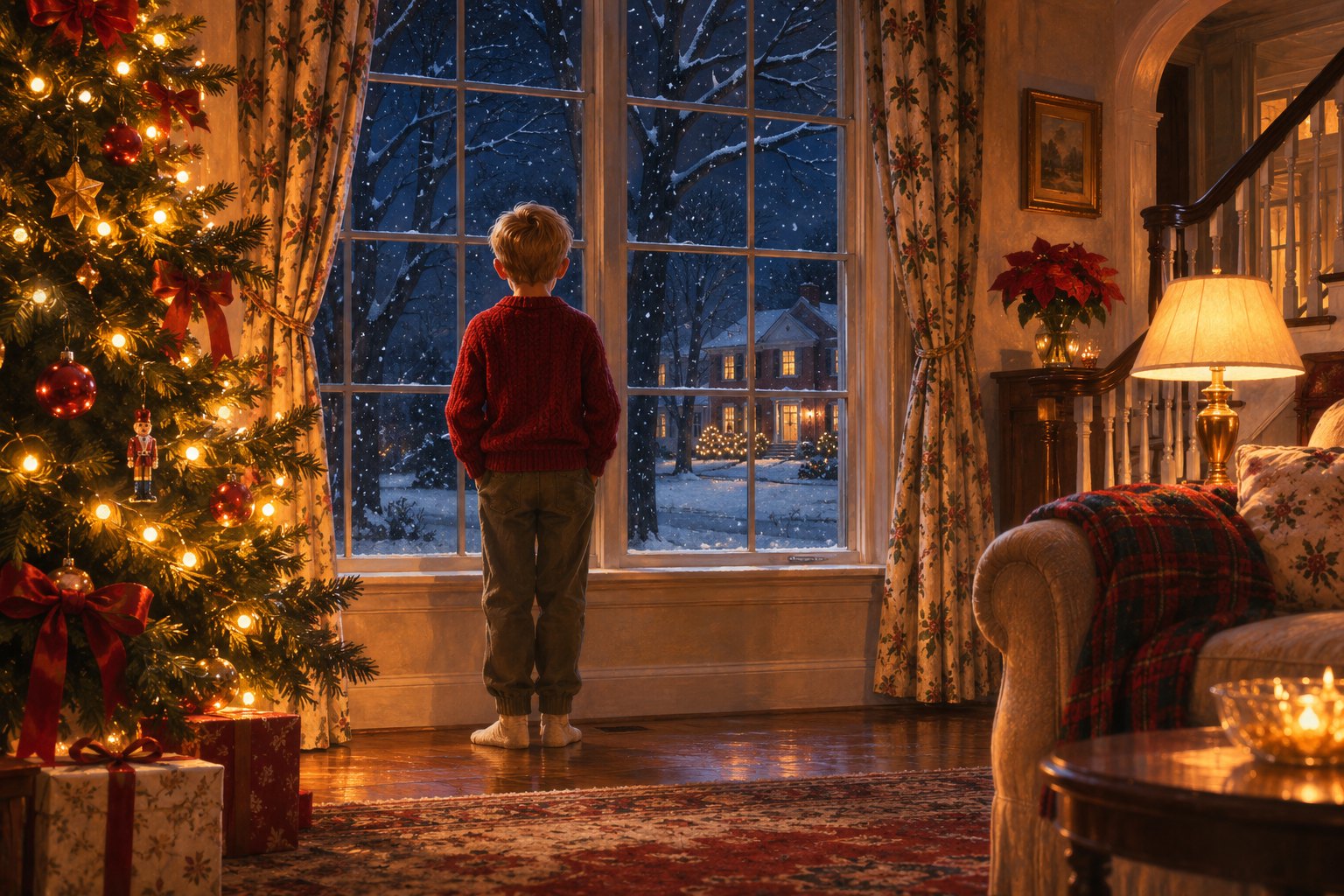
The premise is familiar: eight-year-old Kevin is accidentally left behind when his family travels to Paris for Christmas. Before that happens, however, the household has already made him feel like an inconvenience. His anger grows from being dismissed within a crowded family whose attention is always somewhere else.
That distinction gives the fantasy its bite. Kevin does not begin with a carefully considered desire to manage a household. He wants the people who frustrate him to disappear. When they do, he mistakes an accident for proof that his wishes have power.
“I made my family disappear!” captures the absurdity beautifully. The sentence sounds like a victory announcement, but it also gives Kevin responsibility for something far larger than he understands. The line appears in John Hughes’s screenplay, where the discovery develops out of Kevin’s attempts to explain the empty house. [Home Alone screenplay](https://assets.scriptslug.com/live/pdf/scripts/home-alone-1990.pdf).
Culkin makes this contradiction playable. His confidence can look wonderfully theatrical: a child performing the person he imagines an adult to be. Yet the performance never loses the possibility that the bravado might collapse. Kevin’s independence is exciting because it remains precarious.
My reading is that the film’s most convincing wish fulfillment involves being taken seriously. Access to forbidden pleasures provides the immediate joke. The deeper satisfaction comes when Kevin discovers that his observations and decisions can actually matter.
The Empty House Changes Meaning Around Him
The McCallister house initially offers freedom through abundance. Without supervision, familiar rooms become places where Kevin can experiment with adult privileges. But an enormous home also gives loneliness room to expand. Comfort and isolation occupy the same space.
That is why the domestic setting does more work than a neutral backdrop could. Kevin does not simply move through an adventure location. He continually revises his relationship with a place he thought he understood. Ordinary objects become frightening, useful, entertaining, or reassuring depending on what he needs.
One memorable example is his use of a gangster recording to manufacture an intimidating adult presence. “Keep the change, you filthy animal” is funny partly because the voice bears so little resemblance to the child controlling it. Kevin borrows authority through editing and timing.
The gag also exposes a limitation. He can create the appearance of an adult being home; he cannot create the security of someone actually caring for him. His ingenuity solves practical problems while leaving the emotional problem intact.
Kate Gives the Comedy Its Consequences
Seen from Kevin’s perspective, being left behind becomes an extraordinary test of resourcefulness. Seen from his mother Kate’s perspective, the same event is a terrible failure that demands immediate repair. The film depends on both experiences remaining credible.
Catherine O’Hara gives Kate’s urgency a directness that keeps the story from becoming a consequence-free vacation from parenting. Her efforts to return make visible something Kevin cannot see: he is being missed, pursued, and loved while he believes himself abandoned.
That imbalance in knowledge produces much of the film’s tenderness. The audience understands that mother and son want to reach each other before either can know the reunion is possible. Cutting away from Kevin therefore does more than postpone another gag. It sustains the relationship that gives those gags emotional context.
For a future film, this is a demanding lesson. A returning Kevin would need relationships with their own urgency and perspective. Familiarity with his face cannot substitute for showing why another person’s happiness or disappointment matters to him.
Marley Offers a Different Definition of Courage
Kevin’s encounter with his elderly neighbor Marley provides the original’s most revealing change of scale. In their church conversation, someone Kevin has feared becomes a person with his own family pain. Marley’s estrangement from his son turns adult loneliness into something Kevin can recognize.
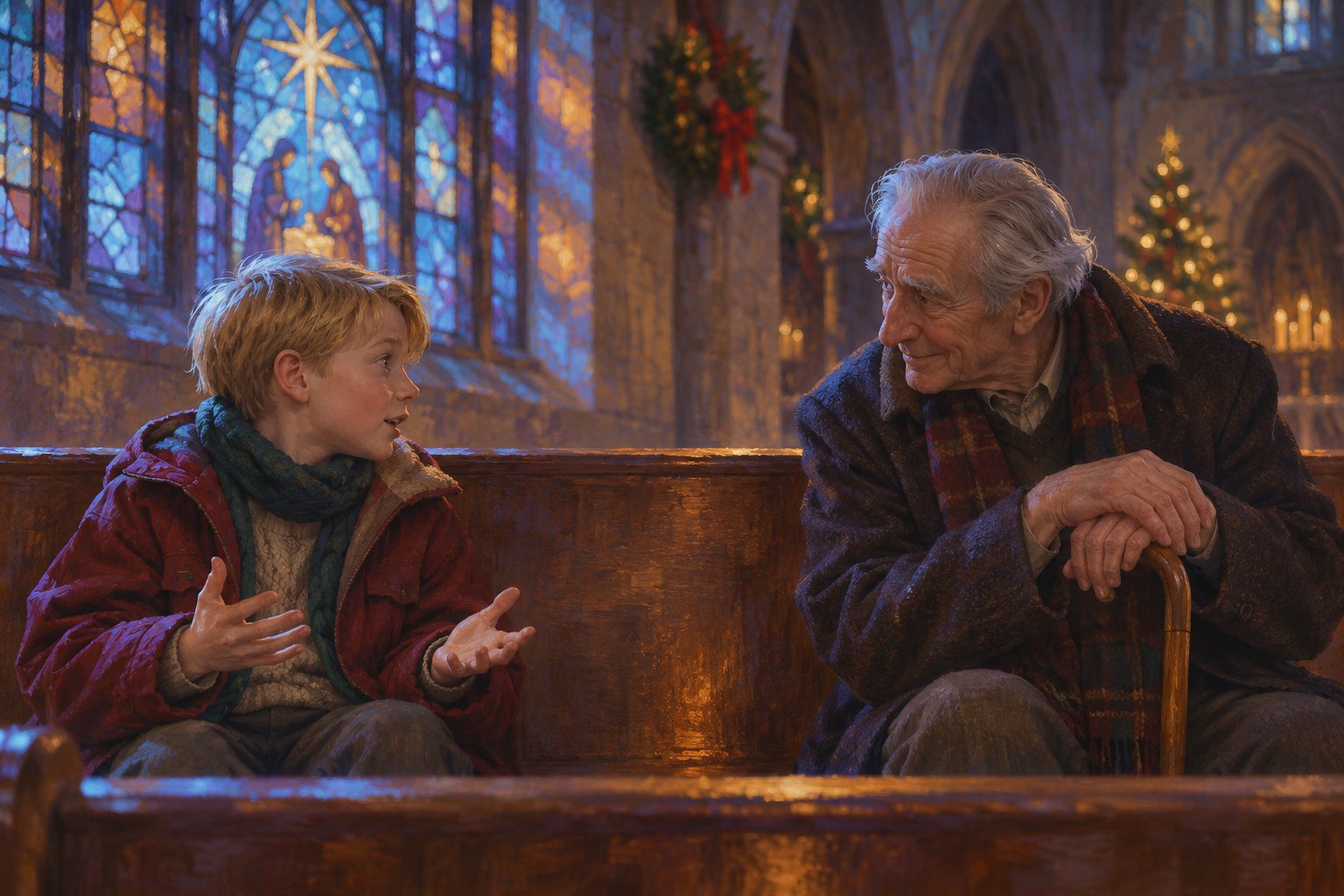
The scene works because understanding travels in both directions. Kevin receives reassurance, but he also has something worthwhile to offer. A child who has spent much of the film feeling unheard becomes capable of listening—and of suggesting that an adult act differently.
That exchange is the strongest argument against reducing Kevin to a miniature action hero. His emotional intelligence matters alongside his mechanical cleverness. He can identify another person’s fear even while struggling with his own.
The later rescue and Christmas reconciliation complete this relationship: Marley helps Kevin when the burglars have him cornered, and Kevin eventually sees Marley reunited with his family. The original’s plot connects survival with renewed human contact. [Home Alone plot overview](https://en.wikipedia.org/wiki/Home_Alone).
To me, this is the film’s most generous idea. Independence does not require refusing help. Sometimes growing up means recognizing who can be trusted enough to let them help.
The Traps Are Funny, but They Are Not the Whole Achievement
The climactic assault on Harry and Marv delivers the movie’s loudest pleasures. Its appeal lies in anticipation as much as impact: viewers understand a setup, watch the burglars approach it, and wait for their confidence to betray them.
There is a tonal cost. The increasingly punishing slapstick can make the earlier vulnerability feel distant. For my taste, the sequence works best when the joke reveals Kevin’s reading of his opponents; it becomes less interesting when another injury functions mainly as escalation.
Still, the mismatch serves a clear emotional purpose. Adults who assume that size grants them control encounter a child who knows the terrain better. Kevin’s earlier exclusion from household authority gets an extravagant reversal.
A new installment would face the challenge of finding an equally specific imbalance. Repeating recognizable traps might produce applause, but recognizable behavior is not necessarily convincing characterization. Our discussion of what another Longlegs film needs beyond its familiar monster considers a related problem: a returning attraction still needs a story that gives it purpose.
What Culkin’s Return Could Make Possible
The most promising creative question is how Kevin’s understanding of independence might change with age. That is an avenue for analysis, not a claim about the new screenplay. Would someone remembered for exceptional self-reliance find it difficult to admit uncertainty? Could being good at solving problems become an excuse to avoid listening?
Those questions preserve something essential without requiring the original circumstances to happen again. They also allow Culkin’s return to carry dramatic meaning beyond recognition. A continuation can explore the distance between a person’s celebrated childhood and the adult they become.
As with the films considered in our holiday movie preview, the useful question is what experience a project promises, not merely which familiar category it occupies.
The original Home Alone remains rewarding because its fantasy changes direction. Kevin begins by wanting freedom from his family and ends by understanding the value of their presence. Defending the house proves his competence; welcoming people back gives that competence a purpose. Any new movie bringing Culkin home would do well to find an equally meaningful distinction between winning control of a space and making it somewhere worth belonging.
Original content by this site's editorial team. Published: November 21, 2026 at 21:47:47 PST (Los Angeles time)