
Kelly Clarkson’s dispute with Brooklyn Heights shop Art of Play has acquired a new focal point: security footage revealed by Pablo Torre. The Hollywood Reporter framed the footage as unfavorable to Clarkson, while People described it as showing her interactions with the owner and employees. Those descriptions establish the footage’s relevance, but an unfavorable interpretation is still an interpretation—not an automatic finding that every part of a complaint was false.
For a film audience, the revealing detail is the comparison at the heart of the controversy. TheWrap characterized Clarkson’s complaint as a claim of Pretty Woman treatment. That reference does considerable work: it invites people to understand a retail encounter through a familiar story about humiliation, money and vindication. Torre’s footage makes it necessary to examine how much that story can actually explain.
Film commentary; spoilers for the shopping sequences in Pretty Woman. The film discussion below concerns its characters and dramatic construction. It does not treat those fictional events as evidence about Clarkson’s visit.
What the Art of Play reporting establishes
The central developments are straightforward: Clarkson criticized her treatment at Art of Play; Torre revealed security footage of the visit; coverage has scrutinized what that footage means for her account. A separate, serious strand of the reporting concerns the shop’s owners. The Brooklyn Eagle reported that they faced threats, and Fox News reported an owner’s claim that Clarkson had put them in danger.
These developments require different kinds of judgment. Whether an interaction was discourteous is one question. Whether a recording supports a particular description is another. The existence and consequences of reported threats deserve attention without being used as a shortcut to settle the original disagreement.
Nor should a headline’s assessment substitute for a precise account of visible behavior. Calling footage damaging tells readers how a writer interprets it. It does not, by itself, specify which statement the footage contradicts. That distinction matters especially when the disputed experience involves feeling judged: actions can be recorded, while another person’s motives require more careful inference.
Why Vivian Ward’s shopping scenes are so effective
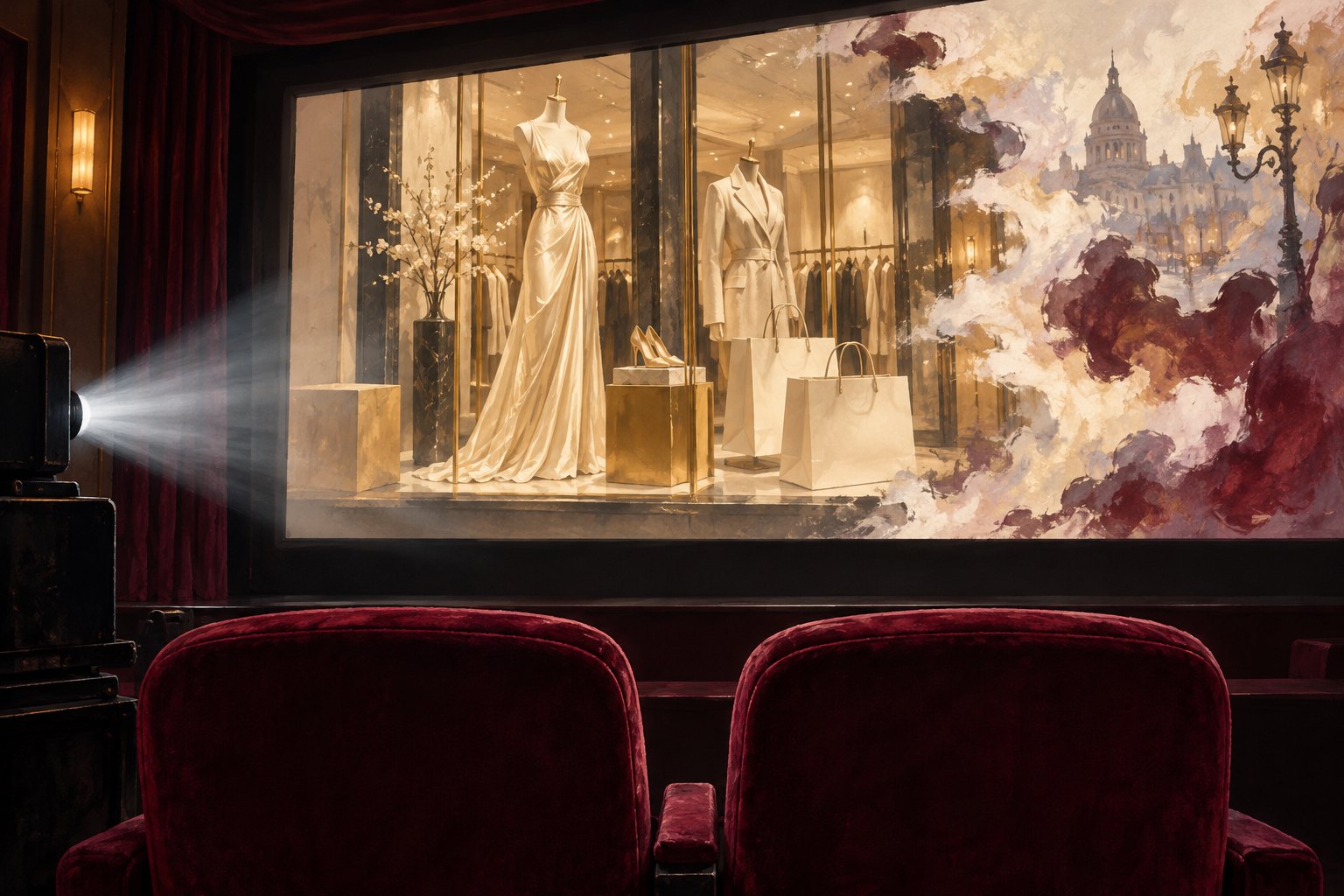
In Pretty Woman, Vivian Ward, played by Julia Roberts, encounters sales clerks who reject her at an upscale store. After shopping elsewhere with Edward Lewis, played by Richard Gere, she returns carrying purchases and confronts the clerks with the business they lost. The sequence gives rejection a visible answer: the woman they dismissed possesses precisely the purchasing power their judgment failed to recognize. [AFI’s film synopsis](https://catalog.afi.com/Film/55709-PRETTY-WOMAN).
From Vivian’s perspective, the emotional injury is exclusion. She enters a commercial space where she wants to participate and discovers that the people controlling access have already decided where she belongs. The later return lets her choose the terms of the encounter. This time, she can leave because she wants to.
“Big mistake. Big. Huge!” compresses that reversal into a wonderfully economical rebuke. Roberts later recited the line during a televised interview, a reminder of how closely the moment remains associated with her performance. [Time’s account of the interview](https://time.com/3070782/julia-roberts-pretty-woman-notting-hill/).
My reading is that the scene’s pleasure comes less from the purchases than from Vivian’s regained command of the conversation. The bags make her answer legible, but her confidence supplies the payoff. She no longer needs the clerks to welcome her. Their approval has become irrelevant at exactly the moment they might be willing to offer it.
The uncomfortable bargain beneath the victory
The shopping sequence also contains a contradiction. Vivian deserves courtesy before anyone knows what she can spend. Yet the dramatic punishment for mistreating her rests on the discovery that she represents a valuable sale. The film makes economic recognition serve as a substitute for the human recognition she should have received immediately.
Edward’s role sharpens that tension. His money helps make the triumphant return possible. Viewed through Vivian’s experience, the transformation offers freedom and confidence; viewed through the structure of the transaction, access still depends on wealth. The scene is emotionally satisfying while leaving the store’s underlying hierarchy largely intact.
That is why the reference carries two possible arguments into Clarkson’s dispute. One is a universal claim: customers deserve respectful treatment. The other is a status claim: dismissing someone with considerable purchasing power is a costly error. Those arguments can overlap, but they are not interchangeable. The first protects everyone; the second reserves its strongest vindication for someone who can demonstrate value to the seller.
A movie comparison assigns roles before the evidence does
Describing an encounter as Pretty Woman treatment encourages an audience to supply missing dramatic elements. There is an underestimated customer, a judgmental gatekeeper and an anticipated reversal. People who recognize the reference may feel they understand the encounter before considering its individual circumstances.
That does not make the comparison dishonest. Familiar scenes can communicate an emotional experience efficiently. But emotional resemblance cannot establish that two situations share the same causes, conduct or balance of power.
We have explored a related distinction in our commentary on how screen portrayals shape judgments of real people. A compelling characterization can organize an audience’s attention without resolving every factual question. Here, the characterization arrives through a film reference rather than a completed portrait.
What viewers should ask of Torre’s footage
The useful response to security footage is specific observation. What conduct is visible? Which particular claim does it support or challenge? What remains outside the recording’s ability to establish? These questions prevent a viewer from replacing one appealing story with an equally sweeping counter-story.
A gesture can have several plausible meanings. A brief exchange can matter greatly to a participant while appearing ordinary to an observer. Conversely, a strongly felt recollection can still misdescribe something a recording clearly captures. Neither personal conviction nor the presence of a camera eliminates the need to compare claims carefully.
Torre’s release matters because it introduces material that can be examined beyond competing descriptions. Its value lies in whatever concrete questions it can answer. Treating the footage primarily as an opportunity for a celebrity’s humiliation would reduce that evidentiary value to another entertainment beat.
The real consequences outlast the movie reference
The reporting about threats changes the stakes of audience participation. Disagreeing with a shop or a celebrity does not justify intimidation. It is possible to take someone’s complaint seriously, examine counterevidence and reject harassment simultaneously.
The broader problem of public attention turning people into targets also appears in our analysis of the pressures that follow visibility for film witnesses. The circumstances differ substantially, but the audience’s responsibility to distinguish scrutiny from punishment remains relevant.
The deeper lesson of Pretty Woman is more demanding than its triumphant shopping moment initially suggests. If Vivian deserves respect before her bags prove her spending power, then dignity cannot depend on winning the final exchange. Applied to Clarkson and Art of Play, that principle leaves room for criticism, correction and uncertainty. What it refuses is the assumption that real people must become heroes or villains simply because a familiar movie has supplied the roles.
Original content by this site's editorial team. Published: October 13, 2026 at 22:03:27 PDT (Los Angeles time)