Hope makes the distinction between an entertaining bad movie and a flawed good one unusually consequential. Na Hong-jin’s creature thriller combines a survival emergency with a challenge to the assumptions that make such emergencies satisfying onscreen. The strongest argument for taking it seriously lies in its characters: people who must act before they understand, and whose urgency can make understanding even harder.
My reading favors the flawed-good side of that divide. The premise contains a substantial dramatic idea: being responsible for protecting people does not automatically make someone a reliable interpreter of danger. Whether the spectacle consistently serves that idea is a separate question. This critical companion examines the documented story and its implications rather than assigning a screening-based score.
Spoiler warning: The discussion covers the opening investigation, the extraterrestrial threat, and the film’s changing perspective. Detailed final-scene revelations are omitted.
Hope Harbor: An Emergency Built on Incomplete Knowledge
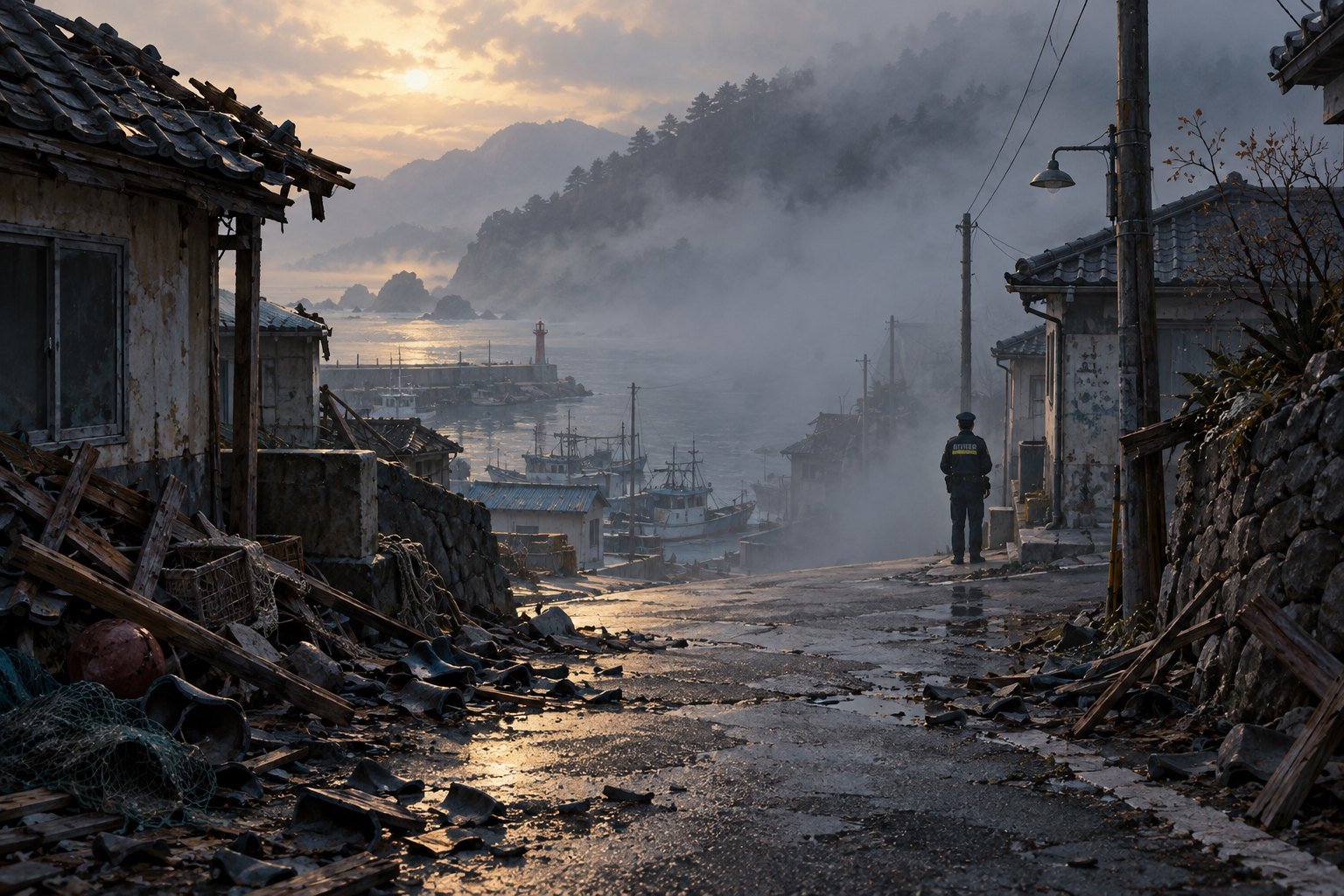
The official setup places police chief Bum-seok, played by Hwang Jung-min, and officer Sung-ae, played by Hoyeon, in the remote South Korean village of Hope Harbor. A creature has devastated the community. Nearby, Sung-ki, played by Zo In-sung, joins hunters tracking the threat through the forest, where their apparent advantage disappears. NEON’s synopsis explicitly connects the disaster to ignorance and human conflict. Those are established elements of the premise; the moral significance of the characters’ responses remains open to interpretation. [NEON’s official synopsis](https://www.neonrated.com/film/hope)
That arrangement offers more than two locations for action. The police and hunters approach the unknown with different expectations. A police officer has a community to protect; a hunter approaches a landscape expecting to identify and pursue a target. Both roles encourage action. Neither guarantees that the person holding a weapon has correctly understood what stands before them.
Bum-seok: Responsibility Without Reassurance
An officially released preview offers a compact introduction to that uncertainty. Sung-ki points into the distance and says, “It’s over there.” Bum-seok replies, “That thing happens to be dead in the middle of the street?” These are brief lines, reproduced in English translation by Soompi, but their awkward practicality matters. The encounter begins with people trying to establish what they are looking at. [Coverage of the preview clip](https://www.soompi.com/article/1840185wpp/watch-hwang-jung-min-and-zo-in-sung-investigate-mysterious-sighting-in-village-in-new-film-hope-0)
“It’s over there” supplies a direction without supplying an explanation. That gap becomes a useful way to read Bum-seok’s predicament. He can reach the next location, inspect the next disturbance, or pursue the next lead without gaining the knowledge needed to make a good decision.
Robert Daniels’s Cannes review documents the opening progression from a mutilated animal to a devastated town, while the creature remains concealed for an extended stretch. From Bum-seok’s perspective, evidence accumulates faster than comprehension. The audience encounters the aftermath alongside him, which makes his alarm understandable without making every conclusion trustworthy. [Robert Daniels’s account of the opening](https://www.rogerebert.com/reviews/hope-na-jong-hin-movie-review-2026)
There is a compelling version of courage here: continuing because the job still needs doing. Yet the same persistence can become a liability when stopping to reconsider feels like abandoning people. Bum-seok’s dramatic value lies in that tension. His obligation is real, even when his understanding is provisional.
Sung-ae: The Appeal and Limits of Decisive Action
Sung-ae brings another kind of energy to the emergency. The Associated Press describes her joining the pursuit in a police car while firing through the window. It is an entrance organized around immediate intervention. Her arrival gives the embattled police response a visible burst of capability. [Associated Press review](https://apnews.com/article/e941af2cf57513e58c286901928c180f)
That distinction between capability and knowledge is central to my interpretation. An action sequence can establish that a character is brave, quick, and useful under pressure. It cannot, by itself, establish that the character understands the conflict. Viewers often grant both judgments at once because decisive movement feels reassuring.
Sung-ae therefore provides a valuable test of the film’s ambitions. Can we enjoy her resourcefulness while remaining uncertain about what that resourcefulness achieves? A creature thriller becomes more interesting when the pleasure of intervention survives alongside questions about its consequences. It becomes less convincing if confusion simply excuses whatever escalation comes next.
Sung-ki: When Tracking Becomes Exposure
The forest strand reverses the hunters’ working assumptions. NEON confirms that Sung-ki’s group becomes hunted while pursuing the creature. The reversal changes the meaning of their equipment and experience: tools associated with control now accompany people whose position is dangerously exposed.
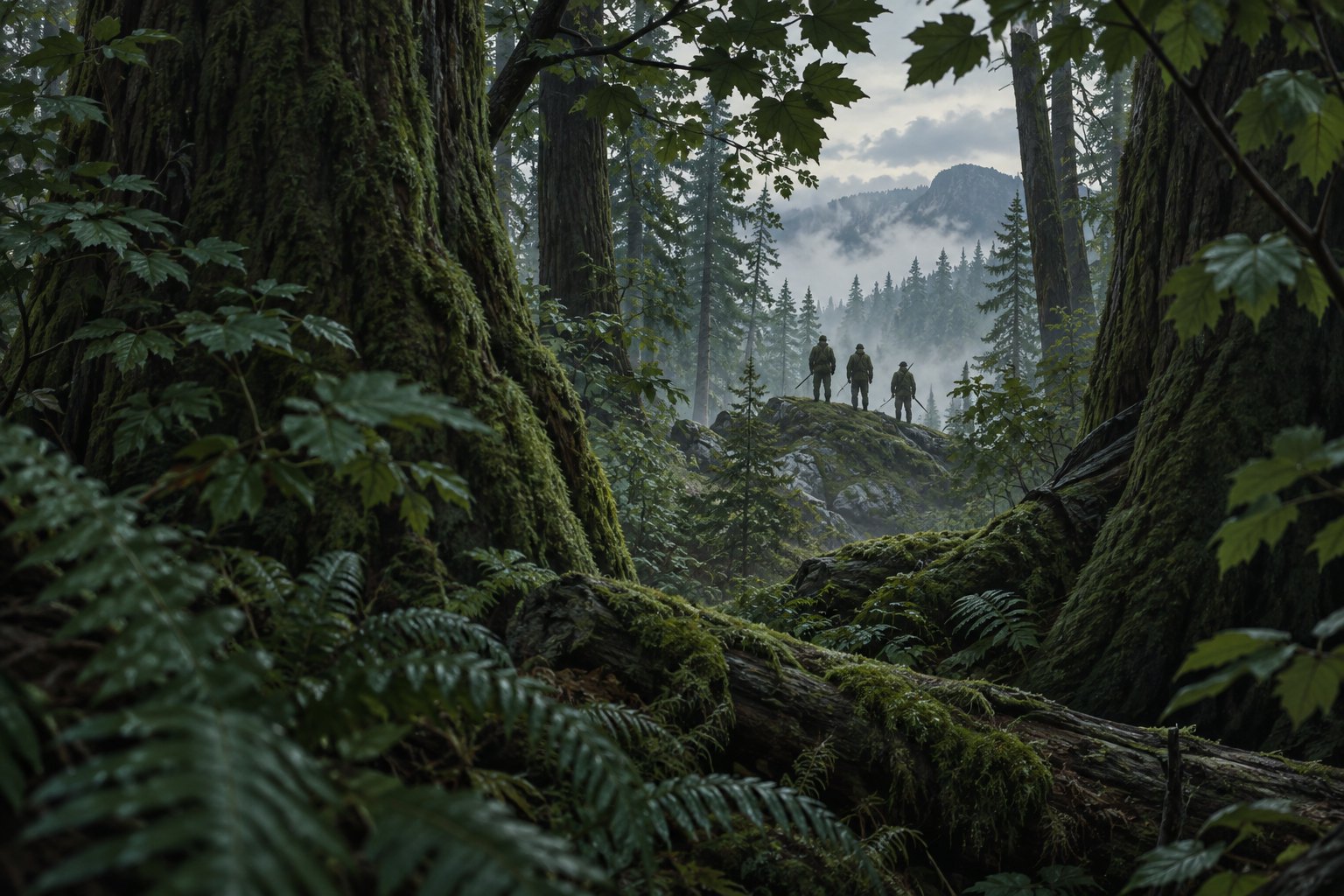
Read through Sung-ki, the forest is a challenge to professional confidence. Knowing how to hunt does not establish what should be hunted, or why another being is behaving aggressively. This distinction gives the reversal an ethical dimension beyond the familiar excitement of a predator becoming prey.
The broader question resembles the problem of recognition explored in our commentary on identity in Madoka Magica: recognizing a category can create confidence before understanding has arrived. In Hope, that premature confidence carries immediate physical stakes.
Where the Good-Bad Debate Becomes Useful
The criticism surrounding the film identifies a practical structural concern. Time Out praises the initial pursuit but argues that the town and forest strands lose cohesion, with repetition and the later mythology weakening momentum. That is one critic’s assessment, not an objective measurement of the film’s quality. It does, however, identify the right distinction to examine: deliberate disorientation versus diminished dramatic clarity. [Time Out’s review](https://www.timeout.com/movies/hope-review-2026)
Disorientation works when viewers understand a character’s immediate problem while questioning its larger meaning. Confusion becomes less productive when viewers lose track of why the current event matters to anyone. A movie can withhold its monster’s origins and still make a choice, a fear, or a relationship sharply legible.
That is also why uneven visual effects cannot settle the verdict alone. An unconvincing creature may interrupt suspense, but the larger issue is whether its presence supports the characters’ experience. Conversely, technical polish cannot compensate for action that leaves everyone dramatically unchanged. Our analysis of character and story in Call My Agent! The Movie approaches a related question: pleasurable individual moments still need a persuasive relationship to the whole.
A Deeper Reading: Survival Does Not Settle the Moral Argument
The most promising interpretation of Hope concerns the distance between surviving an encounter and understanding it. Bum-seok’s responsibility, Sung-ae’s decisiveness, and Sung-ki’s hunting experience each provide reasons to act. Taken together, they also reveal how readily familiar roles can substitute for fresh judgment.
This does not mean the characters should calmly debate while their community is attacked. The pressure to respond is precisely what makes the question difficult. A meaningful monster movie allows fear to be justified without treating every action taken in fear as justified.
For viewers deciding how to approach Hope, that is the useful lens: follow who knows what, and notice when confidence exceeds the evidence. The film’s claim to being more than enjoyable excess rests there. Its most interesting possibility is that the habits helping its characters survive are also the habits preventing them from seeing the whole disaster.
Original content by this site's editorial team. Published: September 12, 2026 at 08:33:08 PDT (Los Angeles time)