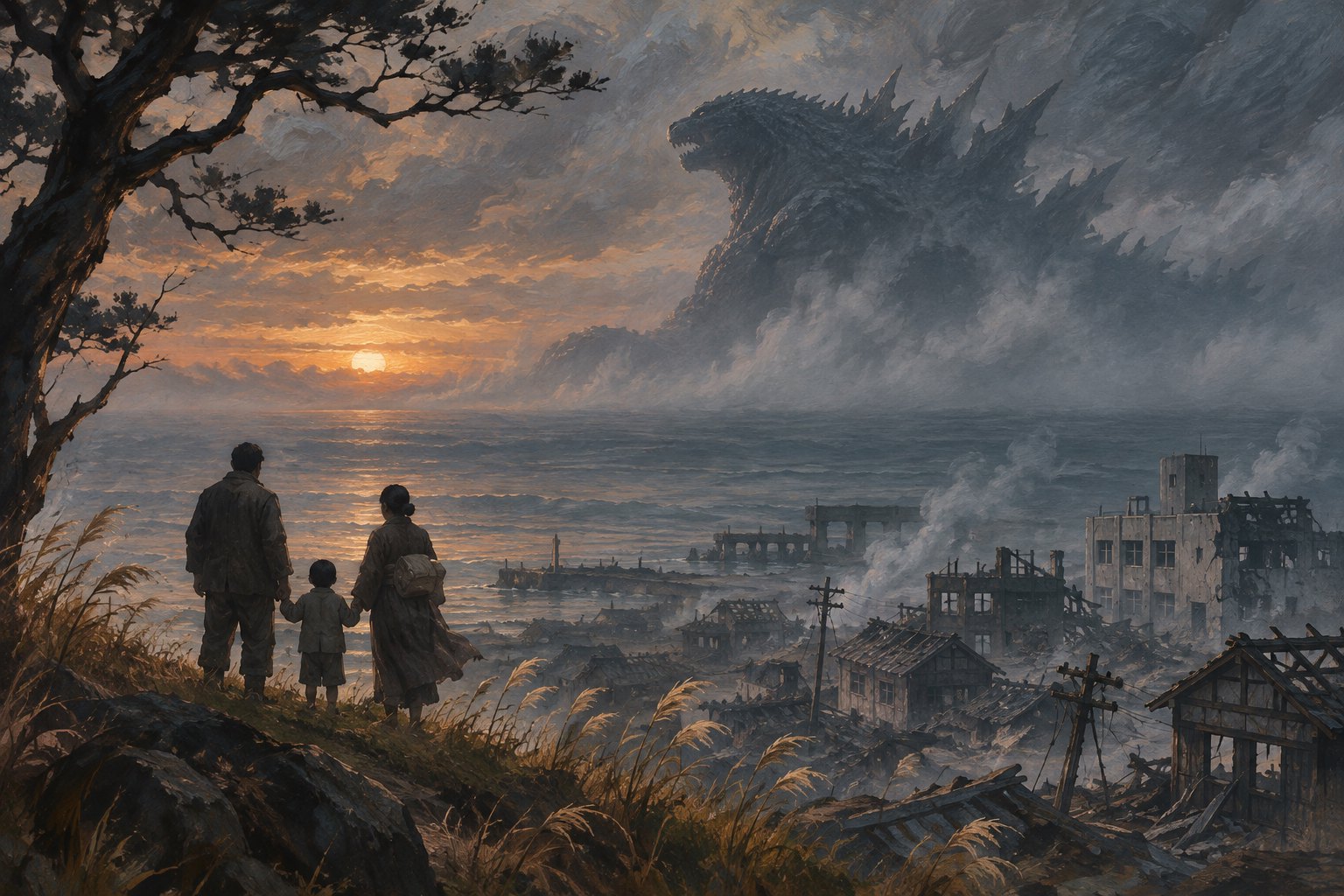
Godzilla Minus Zero finds its strongest dramatic question inside the Shikishima household: what does courage require when other people depend on you coming home? The monster threat matters, but so does the possibility that answering it will destroy the family its heroes want to protect. My reading is that this conflict gives the sequel a persuasive emotional purpose, even when its dialogue pushes feelings that the situation already makes clear.
Spoiler warning: This character-focused review discusses the family’s circumstances, King Ghidorah, and Noriko’s involvement in the response to the monsters.
A sequel about the difficulty of keeping a life
Takashi Yamazaki’s sequel returns to the survivors of Godzilla Minus One. In his Forbes review, Mark Hughes emphasizes the continuity between the films and the consequences that continue to shape their characters. That is a useful starting point: surviving a catastrophe does not automatically give someone the confidence to survive the next one. [Mark Hughes’s review](https://tollbit.forbes.com/sites/markhughes/2026/11/06/film-critic-review-godzilla-minus-zero-is-the-best-film-of-the-year/)
A continuing story earns its existence when an earlier victory creates a new problem. Here, family life changes the meaning of danger. Someone who once struggled to believe his life had value now has obligations that make risking it more complicated. The emotional movement is away from proving oneself and toward deciding what one owes other people.
That distinction also separates this discussion from our look at the film’s opening-weekend response. Commercial enthusiasm can establish that people want to return to this world. It cannot explain what returning means for the people inside it.
Kōichi: protecting a family is an active moral choice
Kōichi Shikishima, played by Ryunosuke Kamiki, now shares a household with Noriko and their daughter, Akiko. When Noda seeks his participation in the response to Ghidorah, Noriko reminds him of his responsibility to the child. The competing obligations are established in Sight and Sound’s account of the story. [Sight and Sound’s review](https://www.bfi.org.uk/sight-and-sound/reviews/godzilla-minus-zero-thrilling-mega-monster-romp)
From Kōichi’s perspective, a summons to help cannot be an uncomplicated compliment. His usefulness makes him vulnerable to being claimed by another emergency. Having skills that could save lives does not erase the lives already entrusted to him.
The interesting question is therefore how to distinguish caution from withdrawal. Protecting one household is a meaningful responsibility, yet that household exists within a community exposed to the same danger. Neither obligation can simply cancel the other. Kōichi’s predicament works because an honorable decision can still hurt someone who deserves better.
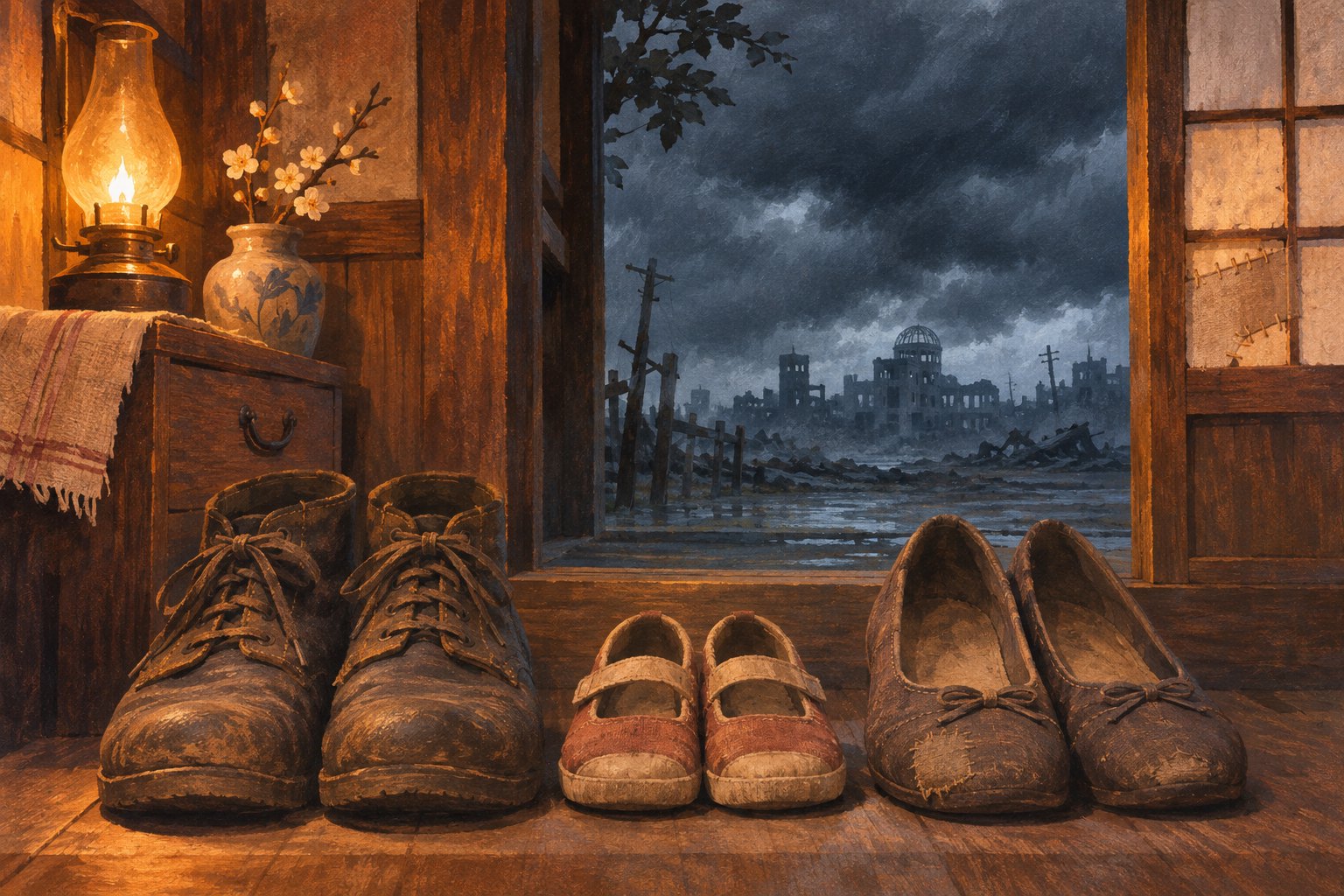
Noriko: the person inside the proposed solution
Noriko’s connection to Godzilla becomes materially important to the effort against the monsters. The proposed use of a resonance device depends on her altered biology, making her participation more than a matter of standing beside Kōichi. GamesRadar’s explanation of the confrontation establishes this mechanism. [The confrontation explained](https://www.gamesradar.com/entertainment/sci-fi-movies/godzilla-minus-zero-ending-explained-ghidorah/)
The ethical pressure comes from the difference between identifying a capability and obtaining consent. To planners, Noriko may look like an indispensable resource. To her family, she is a person whose continued presence cannot be reduced to strategic value. To herself, she must also be allowed a judgment about what risks she will accept.
That last perspective is essential. A protective husband can still crowd out his wife’s agency if his fear becomes the only voice that counts. Conversely, calling a dangerous task voluntary does not remove the pressure created when everyone’s survival supposedly depends on accepting it. Noriko’s situation places those uncomfortable possibilities beside each other.
This is where the science-fiction premise offers something sharper than a convenient solution. A body marked by catastrophe becomes valuable to people confronting another catastrophe. The question is whether they can use that knowledge without treating its bearer as equipment.
Akiko measures the disaster differently
Akiko gives the story a standard that adult explanations cannot satisfy: she wants her parents. GamesRadar’s review identifies her attachment to them as central to the conflict between family love and the monster response. [GamesRadar’s review](https://www.gamesradar.com/entertainment/sci-fi-movies/godzilla-minus-zero-review/)
Her cry, “Something scary is coming again!” captures the recurrence of fear with a child’s bluntness. The line is quoted in the Los Angeles Times review. [Los Angeles Times review](https://www.latimes.com/entertainment-arts/movies/story/2026-11-06/godzilla-minus-zero-review-ryunosuke-kamiki-minami-hamabe-min-tanaka-takashi-yamazaki)
The crucial word is “again.” A threat can be new to the plot while feeling horribly familiar to someone living through it. Akiko does not need a theory of historical repetition. She needs reassurance that absence will be temporary and that the adults making promises can keep them.
Read through her perspective, heroic action becomes painfully incomplete. A successful operation answers a public emergency; it does not automatically answer a child’s fear of abandonment. That gap gives the family scenes their purpose.
Where emotional clarity risks becoming insistence
“Will we ever live in peace?” is another telling line, quoted by Empire in a review that finds portions of the drama overwrought. Empire also praises the action’s sense of danger while questioning the sequel’s narrative coherence. [Empire’s review](https://www.empireonline.com/movies/reviews/godzilla-minus-zero/)
The question belongs naturally to this world, but it also illustrates the dramatic risk. Once a film has shown how precarious ordinary life has become, saying the theme aloud can add little. Emotional directness works best when a declaration changes a relationship or commits someone to a decision. Repetition can make suffering feel arranged for the audience.
That is the reservation I find most consequential here. The family dilemma has enough substance to withstand disagreement and silence. It does not require every feeling to arrive with its own explanation. Readers interested in how images carry moral meaning can find a related discussion in our analysis of Janusz Kamiński’s visual storytelling.
The deeper meaning: survival creates obligations
My interpretation of Godzilla Minus Zero centers on the obligations created by having survived. Kōichi must weigh what he can contribute against whom he might leave behind. Noriko must negotiate the distance between being needed and being respected. Akiko exposes the human cost that adult language about necessity can conceal.
Through those perspectives, the monster story becomes an argument about the limits of sacrifice. A community cannot preserve its humanity merely by finding people willing to suffer for it. It must also ask whether those people have been heard, whether alternatives have been considered, and what will happen to those who depend on them.
The family’s desire for an ordinary future gives that argument its force. Peace has to mean more than the interval before another call to duty. It must include the possibility that people who have already endured catastrophe are allowed to keep the lives they rebuilt.
Original content by this site's editorial team. Published: November 9, 2026 at 10:22:06 PST (Los Angeles time)