The Edits Film Festival has announced its official selection, bringing attention to the work chosen for its program. For viewers, that announcement offers a starting point for discovery. The more interesting question comes with watching: which films turn an arresting image into a meaningful experience, and which leave us thinking about the people inside the frame?
This is spoiler-free festival commentary, not a review of individual selected films. An announcement alone cannot support judgments about performances, plot turns, memorable dialogue, or endings. What it can do is open a useful conversation about how to approach the selection—and what deserves our attention once the films begin.
What official selection tells a viewer
Official selection identifies work chosen for a festival’s program. By itself, that designation does not establish an award win, a theatrical release, or public streaming availability. Those are separate claims requiring separate confirmation. It also cannot tell you whether a film will match your taste, move you, or make its ideas convincing.
That distinction matters because recognition can quietly become a substitute for judgment. A viewer arrives expecting excellence, then interprets every ambiguity as depth. Another arrives suspicious of festival approval and mistakes restraint for pretension. Both responses give the designation too much power before the work has had a chance to speak.
Our coverage of the London Film Festival jury awards addresses a different stage of festival recognition. Keeping selection and awards separate helps readers understand what an announcement actually establishes. For the Edits Film Festival, selection is the occasion to start paying attention; the films must supply the reasons to keep watching.
Start with the person inside the frame
My preferred way into an unfamiliar film is through a character’s immediate situation. What does this person want? What makes that difficult? What might they lose by acting—or by doing nothing? These questions do not demand elaborate exposition. A gesture, an avoided glance, or a decision to stay in a room can establish the stakes.
Character-centered viewing also means noticing the difference between what we know and what a character knows. A scene can feel frightening because the audience anticipates danger that its subject cannot see. It can feel intimate because we discover something at exactly the same moment. Information becomes emotion through that relationship.
This is a useful lens for approaching narrative work in the Edits selection without prescribing a single storytelling formula. An experimental film may offer no conventional protagonist. In that case, ask whose perception organizes the experience: what are we encouraged to notice, and how does that attention change?
The same emphasis informs our discussion of character perspective in the Kaiju Decode teaser. Promotional interest becomes a richer critical question when it leads us toward the experience of someone within the story.
Look at what happens between images
Editing provides a particularly productive lens for this festival commentary. That does not mean assuming every selected film uses conspicuous cuts or elaborate transitions. The critical question is what the relationship between images does to our understanding.
Consider a hypothetical sequence: a person reaches a doorway, the film shows an empty chair, and then we see their face. The order encourages us to connect the expression with an absence. Reverse those images, and we may read the same face as anticipation. This is an illustration of how sequence works, not a description of any selected entry.
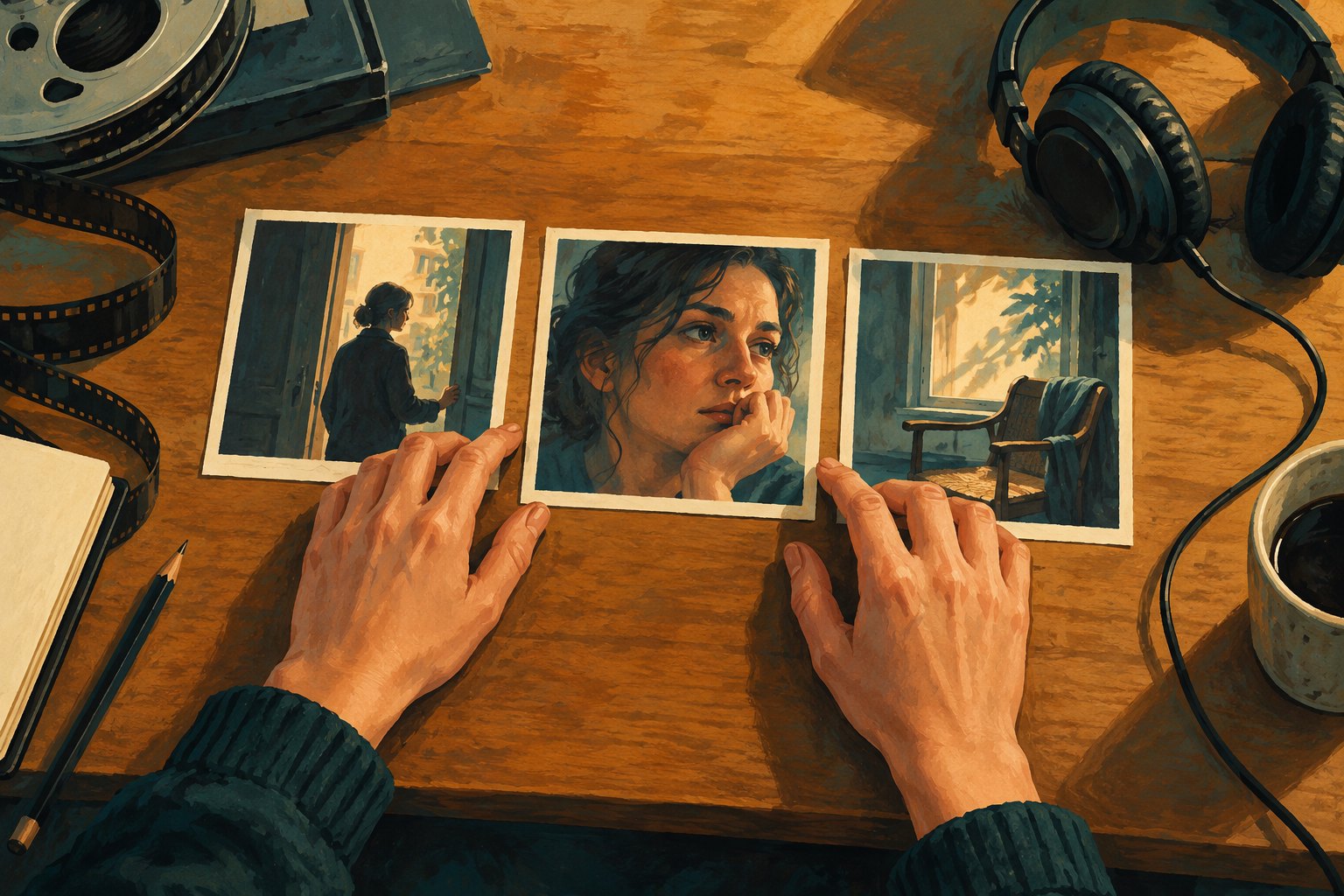
When watching, notice whether a cut gives you new information, changes an emotional emphasis, or redirects your sympathy. A transition can be visually impressive while contributing little to the scene. An almost invisible cut can make a character’s hesitation suddenly legible.
Holding a shot deserves equal scrutiny. Remaining with someone after a conversation ends may expose the effort behind their composure. But duration alone does not create complexity. The question is whether our understanding develops while the camera stays.
Listen for the choices that shape a performance
A performance reaches us through more than an actor’s face. The timing of a reply, an interruption, or the decision to hear someone without seeing them can determine who seems confident, vulnerable, or evasive. Listening closely helps separate what a character says from how the film frames that statement.
Music deserves similar attention. Does it introduce a feeling before the scene has established it? Does it complicate the image? Would the interaction remain affecting without it? There is no rule against strong musical guidance, but noticing that guidance makes a response easier to explain.
Memorable dialogue also needs context. A sentence becomes powerful through who speaks it, who hears it, and what changes afterward. Any eventual review of the selected films should preserve that context when quoting lines, rather than treating a striking phrase as a complete account of the work.
A practical way to compare the films
After viewing, a few specific notes can help distinguish immediate excitement from a lasting response. Try these questions before assigning a score:
- What changed? Identify a change in the situation, a relationship, or your understanding.
- Which moment earned your attention? Name a particular image, sound, gesture, or decision.
- How did the form serve the subject? Connect a stylistic choice to its effect.
- What remained unresolved? Consider whether the uncertainty feels purposeful or merely underdeveloped.
These questions leave room for different ambitions. A comedy need not achieve the emotional weight of a drama to succeed. A formally adventurous piece need not explain everything. Fair comparison begins by identifying what each work attempts, then asking how convincingly it achieves that aim.
The deeper promise of the selection
For me, the most valuable possibility behind the Edits Film Festival announcement is discovery: encountering a way of seeing that feels particular to its maker. Technical polish can attract attention, but perspective gives that attention somewhere to go.
A festival selection becomes meaningful to an audience through those encounters. The lasting impression may be a character whose choice remains troubling, a comic pause timed with precision, or an ordinary detail made newly visible. The announcement brings the work into consideration. Close viewing is where recognition can become a personal connection.
Original content by this site's editorial team. Published: October 18, 2026 at 18:50:41 PDT (Los Angeles time)