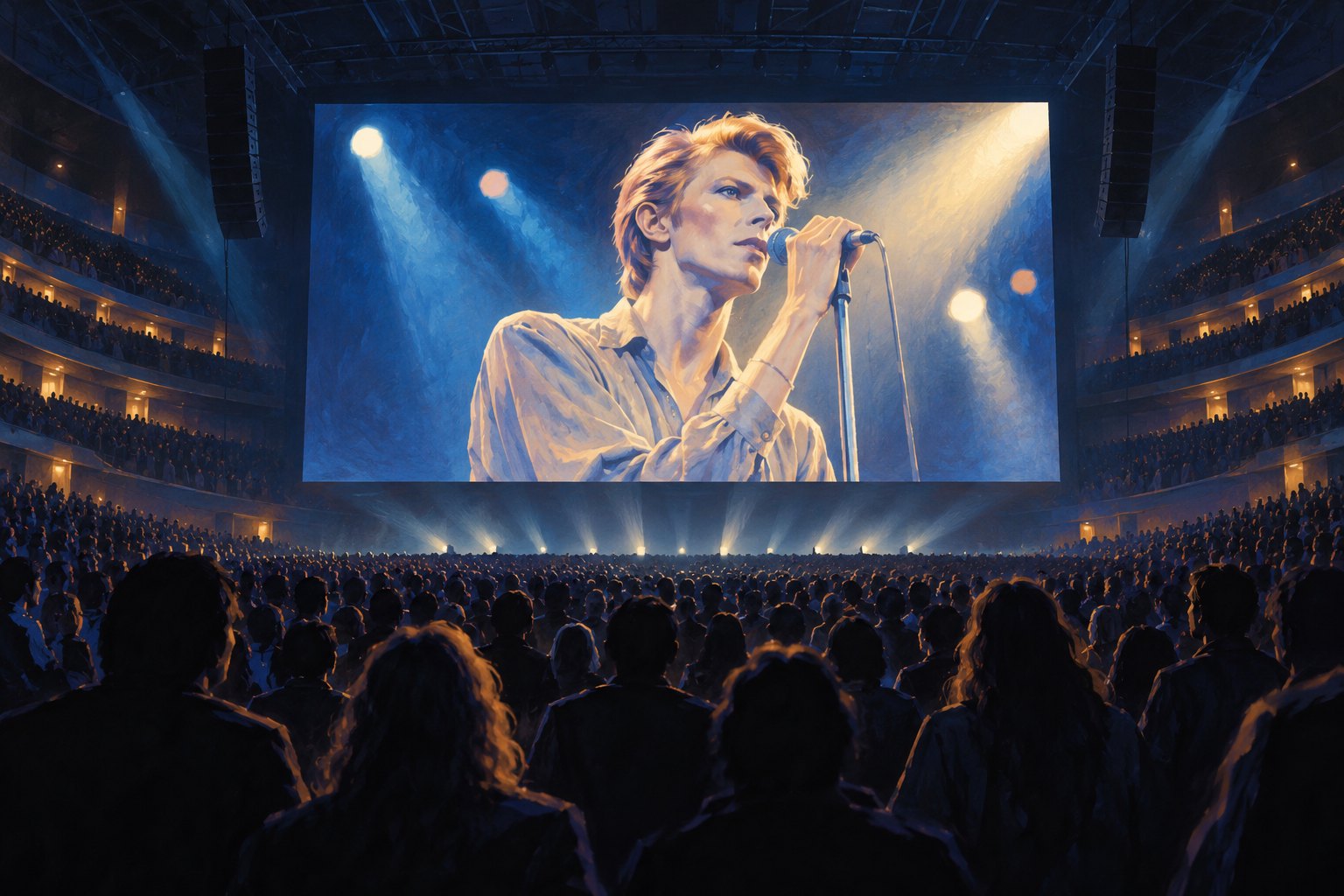
David Bowie’s 1978 tour film is heading toward an unusually large second life. According to reporting by The Guardian, the film described as lost is planned for arena presentations in 2027, with remastering by Brett Morgen, the director of Moonage Daydream. The attraction is immediate: a recorded Bowie performance, separated from its original audience by decades, becoming the reason thousands of people gather again.
For filmgoers, the interesting question extends beyond the rarity of the footage. What happens when a concert film moves into a space associated with concerts themselves? The screen can bring a face closer than most arena seats ever could. It can also make viewers acutely aware that the performer belongs to another time.
This is a critical preview, not a review of the finished presentation. Its editing, sound, song selection, and performance details cannot responsibly be judged in advance. The strongest case for the project rests on what concert cinema can reveal—and what this particular format will need to preserve.
What the announcement establishes
The central reported details are straightforward: Bowie is the subject, the tour footage dates from 1978, arena presentations are planned for 2027, and Morgen is responsible for the remaster. His association with Moonage Daydream gives audiences a recognizable filmmaking connection, but it does not establish that this project will follow the same structure or aesthetic.
The description of the film as lost also deserves precision. That word alone does not explain whether material was physically missing, inaccessible, unfinished, or simply unavailable to the public. A compelling recovery story should eventually explain the distinction. Until then, the prospect of access is enough to make the announcement significant without adding an invented account of rediscovery.
Likewise, a planned arena presentation is not a confirmed conventional theatrical release. Readers looking for a local screening, a streaming date, ticket prices, or a complete itinerary should not treat the year 2027 as an answer to all those questions. Those details require their own announcements.
Bowie as the film’s central presence
A concert film asks us to read a performer somewhat as we read a dramatic character: through posture, timing, expression, and relationships with the people around them. The crucial difference is that a real person’s interior life remains unavailable. A camera can record a pause; it cannot prove what that pause meant to Bowie.
That distinction should guide the eventual analysis. Does the film allow viewers to see how he prepares a phrase, holds a position, or redirects his attention? Does it preserve the relationship between a movement and the music accompanying it? These are observable choices through which a performance develops its own dramatic shape.
From the performer’s perspective, a song involves duration. A gesture begins somewhere and leads somewhere. Editing can preserve that development or break it into attractive fragments. A sustained shot may reveal more about command of a stage than a rapid sequence of emphatic close-ups. The test is whether the camera helps us follow what Bowie is doing.
The other musicians matter to that reading. A performance becomes more intelligible when viewers can understand its exchanges: who initiates a change, who responds, and how the singer occupies the shared space. Whether this footage offers those opportunities remains to be seen. They would be among its most valuable contributions beyond familiar images of its star.
Remastering should make the performance easier to read
The word remastered promises renewed access, but it is not a review score. Picture clarity, tonal balance, and intelligible sound can help an audience notice details previously difficult to perceive. They cannot, by themselves, establish that a film has expressive rhythm or a coherent point of view.
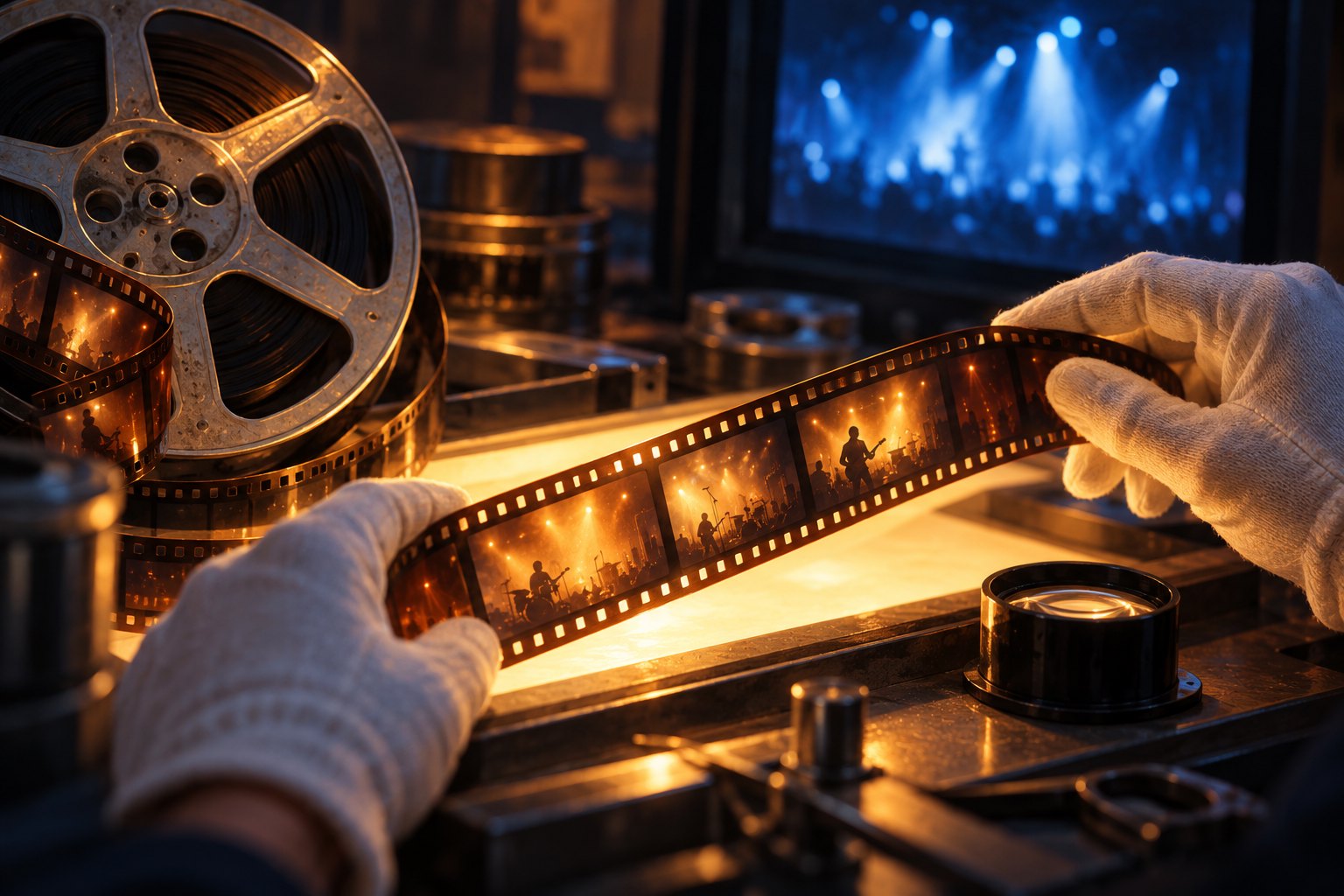
My preference would be for a presentation that preserves the image’s sense of physical origin. Stage light, darkness, texture, and the limits of the original recording all help locate a performance in time. Making every surface appear newly manufactured would not necessarily bring us closer to the event.
Sound invites a related judgment. Loudness can supply excitement, but musical relationships give that excitement meaning. Can listeners distinguish the vocal from the instruments? Can they hear changes in intensity without every passage feeling equally forceful? In a large venue, those questions become part of the experience as directly as the quality of the image.
None of this establishes which techniques Morgen has used. It sets out a standard for assessing their effect. Our discussion of how editing shapes documentary judgment addresses the underlying issue: recorded material acquires meaning through the choices that organize it.
What an arena can add—and obscure
The arena idea has a persuasive emotional logic. Watching with a crowd creates a second event around the recorded one. Applause, anticipation, and shared recognition belong to the present audience, even when the performance on screen is fixed. That collective response can give archival cinema an urgency that solitary viewing rarely supplies.
But scale creates practical demands. A giant close-up may be legible from far away while a wide shot becomes difficult to study. A presentation that feels overwhelming near the screen may feel remote from an upper section. The venue’s contribution needs to be judged from ordinary seats, not just the most flattering vantage point.
The quieter passages will be particularly revealing. Can the room sustain attention when the image asks viewers to observe rather than cheer? Our essay on how cinema restores attention through small details explores a useful parallel. Spectacle gains depth when it leaves room for concentration.
What to check before choosing a presentation
When event listings become available, the useful questions will concern the actual viewing experience:
- Format: Is the event a continuous film screening, or does it incorporate additional presentation elements?
- Content: What runtime and scope are explicitly advertised?
- Sightlines: How do the screen’s position and size relate to the seat being sold?
- Availability: Are other viewing formats announced, or is the arena engagement the only confirmed option?
These distinctions matter because an archival film and a large venue can each be appealing for different reasons. Clear information lets viewers choose the experience they actually want.
The deeper promise: encountering a performance in time
The most meaningful outcome would be a renewed understanding of Bowie as a working performer. Fame can compress an artist into a handful of images. Concert footage can restore sequence: the effort between those images, the decisions that connect them, and the time a song needs to become an experience.
That is why the gap between 1978 and 2027 could be the project’s greatest expressive resource. Viewers will bring memories, expectations, or first-time curiosity to a performance that cannot respond to them. The film’s power could emerge from that encounter between a fixed record and a changing audience.
The announcement earns anticipation. The eventual verdict will depend on whether the presentation makes Bowie’s performance more visible, audible, and understandable. If it does, the reward will reach beyond seeing rare footage on an enormous screen: audiences may leave having noticed something specific about the artist that familiarity had taught them to overlook.
Original content by this site's editorial team. Published: October 27, 2026 at 03:20:54 PDT (Los Angeles time)