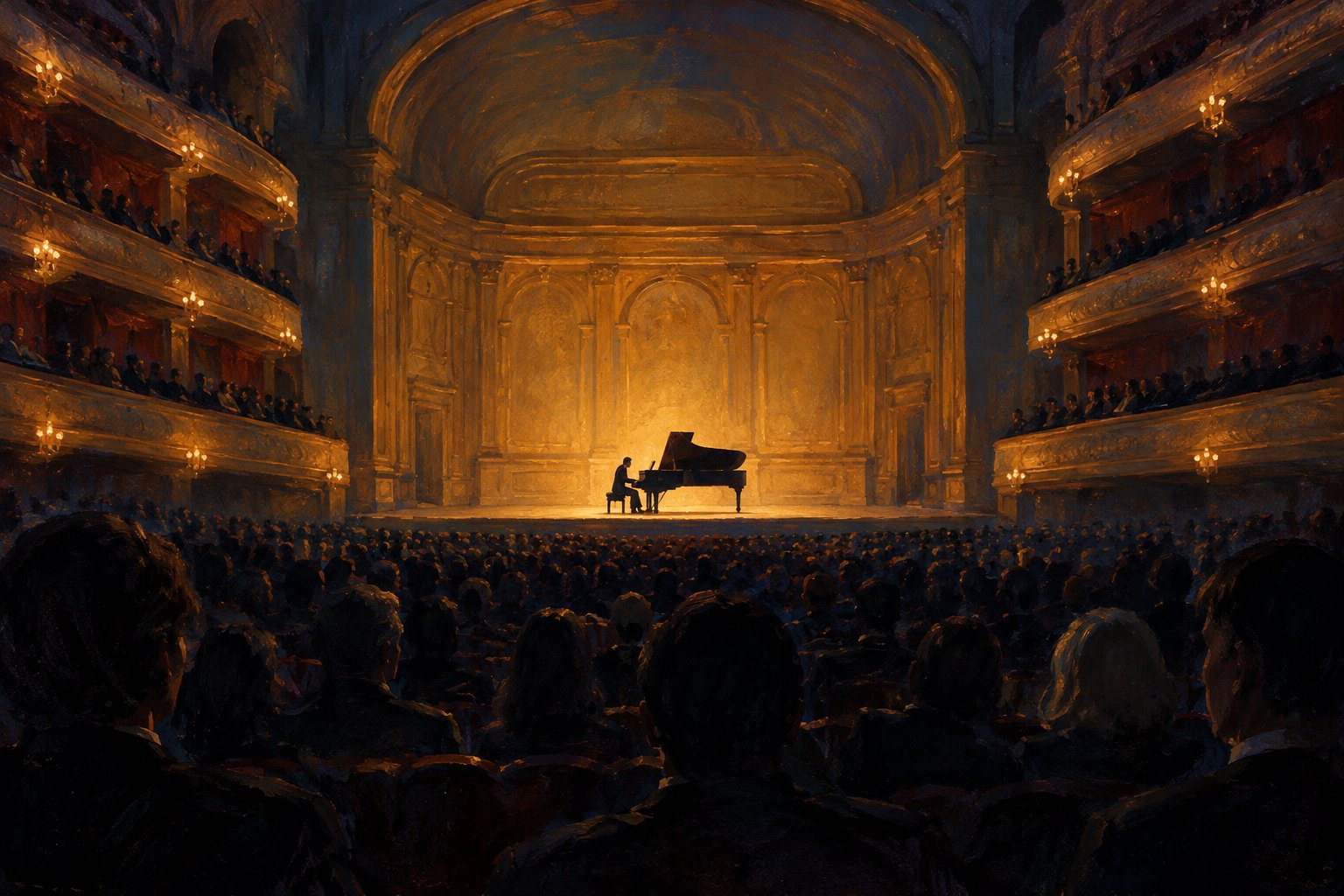
Cameron Winter at Carnegie Hall presents an intriguing proposition for moviegoers: a concert film whose appeal may depend on how comfortably you can sit with an artist you do not immediately understand. Deadline’s review headline characterizes PTA’s movie as “esoteric.” That description is a useful starting point, but it should not become a verdict on who is allowed to enjoy it. Unfamiliar music can create distance; cinema can give that distance shape.
This is spoiler-free critical commentary on the film’s framing, rather than a firsthand screening review. The available reporting establishes the central subject and concert-movie format, but does not support a scene-by-scene assessment here. No set list, performance dialogue, or specific editing choices are assumed. The narrower question is still worth asking: what should viewers expect from a movie that puts musical mystery at the center of its appeal?
“Esoteric” describes a relationship with the audience
Calling a concert movie esoteric can mean several different things. The music might resist familiar structures. The performer might have an established audience whose knowledge a newcomer does not share. Or the film might decline to explain its subject through the usual documentary devices. Those are distinct possibilities, and the label alone cannot establish which applies.
The distinction matters because it changes the reader’s expectations. Difficult music is not necessarily difficult filmmaking. A listener can feel lost within a song while finding the act of performing it absorbing. Conversely, a familiar song can become inert onscreen if the images add little to the listening experience.
My view is that accessibility should be judged by the attention a movie makes possible. Does it offer a newcomer something concrete to notice? Can curiosity survive without prior admiration? A concert film need not supply a biography before allowing viewers to form a relationship with its subject. It does, however, need to earn the time it asks them to spend.
Winter should remain a person, not a puzzle to solve
For a character-centered reading of Cameron Winter at Carnegie Hall, the first adjustment is essential: Winter is a real performer, not a fictional protagonist whose every action exists to advance a screenplay. His presence should not automatically be organized into a story about triumph, loneliness, insecurity, or artistic destiny.
Those interpretations can be tempting in any performance documentary. A face becomes a landscape on which viewers project an emotional narrative. A pause can look like uncertainty; stillness can suggest control. Yet a camera cannot certify an internal state simply by showing someone closely. Concentration and vulnerability may resemble each other without meaning the same thing.
Looking from the performer’s position changes the questions. Instead of asking what secret the movie might reveal about Winter, consider what being watched does to a musical encounter. The performer is making choices in time, while viewers are searching those choices for significance. That imbalance is part of concert cinema’s fascination—and a reason to resist treating every gesture as confession.
The question of who gets to interpret a filmed subject also runs through our analysis of how an interviewer becomes part of a documentary’s story. The circumstances are different, but the underlying issue carries across: access to a person does not eliminate the filmmaker’s influence over how that person is understood.
The filmmaker’s name creates its own expectations
The PTA association gives this concert movie an additional point of entry. Some viewers will arrive interested primarily in Winter; others will come because the filmmaker’s involvement promises a distinctive cinematic experience. Neither approach is illegitimate. The trouble begins when one interest is allowed to erase the other.
For director-focused audiences, a musician can become material for an auteur interpretation before the performance has been considered on its own terms. For devoted listeners, filmmaking can be treated as transparent documentation, as though the camera merely carried an existing experience into another room. Both assumptions overlook the collaboration implied by a concert movie.
A useful assessment would ask how the film negotiates attention between musical expression and visual interpretation. That requires evidence from the finished work. The director’s reputation cannot answer the question in advance, and the performer’s following cannot settle whether the result works as cinema.

What the camera can add to listening
Concert filmmaking has an unusual freedom: its dramatic movement can arise from changes in attention rather than changes in plot. A viewer may begin by following a melody, then notice the physical work of performance, then become aware of the relationship between an individual and a room. These are possibilities of the form, not claims about particular sequences in this film.
Framing and duration matter because they determine which of those experiences becomes available. A distant view can make a performer seem situated within a public occasion. A closer view can direct attention toward effort or expression. Neither distance is inherently more honest. Each offers information while excluding something else.
This is also why a concert movie cannot be evaluated solely as a substitute ticket. Being present at a show gives an audience member some freedom to choose where to look. A film takes responsibility for that choice. Its potential value lies in making a particular way of seeing rewarding, rather than merely making proximity possible.
How unfamiliar viewers can approach the film
For readers considering Cameron Winter at Carnegie Hall, the practical question is whether curiosity about performance is enough to sustain interest when musical recognition is absent. There is no universal answer, but several distinctions can help:
- Separate enjoyment from understanding. An immediate emotional response does not require a complete interpretation, and uncertainty does not automatically signal failure.
- Notice what the images contribute. Consider whether watching changes your attention to the performance, rather than assuming visual beauty alone establishes cinematic value.
- Leave room for resistance. A prestigious filmmaker and an imposing venue do not obligate you to connect with the music.
Our discussion of what early reactions can establish about a movie offers a related principle: critical enthusiasm is most useful when it explains an experience. Descriptive labels should help readers make a decision, not pressure them into an approved response.
The deeper question is whether mystery can remain open
The most productive interpretation of the “esoteric” framing is that it poses a challenge to the relationship between artist and audience. Mystery can invite participation, allowing listeners to bring their own associations to a performance. It can also become a barrier when admiration is treated as proof of belonging.
My position is that a concert movie succeeds most meaningfully when it makes attention feel available without demanding allegiance. Applied to Cameron Winter at Carnegie Hall, that is a standard for judging the film, not a claim that it has already met it. The worthwhile question is whether a viewer can leave with a more particular relationship to Winter’s performance—even if some of its meaning remains unresolved.
That would be a richer achievement than simply confirming an artist’s importance. It would let the encounter remain an encounter: a performer doing something, a filmmaker shaping how we see it, and an audience free to decide what reaches them.
Original content by this site's editorial team. Published: October 14, 2026 at 17:02:36 PDT (Los Angeles time)