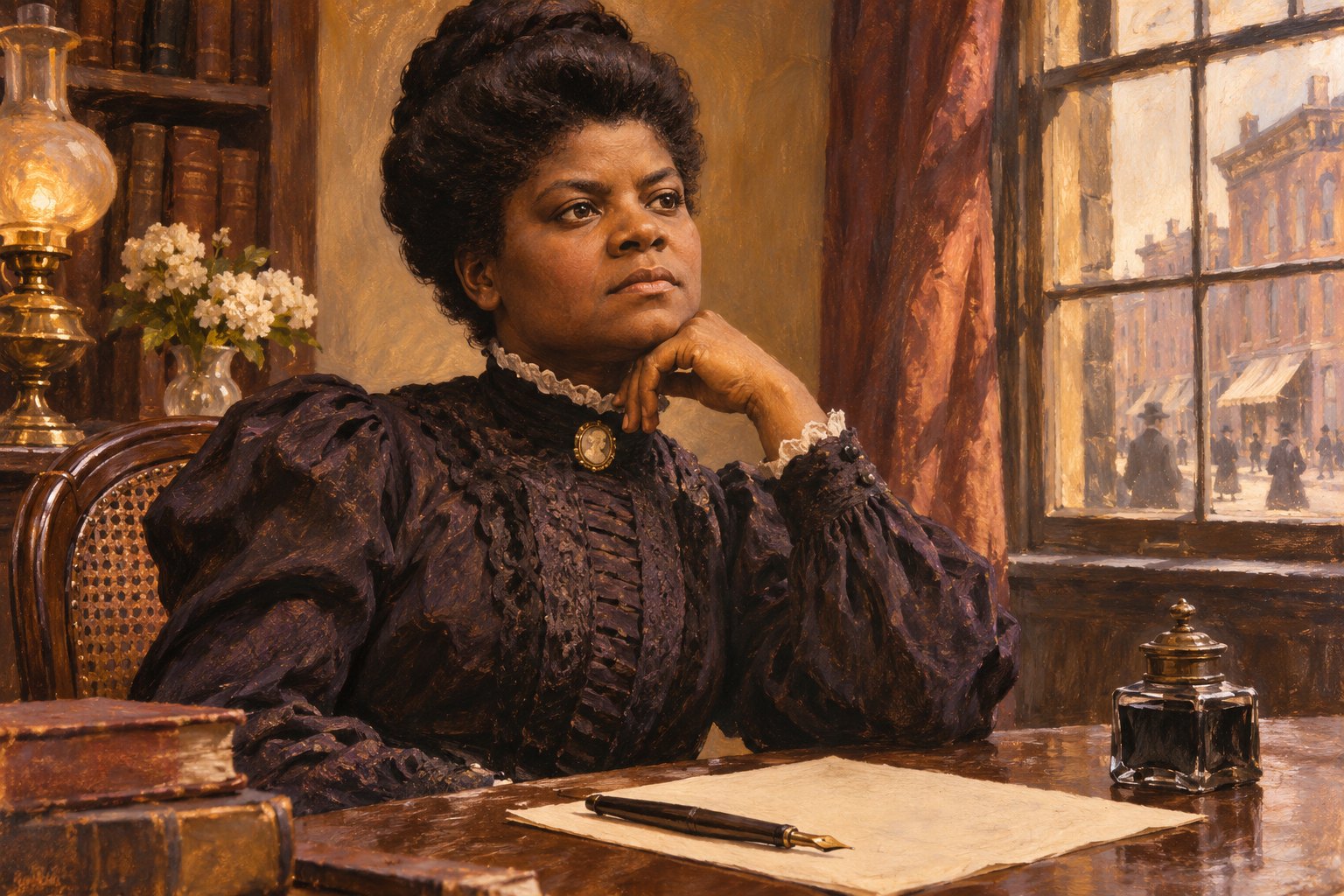
An Ida B. Wells biopic is in development, according to Deadline, with a director associated with Cross and Greatest. That is the essential news for readers wondering whether a movie about Wells is taking shape. It also raises a compelling artistic question: how can a film give audiences access to her thinking, rather than simply ask them to admire her?
The most promising approach, in our view, would make perspective the organizing principle. What does Wells notice? What does she question? How does she decide what to do with what she knows? Those questions offer the foundation for a character whose significance emerges through action.
This is development-stage commentary, not a review of a completed movie. The announcement alone does not establish the film’s plot, performances, dialogue, release date, or eventual availability. There are no verified scenes or movie quotations to assess here. The discussion below concerns the creative possibilities of the project, not claims about its screenplay.
What the announcement tells prospective viewers
The reported combination of subject and filmmaker gives the project an initial identity. Wells is its biographical focus, while the references to Cross and Greatest provide a professional frame for the director’s involvement. Those associations can spark interest, but they cannot establish how this particular film will look, move, or handle its central character.
It would be premature to assume that the biopic will borrow another production’s suspense, structure, or emotional register. Directors make different choices for different material. Until the film’s approach becomes clearer, the useful distinction is between interest in the announced project and confidence in a finished result.
For viewers, the next meaningful information would include casting, the period of Wells’s life the story intends to cover, and a substantiated production or release plan. Each would answer a different question. A lead actor suggests a possible performance; a narrative time frame reveals the film’s scope; a release plan helps audiences know when they might actually see it.
Let Wells determine what the audience sees
A biopic can place its subject in almost every scene and still leave her strangely distant. Other characters explain her importance, admire her resolve, or react to her accomplishments. The audience receives a reputation, but has little opportunity to understand the judgments that built it.
For a Wells film, a stronger dramatic approach would let her attention guide ours. The camera could privilege what she studies and the screenplay could make the reasoning behind her decisions legible. These are potential techniques, not descriptions of announced scenes. Their value lies in turning intelligence into something an audience can follow.
That does not require a constant explanatory voice-over. A performance can communicate thought through a pause, a changed question, or the decision to keep listening. Editing can connect a discovery to a later choice. The crucial element is causality: viewers should understand why a particular piece of information matters to her.
Our discussion of what happens when a biographical movie leaves its central figure elusive addresses a related problem. Recognition supplies an introduction. Characterization has to sustain the experience.
Make the work itself dramatic
A screen portrait built around Wells’s investigative identity would have an opportunity to find tension in the work of establishing a claim. Cinema often compresses research into a brisk montage, reserving its fullest attention for confrontation and public declarations. That approach can make the eventual statement feel powerful while obscuring how its speaker earned the authority to make it.
Our preference would be for the film to give that process room. Gathering information, testing an explanation, and deciding what can responsibly be asserted involve choices. Their dramatic force comes from the possibility of error and the consequences of getting something right.
This need not mean pages of exposition or an exhaustive procedural account. A carefully selected detail can reveal more than a sequence of generalized diligence. The standard should be whether the audience understands a change in Wells’s knowledge and how that change affects her next move. Any specific episode used to achieve that would need historical grounding.

Give the people around her independent motives
Supporting characters would be essential to making this portrait feel inhabited. A film becomes dramatically thin when everyone surrounding its protagonist exists to deliver encouragement, resistance, or information on cue. Relationships become more revealing when people have reasons for their positions that extend beyond the main character’s immediate needs.
For this project, that means looking closely at whichever relationships the eventual screenplay chooses to portray. What does each person understand? What do they want from Wells? What might agreement cost them? These questions can make an exchange meaningful without manufacturing a feud or inventing a private betrayal.
The same principle underlies our commentary on why supporting characters need lives beyond the lead’s story. In a historical drama, independent characterization also carries a responsibility to the real people being represented.
Choose a scope that leaves room for consequence
The announcement does not establish whether the film will survey decades or concentrate on a narrower period. Either approach could work, but each creates a different burden. A broad chronology must preserve emotional continuity across transitions. A concentrated narrative must make its limited window meaningful without implying that it explains an entire life.
From a critical standpoint, the most revealing measure is the space between an action and its consequences. Does the movie allow a decision to alter a relationship, redirect a strategy, or complicate an earlier assumption? Or does it move immediately to the next milestone?
A sequence of achievements can communicate importance efficiently. Drama needs enough time for viewers to experience uncertainty before the outcome arrives. Wells should be allowed to inhabit the present tense of her own story, without every moment being framed as a stepping stone toward recognition.
What a memorable performance would need
The eventual lead performance will invite attention, but resemblance and forceful speeches would only be part of the task. The more demanding work would involve making concentration, impatience, restraint, and changing calculations distinct and readable. Those qualities would have to emerge from the actual script and historical characterization, not from assumptions about how an important person ought to behave.
Dialogue deserves the same care. There is no basis here for quoting memorable lines from this movie. When dialogue becomes available, its effectiveness should be judged in context: who is being addressed, what the speaker is trying to accomplish, and what changes because the words are spoken. An impressive sentence is not automatically an effective scene.
The deeper promise of this biopic
The most compelling possibility is a film about the relationship between knowledge and action. What happens between recognizing a truth and deciding how to make other people confront it? That question offers a way to connect a public legacy with a character’s immediate decisions, without reducing either to a lesson delivered from a distance.
For now, the Ida B. Wells biopic merits attention as a developing project. The eventual test will be whether it makes her perspective indispensable to the viewing experience. A persuasive film would leave audiences able to describe how its Wells observes, reasons, and acts—and why those choices matter.
Original content by this site's editorial team. Published: November 18, 2026 at 14:33:05 PST (Los Angeles time)