Kevin Hart and Henry Cavill’s spy movie has filmed in Glen Ridge, according to Montclair Local News. That is the immediate answer for readers following the production. The more interesting question for moviegoers is what the combination of these two performers will produce once the cameras, locations, and individual takes become a finished story.
A recognizable cast creates anticipation, but espionage depends on something more specific: how characters behave when they cannot safely say what they know. Hart and Cavill give this project an intriguing starting point. Whether that translates into suspense, comedy, or a satisfying relationship remains a question for the film itself.
This is a spoiler-free critical preview, not a review of a completed screening. The discussion below treats the Glen Ridge filming as reported news and the creative possibilities as analysis. The illustrations are conceptual, not production photographs or film stills.
What the Glen Ridge filming news establishes
The report connects Hart, Cavill, a spy movie, and filming in Glen Ridge. That establishes a production connection to the town. It does not, by itself, establish that the story takes place there, that the location has a major role, or that both actors appear together in the material filmed there.
This distinction matters because a shooting location and a fictional setting do different jobs. A place can portray itself, stand in for somewhere else, or contribute only a brief exterior. Editing can connect that exterior to an interior filmed elsewhere. Even a location that attracts considerable local attention may occupy only a few seconds of screen time.
For that reason, the Glen Ridge news should not be read as a plot reveal. This preview also leaves the film’s title, character names, release date, and detailed credits unstated rather than attaching information that has not been established here. There is no basis for a performance verdict or a reconstruction of the sequence.
The appeal of Hart and Cavill begins with expectations
My initial interest in the pairing comes from the possibility of contrasting performance rhythms. A spy story can put a person who fills silence beside someone who uses it strategically. It can then make the audience wonder which response represents confidence and which conceals anxiety.
That is a possible dramatic structure, not a description of Hart’s and Cavill’s roles. Assigning one actor all the jokes and the other all the authority before seeing the film would narrow the possibilities prematurely. A more rewarding approach would give each character a different understanding of the same situation, with neither perspective consistently sufficient.
Consider the distinction between knowing a procedure and understanding a person. In espionage fiction, technical expertise might help a character enter a room, while social perception determines whether they can leave without attracting suspicion. If different characters possess those abilities, cooperation becomes necessary for reasons the audience can recognize.
The casting will become dramatically meaningful if the characters change one another’s decisions. Mere contrast can sustain an introduction. A feature needs that contrast to develop: confidence challenged, assumptions revised, and perhaps competence discovered where another character failed to look.
That distinction between an appealing announcement and an actual character is also central to our look at the dramatic possibilities behind Asa Germann’s reported Angel casting. Familiar names invite attention; specific choices give that attention somewhere to go.
How a location becomes part of the suspense
Glen Ridge gives this production a tangible point of interest beyond its cast. Its eventual cinematic significance, however, will depend on framing and context. A location becomes suspenseful when the film teaches viewers what its characters notice, what they overlook, and where their understanding differs from ours.
An ordinary entrance can suggest safety from one viewpoint and exposure from another. A window may offer useful visibility while leaving the observer visible in return. These are general tools of visual storytelling, not claims about the scenes filmed in Glen Ridge. They explain why location news can be worth following without treating every exterior as a clue.
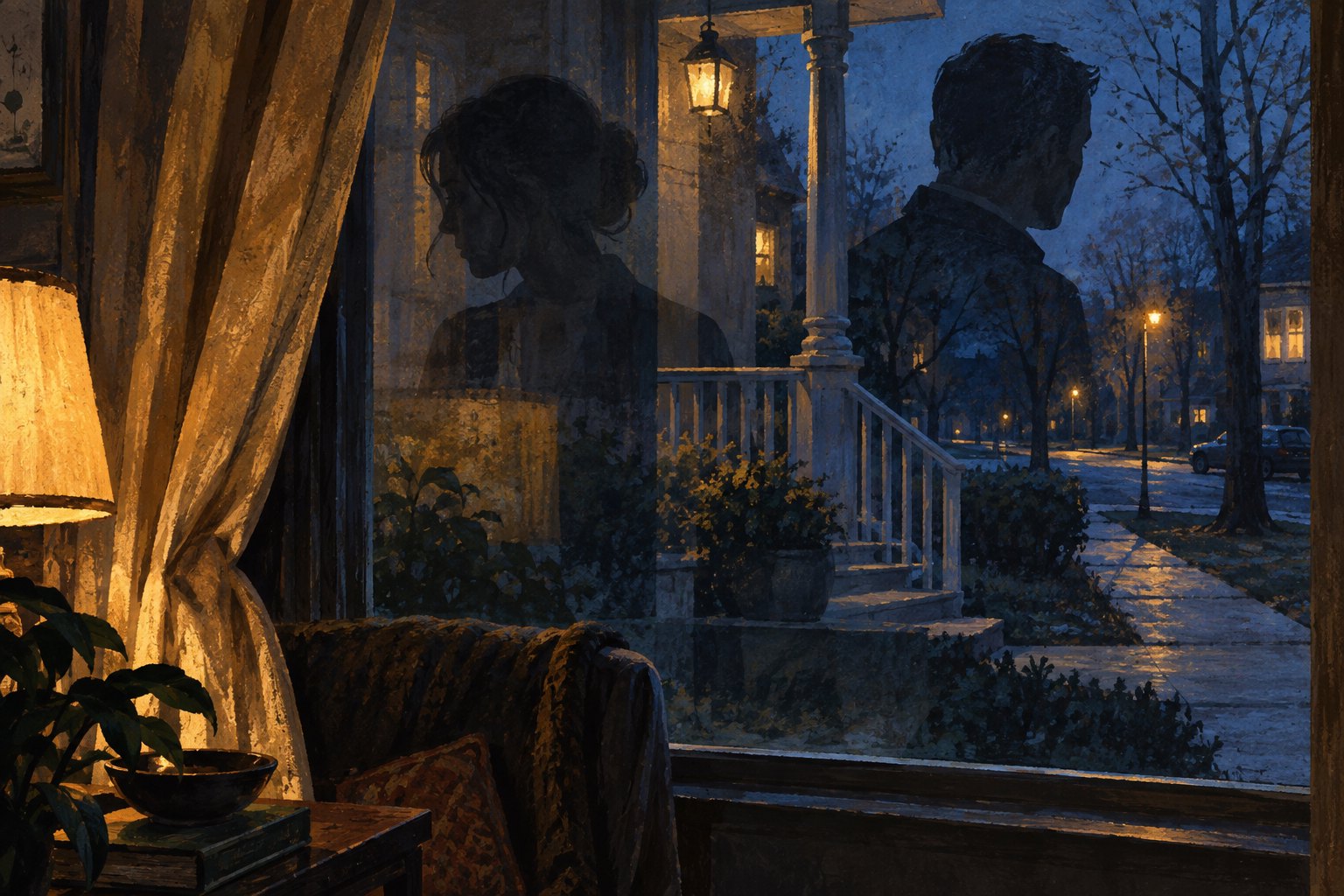
From a character’s perspective, space is rarely neutral. Someone with an escape plan reads a room differently from someone trying to maintain a cover identity. The strongest direction can communicate that difference through a glance, a camera position, or a delayed reaction, without stopping for an explanation.
For this project, the useful question is whether its locations participate in those decisions. Attractive scenery can establish a setting. Precise staging can reveal who feels in control—and how quickly that feeling collapses.
Character choices are the real test of a spy story
A convincing espionage film needs clear relationships between information and action. Viewers do not have to know every secret, but they should usually understand why a character takes a risk. Mystery becomes frustrating when motivation is withheld merely to preserve a later surprise.
Three questions will be particularly useful when Hart and Cavill’s film can be assessed:
- What does each central character want beyond completing the assignment? Personal motives make professional decisions emotionally legible.
- What can each character get wrong? Expertise becomes interesting when it has boundaries, especially if another person recognizes them first.
- What does cooperation cost? Trust carries weight when it requires surrendering control, revealing a weakness, or accepting responsibility.
If comedy is part of the approach, it should contribute to those pressures. A joke can disguise fear, test another person’s loyalty, or buy time. It becomes less useful when every dangerous moment is immediately followed by reassurance that nothing matters.
The same principle guides our analysis of why the Hawaii Five-O movie needs an investigation that tests its characters. Action gains force when solving the immediate problem changes the people involved.
The deeper possibility: being seen while staying hidden
The thematic opportunity here lies in a basic contradiction of spy fiction. Characters may survive by controlling what others see, yet any meaningful relationship requires allowing another person to see something true. A film can turn that contradiction into comedy, tension, or emotional consequence.
That is an interpretive possibility, not an established theme of this production. There are no verified scenes or lines discussed here to support a deeper reading of the actual film, and memorable dialogue cannot responsibly be supplied in advance.
For now, the Glen Ridge filming offers a concrete reason to follow Hart and Cavill’s spy movie. My interest will become stronger if the finished story makes concealment personal: if a withheld fact damages a relationship, if apparent confidence proves costly, or if trusting someone becomes harder than completing the mission. Those are the choices that could turn an intriguing pairing into characters worth remembering.
Original content by this site's editorial team. Published: September 10, 2026 at 13:29:29 PDT (Los Angeles time)